Tiny house Prana uses vertical space for a roomy living room
Prana turns a 24-foot footprint into a true sitting room, showing how tiny homes can trade extra sleeping bulk for everyday comfort.

The Prana makes its case with a simple choice: instead of squeezing the main floor into a corridor of ladders and cabinets, it gives the living room real breathing room. At 24 feet long, 8 feet wide, and 13 feet 6 inches high, the tiny house on wheels totals 266 square feet, and Simplify Further Tiny Homes uses that space to build what it calls the largest living room in its lineup.
A layout built around daytime living
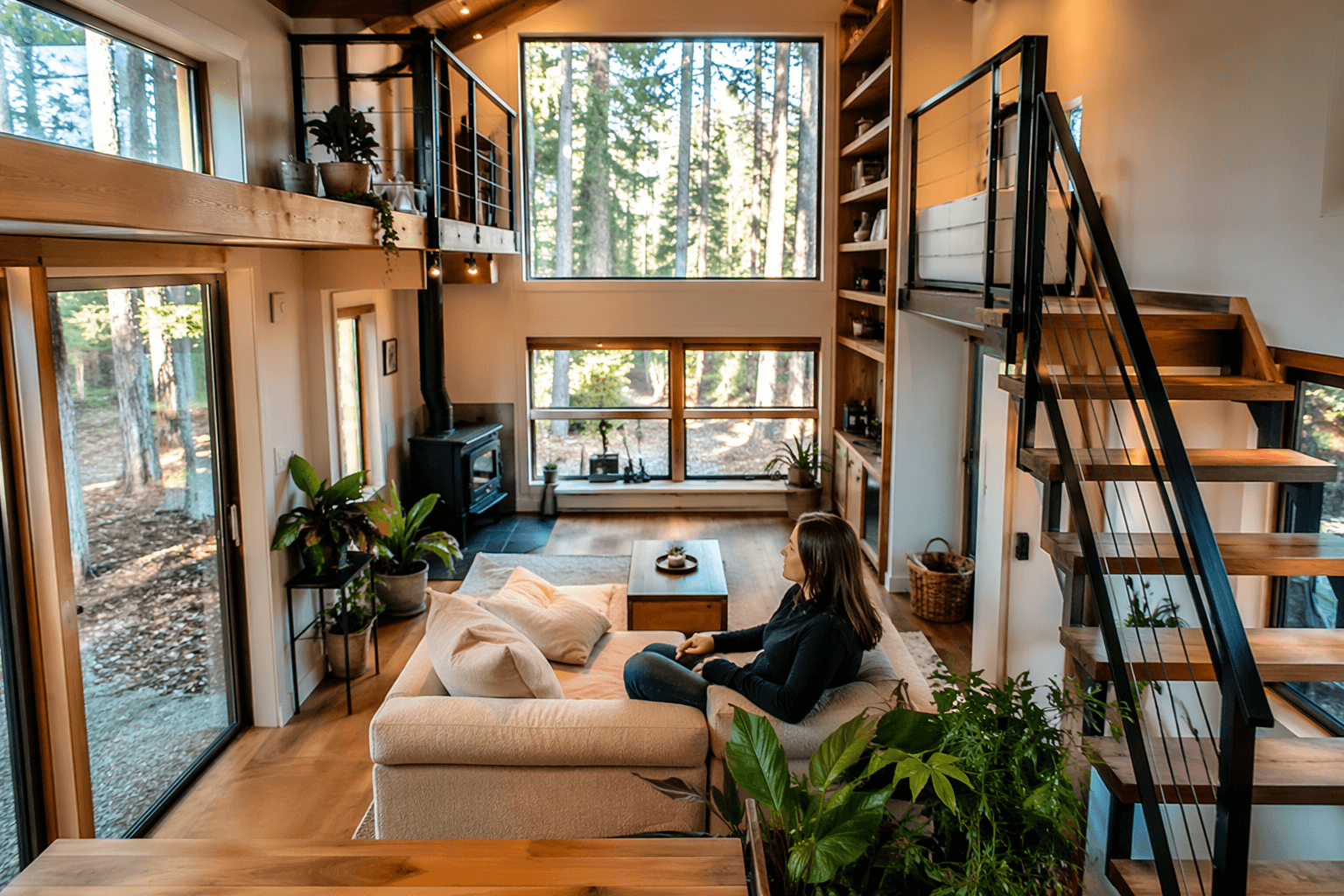
The defining move in Prana is the 7-by-7-foot living nook, which sits beneath the lofts and gives the home a proper place to sit, talk, or unwind. Windows on two sides and a pine ceiling help the space feel more like a small apartment than a pass-through tiny house, and that is the point: the design spends its extra square footage on shared life rather than on more sleeping capacity.
That choice changes how the home reads in person. Many tiny houses maximize loft count and storage density, but Prana uses vertical space to keep the downstairs open. The result is a main floor that feels intentionally arranged for daytime use, not simply for moving from one function to the next.
Sleeping space without crowding the floor plan
Prana still makes room for guests and longer stays. Simplify Further says the home sleeps 4 to 6 people, with two lofts measuring 7 by 8 feet and 7 by 7 feet. One loft sits above the main space and is reached by open stairs, while the second is accessed by ladder, a setup that keeps the layout flexible without turning the living area into a maze of stair treads.
The loft design also leaves usable headroom where it matters. Simplify Further lists 36 inches of low-side loft height and 6 feet 4 inches of space under the lofts, details that help explain why the downstairs does not feel pinched. In a tiny house, those vertical measurements matter as much as square footage, and Prana uses them to preserve a more relaxed ground-floor feel.
A kitchen and bath that support longer stays
Prana’s kitchen is compact, but it is not an afterthought. The company equips it with a butcher-block counter, a double stainless sink, a two-burner electric cooktop, and a 4.3-cubic-foot stainless fridge. That combination gives the home enough utility for regular cooking without letting food prep swallow the living room, which is one of the model’s clearest design priorities.
The full bathroom pushes the same comfort-first approach further. A soaking tub is part of the package, a detail that shifts Prana away from bare-bones weekend use and toward a more settled daily rhythm. For anyone comparing tiny homes for full-time living, that kind of bathroom can matter as much as an extra loft.
How Prana fits the Simplify Further lineup
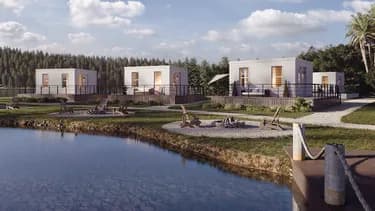
Prana is not just a standalone model; it also helps define how Simplify Further is thinking about small-space design. The company says Prana has a similar layout to its Rasa model, but with an added 32 square feet of space. Tiny House Talk’s comparison coverage of the Rasa described it as a stay-and-tour tiny house on wheels in the Florida woods near Lake Butler, which shows the builder is already using its own homes for visitor stays as well as sales.
That context makes Prana’s extra space easier to read. The difference is not being spent on a dramatic second bath or a more crowded sleeping setup. It is being spent on the room where people actually gather, which is why the home lands as a livability play instead of a novelty play.
The comparison with the Goa model reinforces that point. Tiny House Talk describes another 24-foot Simplify Further build, the Goa, as packing 252 square feet with two queen sleeping lofts and a full-size range plus washer/dryer. Prana still gives up none of the basics, but its 266-square-foot layout places a bigger bet on open living space rather than on packing in more sleeping density.
A build aimed at real-world use
Simplify Further builds Prana in Lake Butler, Florida, and the company positions it for several uses: guest house, Airbnb, and full-time living. That versatility is part of why the model stands out. It is not being marketed as a one-purpose weekend cabin, but as a home that can shift between hosting, short-term rental income, and everyday life.
The platform details back up that serious-use positioning. Simplify Further says Prana rides on a bumper-pull chassis with 7,000-pound double axles, trailer brakes, highway lighting, and a DOT-approved hand-built chassis. The company also says the home is certified as an RV by NOAH and can be built to satisfy IRC Appendix AQ by request, which gives buyers a clearer path depending on how they plan to place and use it.
What the price and footprint tell you
Prana starts at $60,000 as a fully finished home, according to Simplify Further. For that price, buyers are getting a 24-foot build that prioritizes one very specific advantage: a sitting area that does not feel sacrificed to the demands of tiny-house mechanics. The 7-by-7-foot nook is the centerpiece, and the rest of the plan is arranged to protect it.
That makes the model especially relevant in a market that has matured beyond the question of how small a house can be. The bigger question now is how normal a tiny home can feel once daily life moves in. Prana answers by making the living room the star, leaving enough loft space for sleeping, and keeping the kitchen and bath functional enough to support more than a quick overnight stay.
For buyers weighing comfort against capacity
Prana is most persuasive for people who want tiny-house living to feel settled rather than squeezed. The open-stair master loft, ladder-access second loft, compact but workable kitchen, and soaking tub all support that goal, but the living room is what gives the home its identity. It is a model for readers who want a tiny house that can host people comfortably in the daytime and still serve as a real home after the guests leave.
Simplify Further’s broader setup makes that message even clearer. The company says it is transitioning to models-for-order only and offers virtual and in-person tours seven days a week, a sign that its homes are being presented not just as products but as experiences to step into and compare. Prana fits that pitch perfectly: a small house that spends its vertical space making the downstairs feel like somewhere worth staying awhile.
This article was produced by Prism’s automated news system from verified source data, official records, and press releases, then run through automated quality and moderation checks before publishing. The system is built and supervised by the people who set the standards it runs under. Read our full AI policy.
Did this article answer your question?