Tiny House Retreat in Hungary Adds Sauna, Hot Tub, Terrace
A 215-sq-ft retreat in Hungary packs a sauna, hot tub, and terrace into a vacation rental built for quick escapes from Budapest.
A tiny house built like a destination, not a trailer
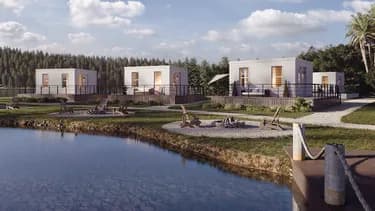
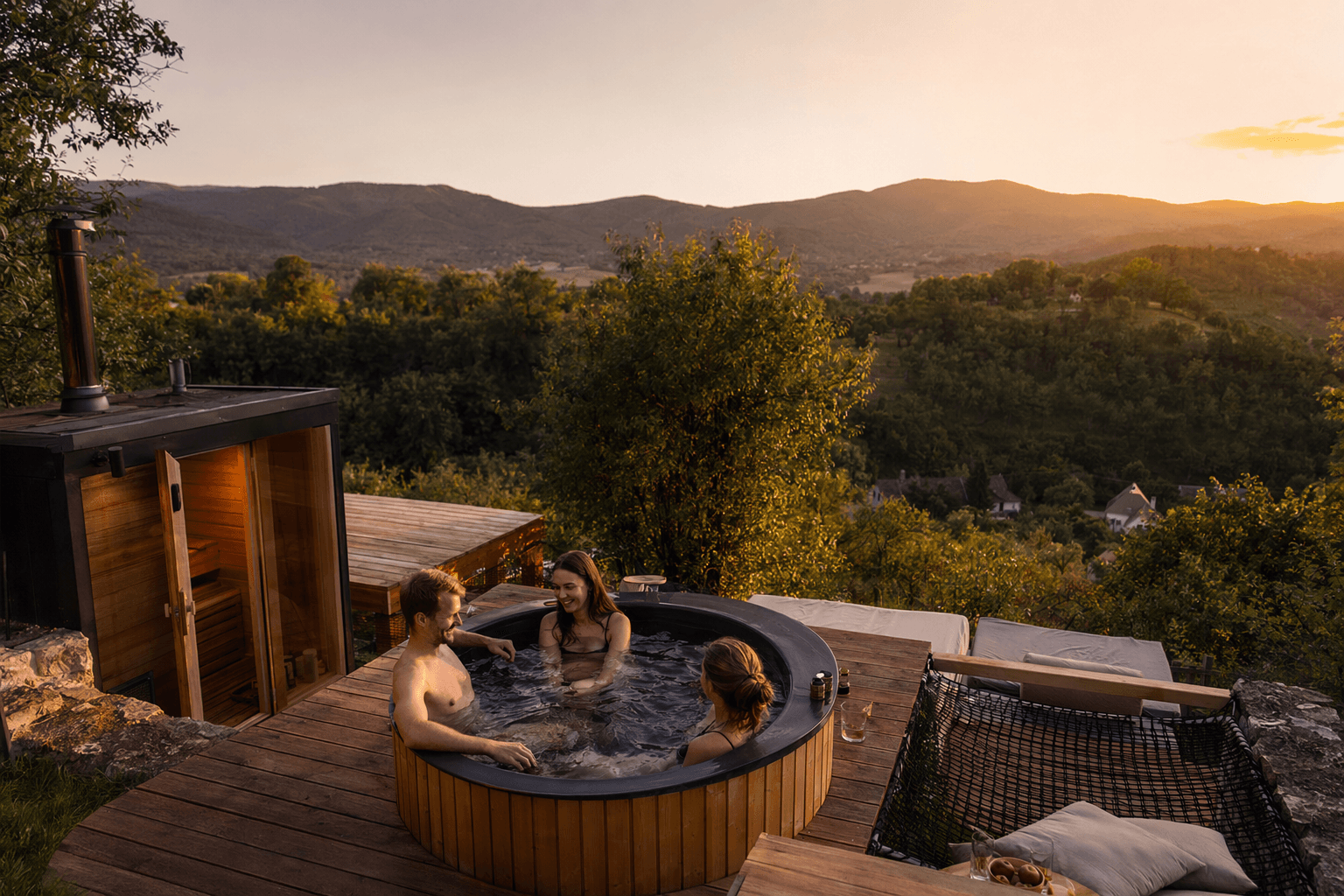
NestOff is the rare tiny house that sells the escape as much as the floor plan. Set in Romhány, in northern Hungary’s Cserhát hills, the 215-square-foot micro-retreat sits about an hour from Budapest and is already being used as a vacation rental, not a full-time residence. That location matters: the project is pitched as a hidden cabin retreat with a private sauna, wood-fired hot tub, panoramic terrace, and dog-friendly stays, which tells you exactly where the market is heading, toward tiny homes that perform like boutique hospitality.
What makes NestOff stand out in the tiny-house conversation is not just that it is small. It is that the design compresses a full short-stay experience into a footprint that would usually force builders to choose between comfort and restraint. Here, the choice has been to stack amenities carefully, move some of the work outdoors, and let the landscape do a lot of the emotional heavy lifting.
How the layout makes 215 square feet feel like a stay, not a squeeze
Inside, NestOff is finished in birch plywood and uses large windows to keep the cabin bright and visually open. The interior layout is straightforward but disciplined: a compact kitchen with a sink, microwave, induction cooktop, and cabinetry; a living area anchored by a large L-shaped sofa with built-in storage, plus a coffee table and wood-burning stove; a sleeping zone with a double bed and wall-mounted TV; and a bathroom with a walk-in shower, vanity sink, and flushing toilet. A secondary loft above the bathroom adds storage, which is the kind of practical move that keeps a micro-home from feeling cluttered.
That layout also reveals the real tradeoff behind the project. NestOff is not trying to be the smallest possible home, and it is not pretending to solve full-time family living in 20 square meters. Instead, it is organized to support short stays for one or two people, with sleeping, cooking, lounging, and bathing all handled in a way that feels deliberate rather than improvised. In tiny-house terms, that is the difference between a novelty build and a property designed for repeat bookings.
The wellness zone is the real selling point
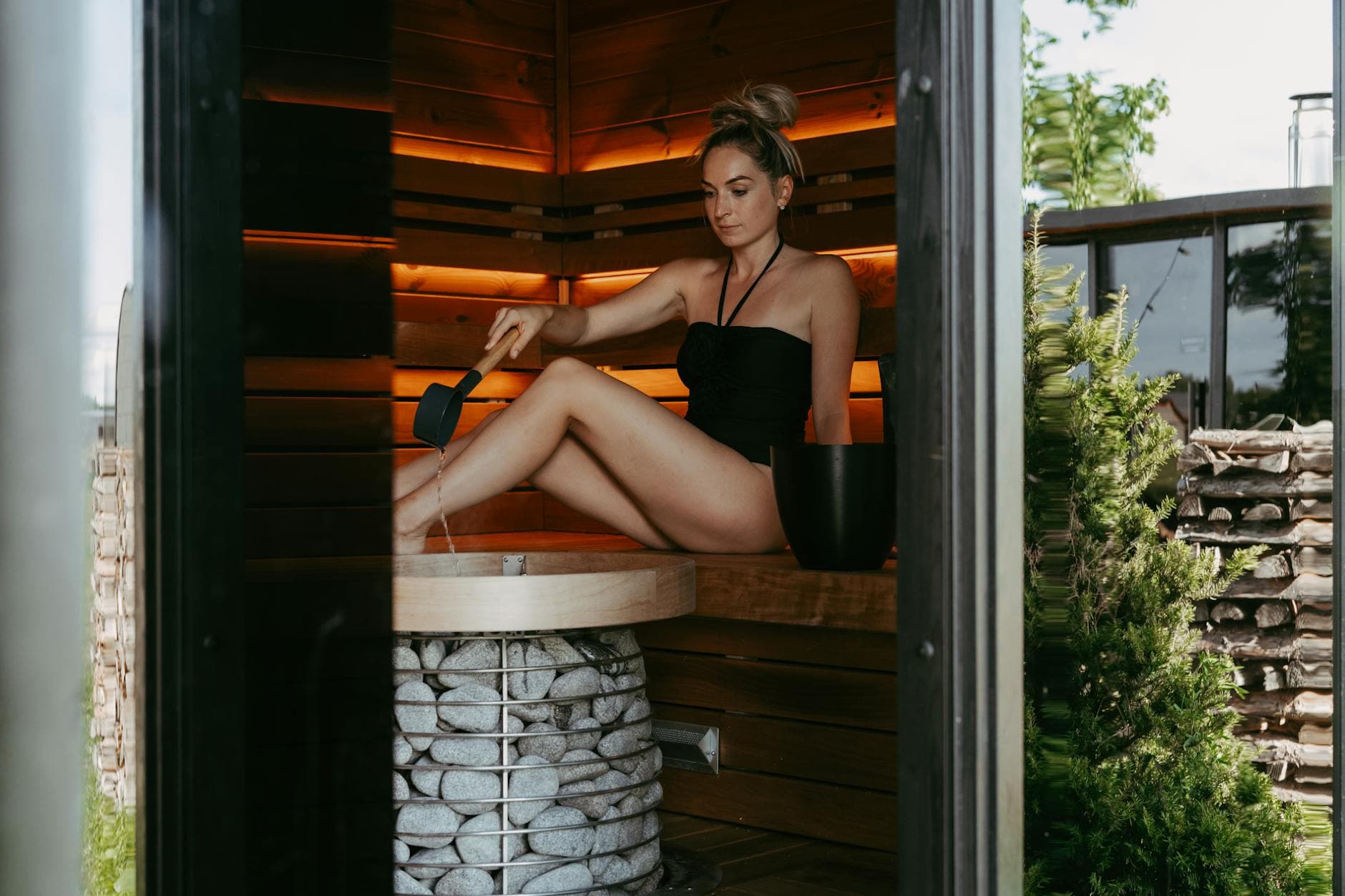
The biggest shift happens once you step outside. The terrace area includes a hot tub, a sauna, and a fire pit, turning the outdoor zone into the cabin’s true second living room. That is where the project becomes less about square footage and more about atmosphere, because the wellness amenities do the work that a larger interior normally would.
The sauna and the wood-fired hot tub both take a couple of hours to reach the right temperature, which is an important detail for anyone thinking about this model as a product rather than a photo op. These features are immersive, but they are also labor-intensive in a very specific way. They demand planning, fuel, and time, which makes them ideal for a planned overnight escape and less practical for a casual pop-in. That is part of why NestOff makes sense as a rental experience: guests arrive for the ritual, not just the room count.
For builders and buyers watching the tiny-house market, that matters. A sauna and hot tub can become the headline amenities, but they also introduce operational realities, from heating time to ongoing maintenance and utility planning. NestOff shows how those demands can be folded into a compact hospitality build when the property is designed around leisure instead of everyday domestic efficiency.
Why the foundation and fabrication method matter
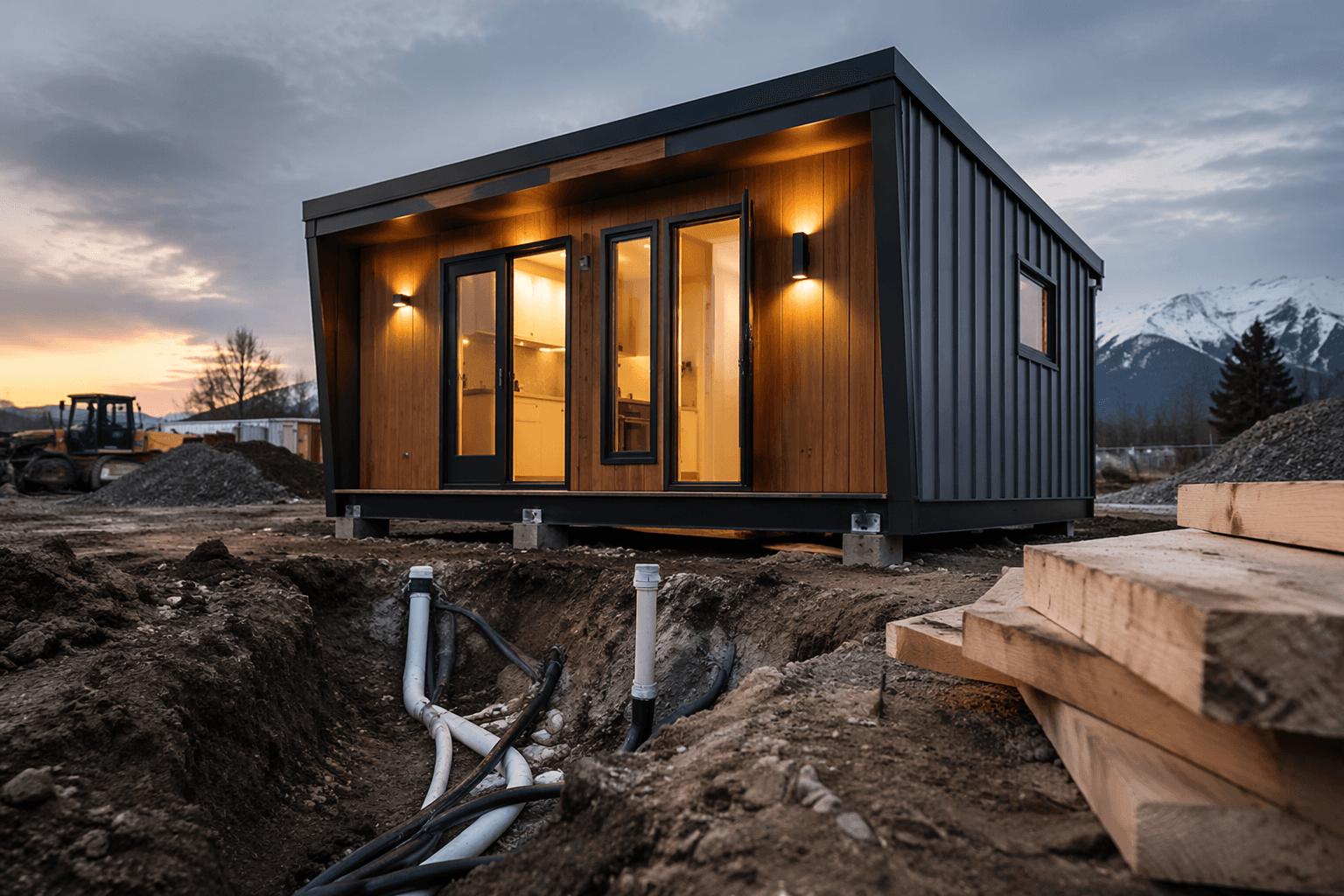
NestOff is not mounted on wheels. Instead, it sits on ground screw foundations, also described as screw piles, which allows the structure to be installed with less disruption to the land and removed relatively easily if needed. That reversibility is a major part of the project’s appeal in a rural setting where the goal is to avoid damaging the surrounding landscape.
The cabin was also partially prefabricated off-site to improve precision, shorten construction time, and reduce waste and site impact. That combination, off-site fabrication plus screw foundations, is one of the clearest indicators that this is not just an architectural mood board. It is a build method aimed at repeatability, lower site disturbance, and a cleaner installation process. In a market where small-home buyers increasingly care about whether a cabin can be placed lightly on the land, this is the kind of detail that turns curiosity into a usable model.
The project is associated with cabin fabricator Tajga-Depo, which worked with architect and interior designer Péter Kotek to realise the build. That pairing helps explain the balance here: the cabin has enough design discipline to feel polished, but it still carries the practical logic of a fabrication-led project.
A prototype for the next wave of short-stay tiny houses
Kotek has described NestOff as a prototype for a scalable network of future homes, and that is the detail that gives the project its broader meaning. It suggests the cabin is meant to be repeated, not just admired. In other words, the sauna-and-hot-tub formula is not a one-off flex for design magazines; it is a template being tested for hospitality use.
That is where NestOff becomes especially relevant for the tiny-house community. The project shows how wellness, tourism, and compact architecture are converging into a new kind of micro-retreat, one that packages a strong site, a restrained interior, and high-value outdoor amenities into a rentable experience. The cabin’s appeal is not that it proves tiny houses can do everything. It proves they can do one thing very well: turn a small footprint into a memorable destination.
In the Cserhát hills, that means a quiet cabin, a glowing stove, a wood-fired soak, and a sauna waiting outside the door. For the tiny-house market, it looks like a signal worth watching.
This article was produced by Prism’s automated news system from verified source data, official records, and press releases, then run through automated quality and moderation checks before publishing. The system is built and supervised by the people who set the standards it runs under. Read our full AI policy.
Did this article answer your question?