Tiny house stay in Tuscany captures an Italian countryside mood
Dolce Casa 1 turns a 155-square-foot stay into a Tuscan mood piece, pairing rustic warmth, garden views, and easy access to Arezzo and Florence.

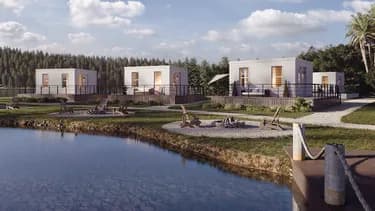
Some tiny homes are built to save space, but Dolce Casa 1 is built to sell a feeling. Set in Rigutino, in Tuscany’s province of Arezzo, the stay is presented as a countryside escape that belongs to the landscape rather than sitting on top of it. With a front garden, mountain views, and a position about 17 kilometers from Arezzo and roughly an hour from Florence, it uses location as part of the design.
A Tuscan mood in tiny-house form
Dolce Casa works because it treats the tiny-house format as a style vessel, not just a compact shell with a kitchen and bed squeezed inside. The story here is less about squeezing in amenities and more about whether a small stay can carry a recognizable Italian rural atmosphere without feeling forced.
That is where the comparisons matter. The mood leans toward rustic warmth, a welcoming tone, and the feeling of staying in a country home rather than a mini hotel. The most telling shorthand is the comparison to a nonna’s house: cozy, familiar, and full of understated comforts that make Italian countryside living feel authentic instead of staged.
The idea also fits the wider tiny-house conversation. A compact stay can translate different architectural languages, from Scandinavian cabins to French cottages and Austrian ski-chalet styles, and Dolce Casa shows how that flexibility can be used to create a regional fantasy without changing the basic format. In this case, the fantasy is not about excess. It is about ease, quiet, and the slow rhythm associated with the Italian countryside.
What the unit includes inside
Dolce Casa 1 and Dolce Casa 2 are both described on booking listings as holiday homes of about 155 square feet, or roughly 14.4 square meters, each with one bedroom and one bathroom. The setup is straightforward and self-contained, with a private entrance, kitchen, air conditioning, heating, free Wi-Fi, free parking, and mountain views.
That mix tells you a lot about how the stay is meant to function. It is still a tiny home, but it is not a stripped-back cabin experience. The essentials are present, and they are packaged in a way that supports a short getaway without sacrificing independence.
One listing also describes the property as family friendly, which broadens its appeal beyond couples looking for a romantic stopover. The full-place setup matters here too, because the experience depends on having a private, standalone stay that can feel like a small home base rather than shared lodging.
Why the setting does so much of the work
Tiny Away’s Tuscany page places Dolce Casa 1 in Rigutino, about 17 kilometers from Arezzo, on a 40-square-meter plot with a front garden area. It is also positioned as about an hour’s drive from Florence, which gives the stay a practical travel map as well as an emotional one.
The surrounding area is part of the pitch. Tiny Away points to access to thermal baths, natural parks, restaurants, historical sites, vineyards, and nearby destinations such as Florence, Arezzo, Assisi, Siena, and Cortona. That turns the tiny house into a launch point for a broader Tuscan itinerary instead of an isolated novelty stay.
For readers thinking in host or builder terms, this is the key lesson: the landscape is not just a backdrop. The front garden, the quiet rural setting, and the way the home is framed as part of the countryside all reinforce the feeling that the place is meant for slowing down, not just sleeping over.
The pricing shows how platform and timing change the story
The nightly rate for Dolce Casa 1 is listed at AUD 101 on Tiny Away’s Tuscany page. An Airbnb listing showed Dolce Casa 1 priced at $247 on October 12, 2024, which is a reminder that platform, timing, and channel can all move the number around.
That spread matters because it changes how the property is positioned. At one price point it can read as a relatively accessible weekend escape; at another, it lands more like a premium branded experience. The stay itself does not change, but the way travelers read value absolutely does.
What tiny-house hosts can actually borrow from this model
The Tuscan effect is not magic, and not every part of it is transferable. What can travel well is the design logic behind the stay: a compact but complete layout, a strong sense of arrival, a clear visual relationship to the outdoors, and a carefully chosen mood that runs through the whole experience.
- Use the site first. A front garden, open views, and a quiet approach do a lot of heavy lifting.
- Keep the interior coherent. Rustic warmth works here because the materials and tone support the countryside story.
- Make the stay feel standalone. A private entrance and full kitchen help it read as a real tiny home, not a dressed-up room.
- Tie the stay to nearby experiences. Thermal baths, parks, restaurants, and historic sites widen the value of the booking.
- Sell a mood only if the details support it. Tuscany is branding, but the garden, rural location, and welcoming interior make the branding believable.
What is less transferable is the place-specific halo. Tuscany, with its vineyards, historic towns, and deeply recognizable rural identity, brings a built-in story that a host elsewhere cannot simply copy by changing the décor. The lesson is not to imitate Tuscany. It is to understand how place, materials, and hospitality choices work together to make a tiny house feel larger than its footprint.
Tiny Away is using the stay as part of a bigger push
Dolce Casa also sits inside Tiny Away’s larger strategy. The company says it creates tiny house stays that inspire reconnection with nature, people, and yourself, and it markets its units as weekend getaways for city dwellers while aiming to disrupt tourism accommodation in an eco-friendly, sustainable, and highly efficient way.
That scale matters. Tiny Away says it manages almost 200 tiny houses in Australia and New Zealand, and it is expanding into Europe. Seen that way, Dolce Casa is not just a charming Tuscan listing. It is part of a broader international rollout that uses tiny houses to package place, pace, and identity into a format travelers can book.
In the end, Dolce Casa 1 succeeds because the tiny footprint is not the headline. The headline is the mood it carries, and in Tuscany that mood is strong enough to make 155 square feet feel like a full countryside escape.
This article was produced by Prism’s automated news system from verified source data, official records, and press releases, then run through automated quality and moderation checks before publishing. The system is built and supervised by the people who set the standards it runs under. Read our full AI policy.
Did this article answer your question?