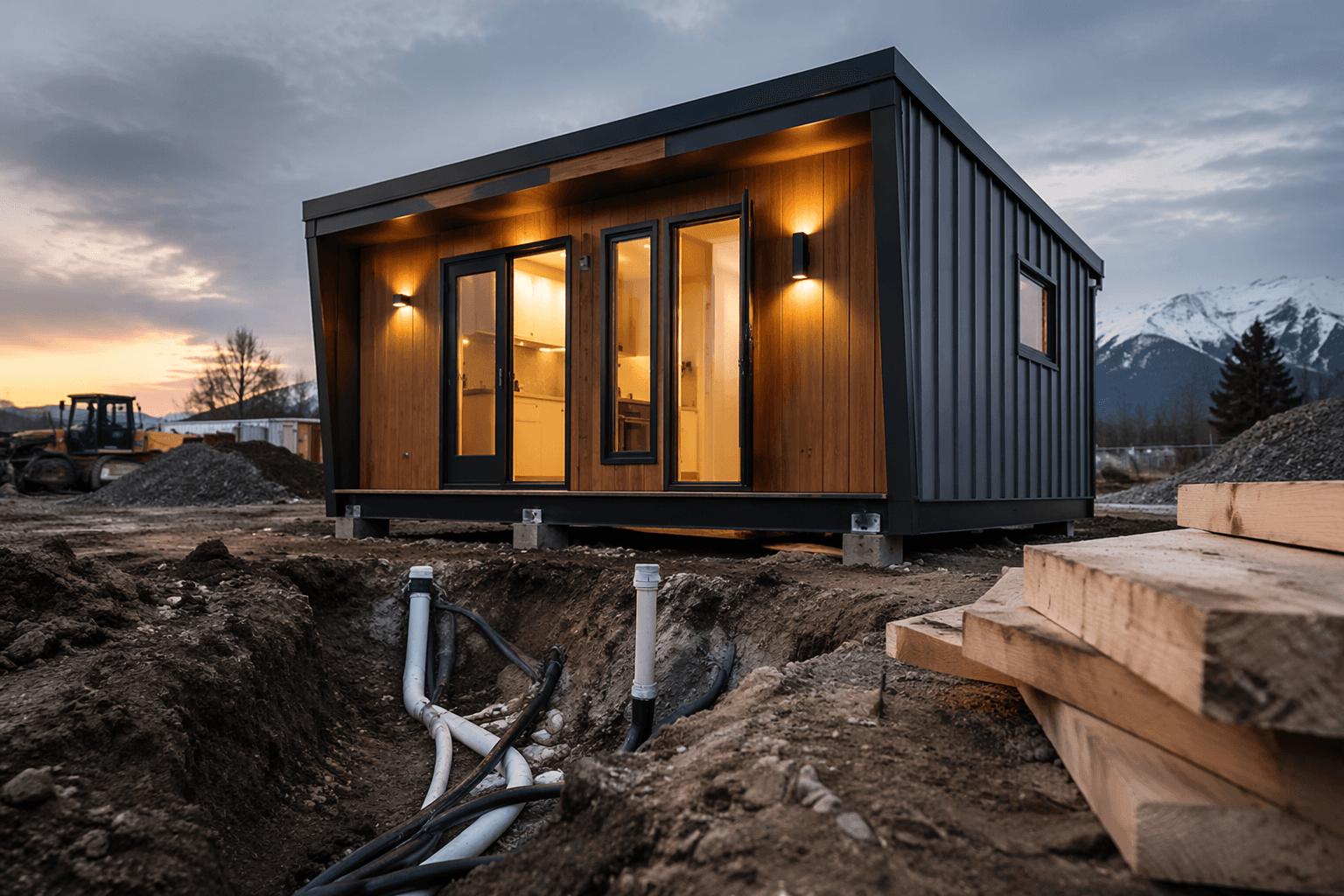
Unfold House arrives in a container, unfolds into a $80,000 home
An $80,000 tiny home ships in a 40-foot container and unfolds on site in about three hours, putting speed and portability at the center of the pitch.
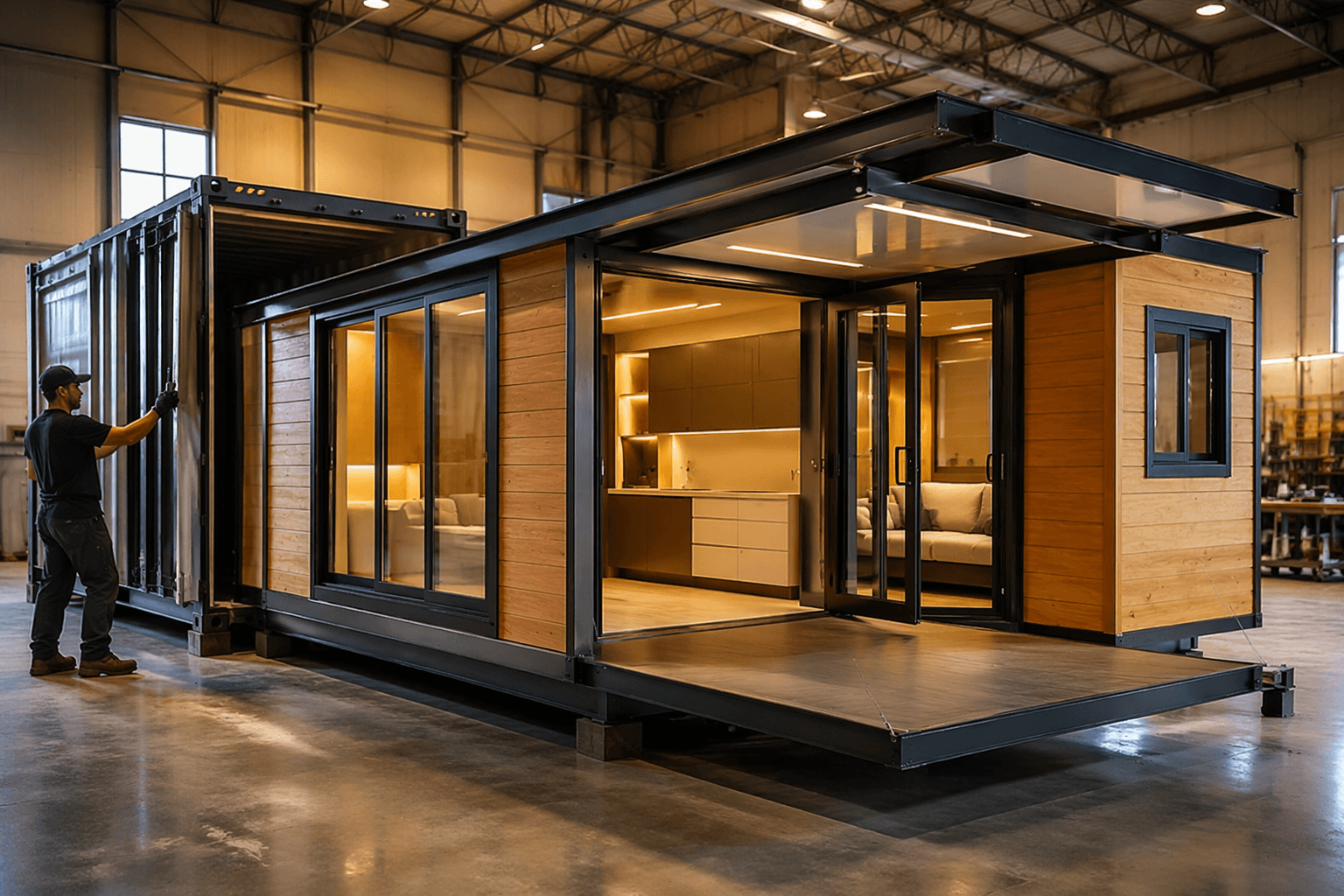
An $80,000 tiny home that arrives in a standard 40-foot container and opens on site in about three hours is testing whether folding construction can solve more than curiosity. Unfold House is using its Kingston, Oklahoma show unit, near Lake Texoma, to make the case that speed, shipping ease, and factory production can matter as much as square footage in the tiny-house market.
The company says its homes are manufactured in China and use patent-pending folding technology that lets crews set them up on site in under three hours. Unfold also says the process can cut usual shipping costs by as much as two-thirds, a major advantage over towable tiny houses that still need a truck, a wide route, and careful maneuvering at every move. Its “How it works” materials say the house is unfolded in a day, then needs about a week of touch-up work before it is ready for move-in.
The Kingston unit shows off the pitch in a very compact package. The one-bedroom Ori model is listed at 482 square feet of building footprint and 428 square feet of usable area, with exterior dimensions of 25 feet by 19 feet 2 inches by 13 feet 6 inches. The Airbnb listing describes it as a luxury folding modular home with 12-foot ceilings, a full kitchen, bathroom, premium finishes, and expansive windows. Li Cheng, Unfold House’s founder and chief executive, posted a time-lapse saying the first U.S. show home was completed in Kingston on December 5, 2025.
That timing matters because Unfold is not selling only a weekend stay. Cheng has framed the company around a housing deficit of 5 million homes, and the company says its modular designs can be connected and stacked for single-family or multi-family use. That puts it in the same conversation as the broader modular housing push, especially as the Urban Institute says home-building costs rose 32 percent from 2019 to 2022 and the National Low Income Housing Coalition estimates a 7.1 million shortage of affordable homes for extremely low-income renters.
The real test for buyers is whether folding into a container is a meaningful upgrade over conventional tiny-house builds. For people who want a unit that is easier to ship, faster to place, and more repeatable to deploy, Unfold’s model has a clear advantage. For anyone expecting a finished home straight out of the box, the week of touch-up work is the trade-off that comes with turning a container delivery into a livable house.
This article was produced by Prism’s automated news system from verified source data, official records, and press releases, then run through automated quality and moderation checks before publishing. The system is built and supervised by the people who set the standards it runs under. Read our full AI policy.
Did this article answer your question?