Vagabond Haven’s Lucia trades towability for a cottage-like tiny home feel
Lucia shows the tiny-house pivot from towability to permanence, giving buyers a 4 m-wide cottage feel instead of trailer-first compromises. It is a clear bet on comfort over road rules.

Vagabond Haven’s Lucia makes the trade-off in tiny living impossible to miss: it gives up towability so it can feel more like a small cottage than a trailer. With a 4 m-wide footprint, a loft bedroom, a home office, and generous glazing, it pushes the tiny-house conversation toward permanence, comfort, and everyday livability.
A cottage feel starts with the footprint
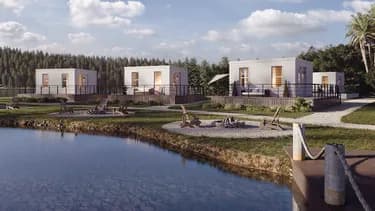
Lucia is a non-towable tiny house, and that choice shapes everything about it. At 7.5 m, or 24.6 ft, long and 4 m, or 13 ft, wide, it is noticeably broader than the 2.6 m, or 8.5 ft, width that defines many towable tiny homes. That extra width is not just a number on a spec sheet. It opens the door to a more residential layout, one that reads less like an RV compromise and more like a compact cabin or guest cottage.
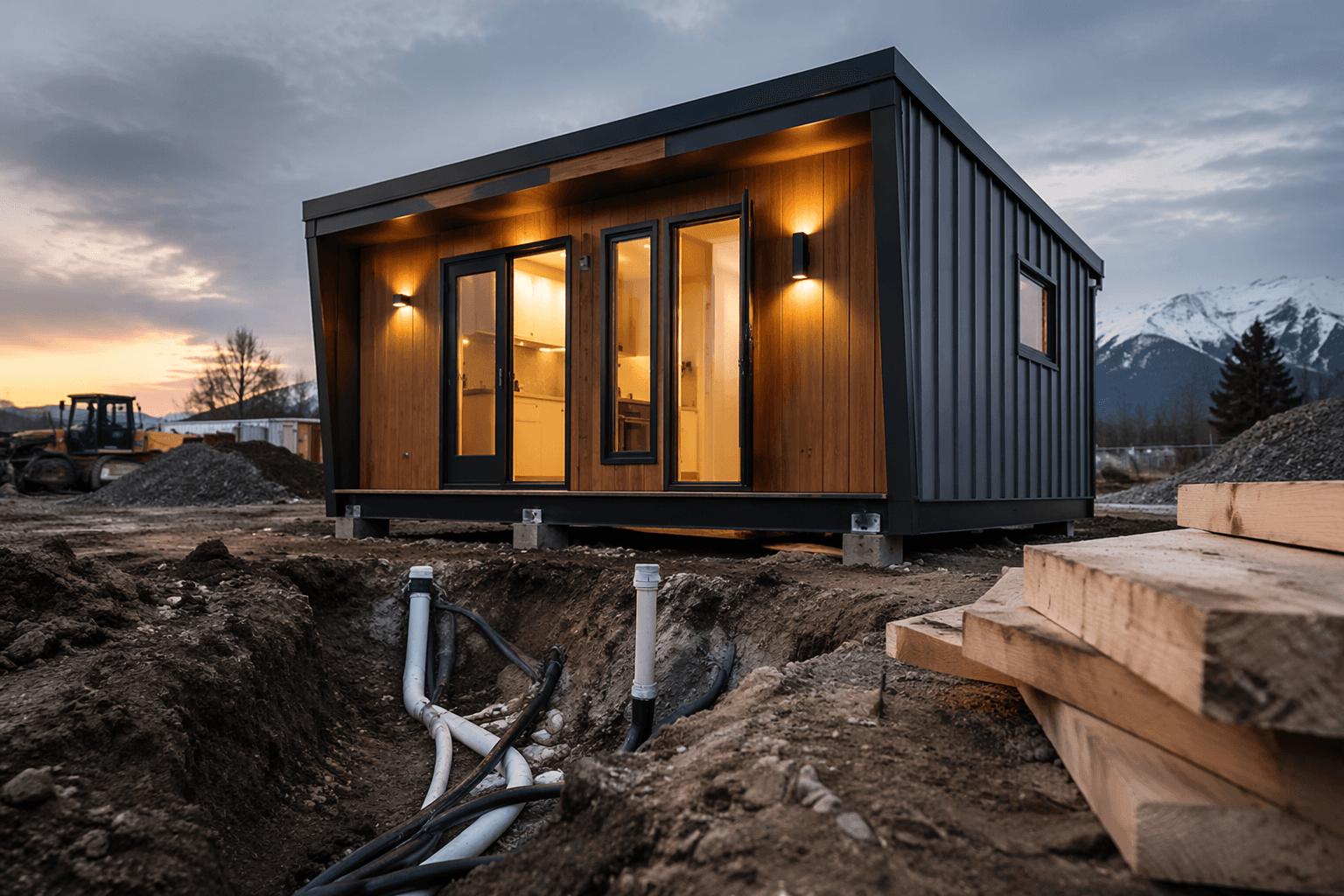
The exterior matches that intent. New Atlas describes Lucia as finished in spruce or engineered wood siding with a metal roof, a combination that reinforces the small-home, built-to-last look. Instead of leaning into the overtly mobile aesthetic of a house on a trailer, Lucia aims for a calmer and more settled presence. For buyers who want a tiny footprint without the feeling of living inside a scaled-down vehicle, that matters.
Space is the selling point, not just the size
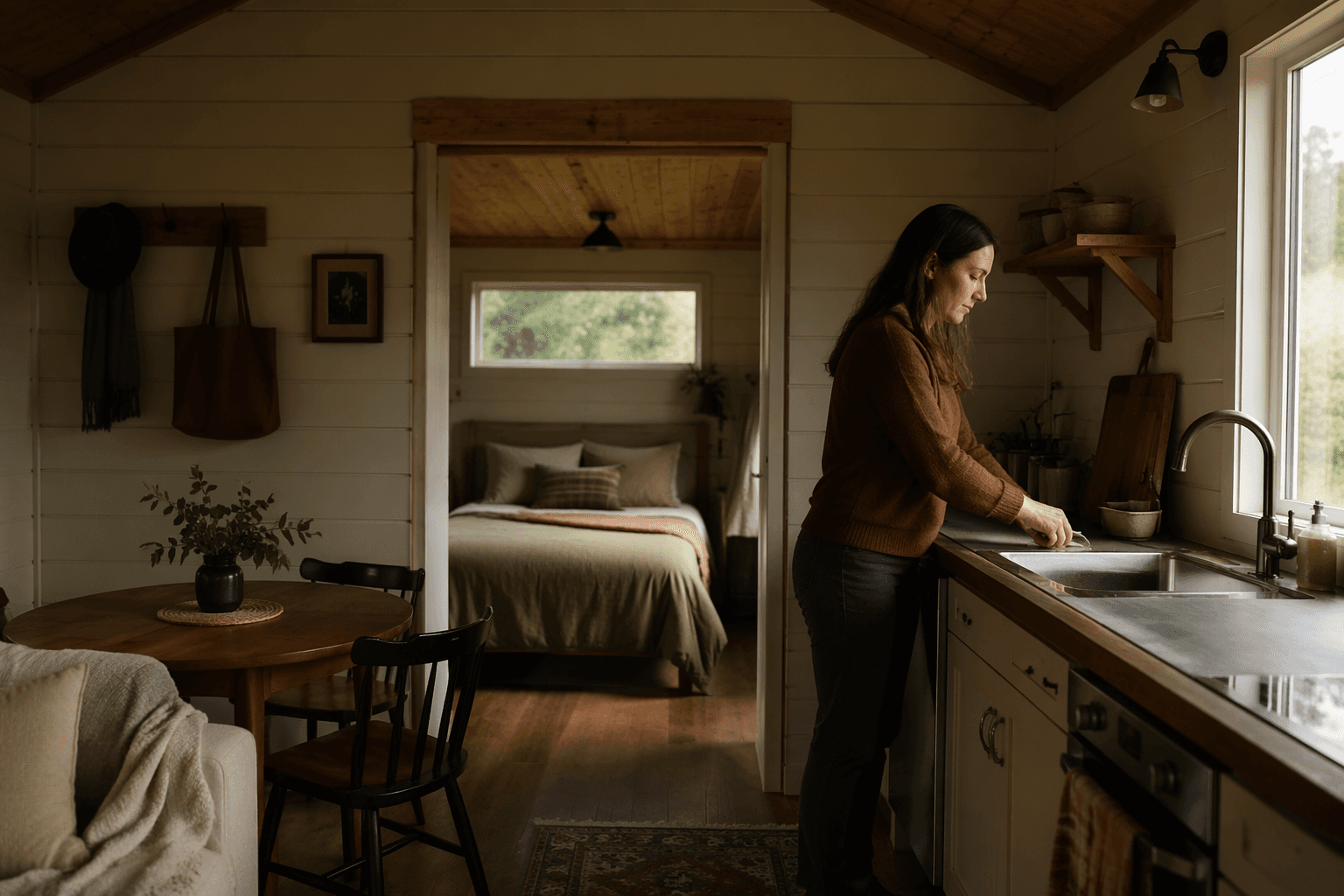
The wider body gives Lucia room to breathe in ways that most towable tiny houses cannot. New Atlas notes a home office, a loft bedroom, generous glazing, double glass doors, and a side entrance, all of which help the interior feel closer to a conventional small home. In tiny-house terms, that is a meaningful shift: it is not only about fitting in a bed and a kitchen, but about creating distinct zones that support work, rest, and daily routines.
That layout also changes how the house feels day to day. More glazing brings in light, the double doors create a stronger indoor-outdoor connection, and the side entrance makes the home feel less like a narrow corridor and more like a proper dwelling. These are the kinds of details tiny-house buyers usually have to sacrifice when a builder is designing around road width and towing constraints.
Vagabond Haven is designing for a different kind of buyer
Vagabond Haven says it designs and builds tiny houses in Scandinavia, and that its homes are intended for year-round living in Scandinavian conditions. That context helps explain why Lucia leans toward permanence. In colder, harsher climates, the appeal of a tiny house often depends less on mobility and more on insulation, comfort, and a layout that can hold up through all four seasons.
The company’s pricing page also makes the product strategy unusually clear. Its homes are grouped into mobile tiny houses on wheels, semi-mobile models delivered by truck, and non-mobile tiny houses that require a foundation. Lucia fits squarely into that last category. That separation shows how much the market has matured: builders are no longer treating every compact home as the same thing, and buyers are increasingly choosing between mobility, partial mobility, and a fixed site.
Off-grid use broadens the market even further
Lucia is also being framed as suited to off-grid use, which fits the growing role of tiny houses as vacation homes, rentals, and guest units. A related Vagabond Haven feature from December 2025 showed an off-grid tiny house equipped with solar panels, a gas water heater, a gas cooktop, a fridge, a composting toilet, and the option to add water tanks. That package points to a practical reality in the tiny-house world: self-sufficiency can be a bigger selling point than highway readiness.
That shift matters because it changes how people use tiny homes. A mobile build once implied travel, but many owners now want a compact home that can serve as a retreat for days or weeks at a time, or as a rental that earns income without needing to move. Lucia fits that pattern neatly. Its cottage-like presentation and more residential layout make it easier to imagine as a secluded getaway, a backyard-style guest house, or a foundation-set rental unit.
The tiny-house movement has outgrown the wheels-only mindset
Lucia arrives in a movement that has never been static. The tiny-house movement is commonly described as living simply in homes typically under 400 square feet, and those homes can be mobile or stationary. That distinction is crucial, because it means the category is no longer defined by one form factor. Instead, it is being shaped by what owners actually need from the space.
The legal framework has also evolved. IRC Appendix Q was adopted into the 2018 International Residential Code for tiny houses 400 square feet or less, which gave foundation-based tiny homes a clearer code pathway in some jurisdictions. At the same time, tiny houses on wheels are often treated differently in zoning and code discussions, which helps explain why builders like Vagabond Haven are splitting their offerings into mobile, semi-mobile, and non-mobile lines. When the rules diverge, the market tends to follow.
The history of the movement points in the same direction. Jay Shafer is widely credited with popularizing tiny houses on wheels in the early 2000s, helping make mobility a signature of the modern movement. But the idea of compact living goes back further still. Caroline Bartlett Crane designed an award-winning tiny home in 1924 in Kalamazoo, Michigan, showing that the appeal of small, efficient housing predates today’s trailer-based boom by many decades.
What Lucia really changes
Lucia is best understood as a statement about priorities. If a buyer wants the freedom to tow a home down the highway, this is not that house. If the goal is to gain a calmer interior, a wider and more usable layout, and a cottage-like presence that feels settled from the moment you step inside, Lucia makes a persuasive case.
That is the real trade-off in modern tiny living. Road legality and portability used to sit at the center of the conversation, but houses like Lucia show what owners gain when they stop treating those as the default goal: more room, more comfort, and a design that behaves like a permanent home instead of a compromise on wheels.
This article was produced by Prism’s automated news system from verified source data, official records, and press releases, then run through automated quality and moderation checks before publishing. The system is built and supervised by the people who set the standards it runs under. Read our full AI policy.
Did this article answer your question?