Wheelhome Dashaway ECT tiny trailer becomes a compact mini-home
Wheelhome's Dashaway ECT2 turns a 370kg trailer into a five-minute mini-home, but its real trick is quick off-grid escapes, not full-time vanlife.

A tiny trailer that stops feeling like a trailer
Wheelhome’s Dashaway ECT2 is the sort of compact towable that forces a double take. In travel mode it stays brutally small, but in five minutes it opens into a standing-height micro-home with proper cooking, power, refrigeration and enough shelter to make a short trip feel sorted instead of compromised.
The appeal is not just the trick of it. Wheelhome now offers the Dashaway in single-berth and double-berth forms, which makes the whole thing feel less like a novelty and more like a product line. The company has clearly decided this format can serve different kinds of trips, from solo overnights to two-person escapes, without pretending it is a full-size caravan.
What the Dashaway is built to do
This is a trailer for short, self-contained stays, not for weeklong road tours or full-time life on the move. Wheelhome pitches it for quick getaways, fishing, hunting and off-grid overnights, which is exactly where the packaging makes sense. It is light, low and fast to deploy, so the benefit is not interior sprawl, it is the ability to arrive, open up and start living almost immediately.
That focus shows up in the numbers. The Dashaway ECT2 starts from 370kg, costs from £19,750 including VAT, and comes with free UK mainland delivery. It is also meant to be towable by almost any modern car, which matters more here than headline-grabbing gimmicks. If the towing side is easy, the rest of the experience gets a lot less stressful.
The five-minute transformation, step by step
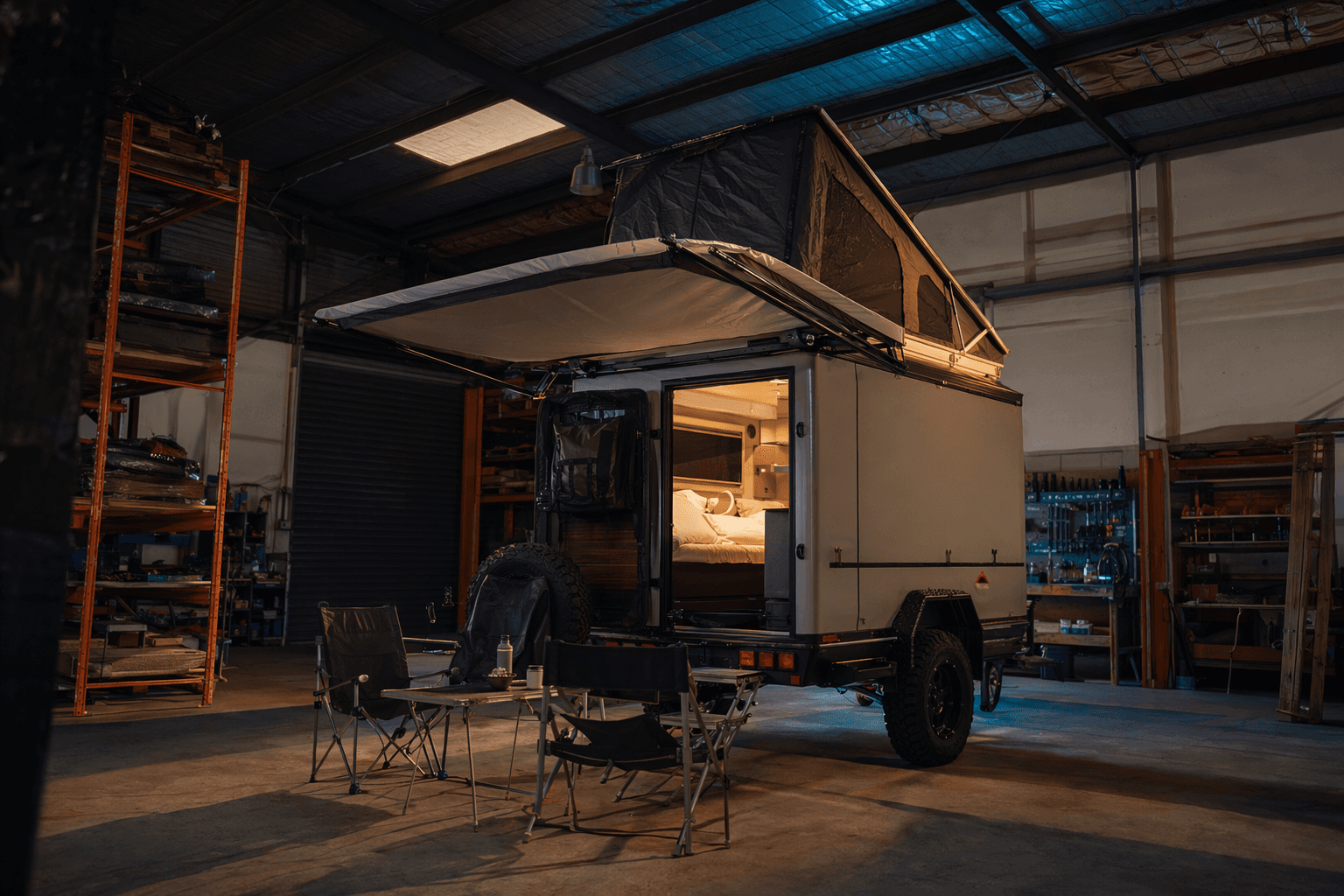
The best way to understand the Dashaway is to watch how quickly it changes state. In road form, it rides under 4 feet high, with a compact body measuring about 3.8 meters long, 1.6 meters wide and 1.1 meters high. Once parked, the high-lifting roof and gas-strut mechanism bring it up to around 6 feet of headroom, so you are not crawling around inside a shell.
In practical terms, the transformation works like this:
1. Park and unhitch the trailer.
2. Lift the roof, which rises on gas struts into its full standing-height position.
3. Open out the living space and, if needed, deploy the rear awning.
4. Set up the kitchen and switch to the onboard power package.
That sequence is the whole pitch in miniature. There is no elaborate folding choreography, no wrestling a canvas maze into submission, and no sense that setup will steal the first hour of the trip. Five minutes is the right number here because the design is clearly optimized around getting you from tow mode to usable shelter with as little fuss as possible.
Two layouts, two very different priorities
Wheelhome’s single-berth ECTS is the more self-contained little studio of the pair. It uses an integrated one-burner cooktop and microwave, plus a separate sink block, so the kitchen reads like a complete short-stay setup rather than a token galley. The company also says the Porta Potti remains accessible at all times, which is the kind of detail that separates a clever design from a frustrating one.
The two-berth ECT2 gives up some interior room in exchange for shared sleeping capacity, and it changes the cooking arrangement too. Instead of the built-in cooktop and microwave setup, it uses a portable induction cooker and fold-down shelf, which is a more flexible but slightly less built-in approach. That tradeoff makes sense for a couple, especially if one of you cares more about sleeping space and the other cares less about a fixed kitchen module.
The optional rear awning is where the two-berth version gets surprisingly persuasive. Wheelhome says it creates a 1.4m by 1.4m outdoor space, which is not huge, but it is enough to feel like a small porch, changing area or sheltered extension of the trailer. It can also serve as a private spot for the Porta Potti overnight, and that is the kind of real-world use case that tiny-living gear often forgets until the first rainy evening.
Off-grid hardware that does real work
The Dashaway is not leaning on cute looks alone. Wheelhome says the ECT2 includes a 200W solar panel, a lithium battery bank, a 3,000W inverter and a 12-litre compressor fridge, which together make the trailer feel like a proper electric micro-habitat. It is also marketed as gas-free, and Wheelhome claims 2-plus nights off-grid capability, which is the difference between an overnight toy and a compact escape pod.
That power setup is important because it shapes how the trailer gets used. A tiny camper can look clever and still be annoying if the fridge is weak, the battery is marginal or everything depends on campsite hookups. Here, the electrical package looks thought through for short autonomy rather than decorative sustainability, and that is exactly the right brief for this kind of rig.
Wheelhome also lists an optional motor mover with remote control, which is a quiet but telling convenience feature. On a trailer this small and light, that kind of aid matters less for brute force and more for precision, especially when you are squeezing into a tight pitch or adjusting the setup solo.
Why the classification gets messy, and why that is a good sign
One of the more interesting things about the Dashaway is how hard it is to sort cleanly into a familiar category. A March 2026 review from the Camping and Caravanning Club reportedly found the ECT2 hard to pin down between trailer tents, folding campers and folding caravans, and that sounds about right. It behaves like a tiny caravan in some ways, but it keeps the quick-deploy logic of a lighter, more agile camping solution.
That blur is part of the story Wheelhome is telling. The company has been hand-building campervans in Essex since 1986, and Stephen Wheeler’s travels in Iceland helped inspire the Dashaway range. The whole idea also traces back to a Tesla Model 3 roof-camper concept before it evolved into the towable ECT, which explains why the final product feels like an exercise in packaging as much as in camping comfort.
The verdict on the expandable bits
The expandable features are not just theater, but they are also not magic. The roof lift, the headroom, the rear awning and the quick setup all improve livability in a very specific way: they make short trips feel efficient, sheltered and self-sufficient. What they do not do is turn the Dashaway into a miniature house for long-stay touring, and that honesty is what makes the design interesting.
That is why the Dashaway ECT2 lands as a sharp little answer to a narrow problem. It is compact enough to disappear behind the tow vehicle, fast enough to open before the kettle cools, and clever enough to function like a self-contained habitat for a couple of nights. For tiny-living enthusiasts who care about engineering more than fantasy, that is the part that sticks.
This article was produced by Prism’s automated news system from verified source data, official records, and press releases, then run through automated quality and moderation checks before publishing. The system is built and supervised by the people who set the standards it runs under. Read our full AI policy.
Did this article answer your question?