Windsor councillor eyes indoor tiny-home village for homeless residents
Windsor is weighing an indoor tiny-home village model after a Minneapolis tour showed 100 secure units, wraparound care and 343 moves to permanent housing.

Windsor’s next homelessness response may not look like a shelter at all. Ward 3 councillor Renaldo Agostino and Mayor Drew Dilkens toured Avivo Village in Minneapolis in April, and Agostino came away pushing a model built around 100 secure tiny homes inside one larger building, not a scattered outdoor encampment or a standard dorm-style facility.
Avivo Village, at 1251 N Washington Avenue in Minneapolis’ North Loop, is an indoor community of 100 private dwellings run as a low-barrier shelter under a Housing First and harm-reduction model. Avivo says the village opened in December 2020 and, as of April 1, 2026, had served 851 people, moved 343 into safe permanent housing and reversed 255 overdoses. It also reports 21 babies born to residents, 45 veterans served and 51 pets living there with cats and dogs allowed on site. Staff and security are present 24/7, and residents stay an average of about four and a half months while they are helped toward housing.
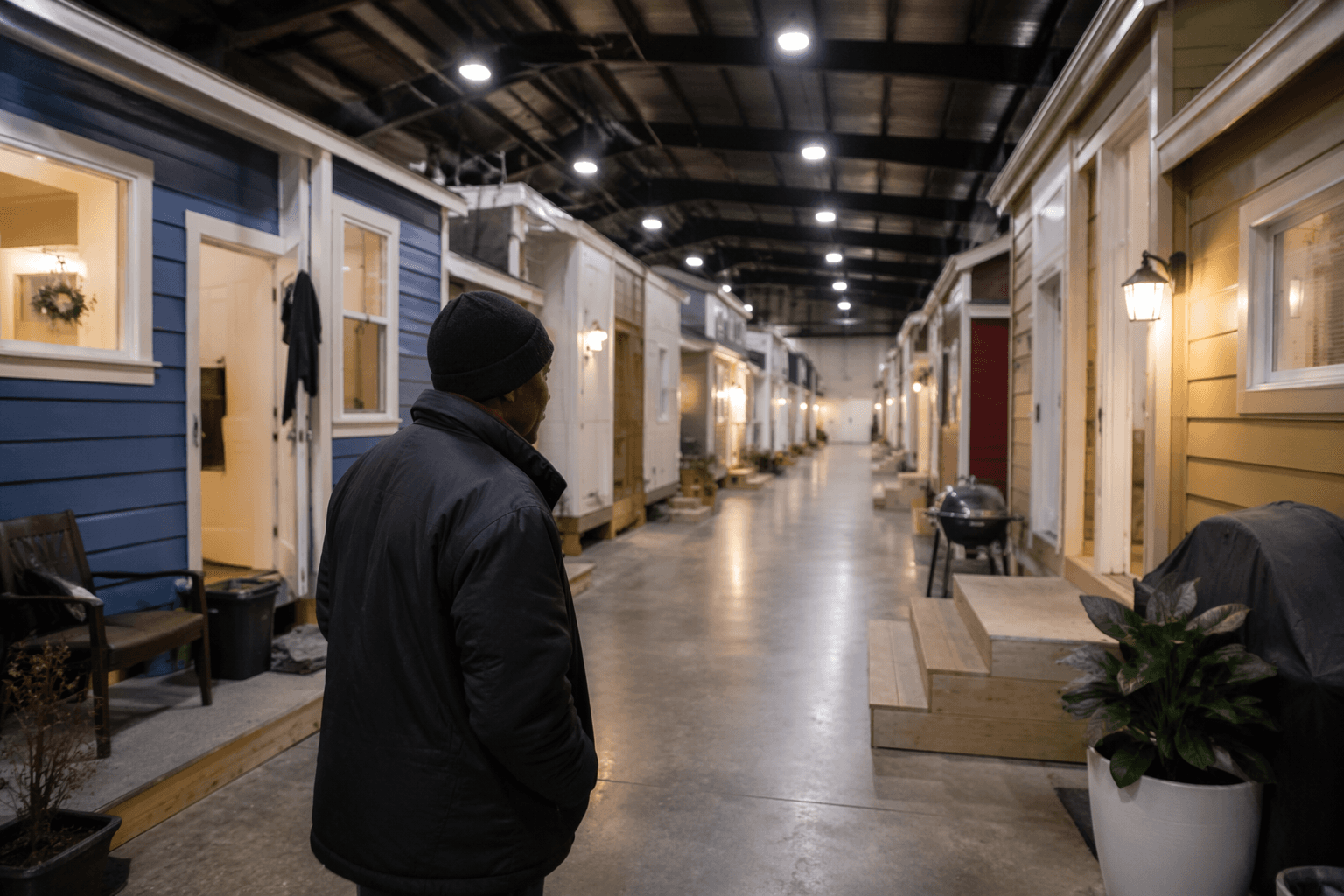
That mix of privacy, sobriety support and year-round shelter is what makes the Minneapolis project stand apart from a conventional emergency shelter. Agostino has described it as more like a neighborhood, a place where people can lay their heads down, think about what comes next and get the addiction and mental-health support that helps stability stick. For a cold-weather city, the indoor format also solves a basic problem outdoor villages do not: people are not trying to survive winter in a tent while waiting for services to open.
The replication test for Windsor is blunt. The city would need a site large enough to hold a village under one roof, plus a zoning and operating plan that can support tiny-home-style units, round-the-clock staffing and wraparound care. Funding would be the other hurdle. Minneapolis initially invested $3.6 million in Avivo Village and later considered another $1.2 million for 2023, underscoring that this is a capital-heavy model, not a cheap patch on the shelter system.

Dilkens has tied the idea to Windsor’s broader downtown push, including the old Windsor Arena as a possible site for people facing homelessness and addiction. In his downtown plan, he argues Windsor is facing increased challenges around mental health, addictions and homelessness, and that municipalities cannot handle those pressures alone. That is the real appeal of the Minneapolis precedent: not a trendy tiny-home gimmick, but a tested indoor village that combines privacy, safety and year-round livability in one building.
This article was produced by Prism’s automated news system from verified source data, official records, and press releases, then run through automated quality and moderation checks before publishing. The system is built and supervised by the people who set the standards it runs under. Read our full AI policy.
Did this article answer your question?