Yellow Rock Views tiny home offers scenic comfort in Hunter Valley
Yellow Rock Views turns a compact tiny home into a premium Hunter Valley escape by leaning on its 12-acre setting and space-smart layout.

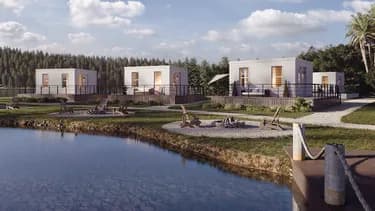
Yellow Rock Views shows how a tiny home can feel far bigger than its footprint when the site does half the work. Set on a 12-acre secluded property in Broke-Fordwich, it pairs a simple, efficient layout with bushland, open valleys, mountain ranges, and native wildlife, all just 157 km north of Sydney and 13 minutes from Pokolbin.
Why the setting does so much of the heavy lifting
This is not the kind of tiny house that tries to impress by size alone. Its appeal starts with where it sits, because the property gives guests the feeling of being tucked away without pushing them into a hard-to-reach off-grid experience. That balance matters in the Hunter Valley, where a stay can be both restful and practical, especially when the home is close enough to wine country and regional events to remain easy to use as a short break.
The location also changes how the house is experienced. Instead of reading as a compact novelty, Yellow Rock Views feels like a private retreat with scenery built into the stay itself. That is the key to its premium feel: the home is modest, but the land around it stretches the experience.
A compact floor plan that still feels complete
Inside, the design is stripped back but effective. The ground level is open-plan and holds the lounge, a compact kitchen, and the bathroom, while the loft serves as the main bedroom. That arrangement keeps the interior straightforward, but it also preserves the feeling that everything has a purpose, which is exactly what a good tiny house should do.
The home is presented as ideal for two guests, though it can accommodate three. Just as important, it is described as feeling like a real home rather than a mini hotel, and that distinction comes from the way the rooms work together. The layout does not chase gimmicks, it makes a small footprint behave like a complete stay.

A hybrid staircase, closer to a ladder than a full staircase, connects the loft to the main level. It is space-efficient and sturdy enough to be practical, and the trade-off pays off by freeing up room for a small breakfast bar tucked behind it. In a tiny house, that kind of move matters because it turns a necessary circulation element into usable living space.
The comfort details that make the stay feel polished
Yellow Rock Views lands its comfort through a mix of layout and standard features rather than excess. Booking.com lists the property at 4 Hughes Street, Broke, with one bedroom and one bathroom, plus air-conditioning, a private entrance, a fully equipped kitchen, patio access, and a barbecue area. Those are the kinds of practical details that can make a compact rental feel far more polished than its size suggests.
The public feedback supports that impression. The property has 52 reviews and a score of 8.4, which Booking.com rates as Very Good, and guests have singled out the stargazing, peaceful setting, cleanliness, and convenience for visiting wineries and Hunter Valley events. That combination tells the real story: the tiny home is not selling a design fantasy, it is delivering a stay that works in daily use.
How this fits Tiny Away’s wider model
Yellow Rock Views also makes more sense when you look at Tiny Away’s broader approach. The company says it started in 2017 and was founded in Australia in 2018, with a model built around placing fully furnished tiny homes on scenic private land so city dwellers can get a nature-based escape. The point is not just to build small, it is to put the right small home in the right landscape.
Trade coverage says Tiny Away landowners can earn up to 45% of rental revenue in its profit-sharing model, which makes the setup relevant beyond tourism appeal. For rural property owners, that turns a scenic parcel into a revenue stream without requiring a full-scale resort build. NSW planning guidance supports the same direction, since agritourism rules explicitly allow farm stay accommodation in buildings or moveable dwellings, including tents and caravans, on farms.

That policy backdrop helps explain why this kind of stay keeps spreading. It is not simply a trend in cute accommodation. It is a workable model for landowners who want to add income while keeping the property rooted in farm and landscape use.
Why Broke-Fordwich gives the tiny home an edge
The Hunter Valley already has the ingredients that make a tiny house stay feel elevated, and Broke-Fordwich sharpens them. Visit NSW describes Broke as part of Australia’s oldest wine-making region, with boutique wineries, fine dining, wilderness, and Aboriginal rock art. Singleton Council and regional tourism material also position Broke-Fordwich as a major couples-getaway destination and a 2026 NSW Top Tourism Town.
That matters because tiny houses are often judged as much by what is outside the door as what is inside it. In this case, the surroundings do a lot of the branding work. Guests can treat Yellow Rock Views as a base for wineries, events, and scenic drives, or simply stay put and let the property itself carry the experience.
The broader regional picture points the same way. Visit NSW has been highlighting unique accommodation across the Hunter Valley, including farmstays and eco-luxe cabins, and Yellow Rock Views fits neatly into that shift toward small-scale, experience-led stays. The house does not need to be large when the destination already supplies the atmosphere.
Yellow Rock Views proves the strongest tiny-house stays are not always the ones that pack in the most features. Here, the compact floor plan is only half the formula, because the 12-acre setting, the Broke-Fordwich location, and the Hunter Valley backdrop give the home the sense of comfort and escape that makes a small build feel premium.
This article was produced by Prism’s automated news system from verified source data, official records, and press releases, then run through automated quality and moderation checks before publishing. The system is built and supervised by the people who set the standards it runs under. Read our full AI policy.
Did this article answer your question?