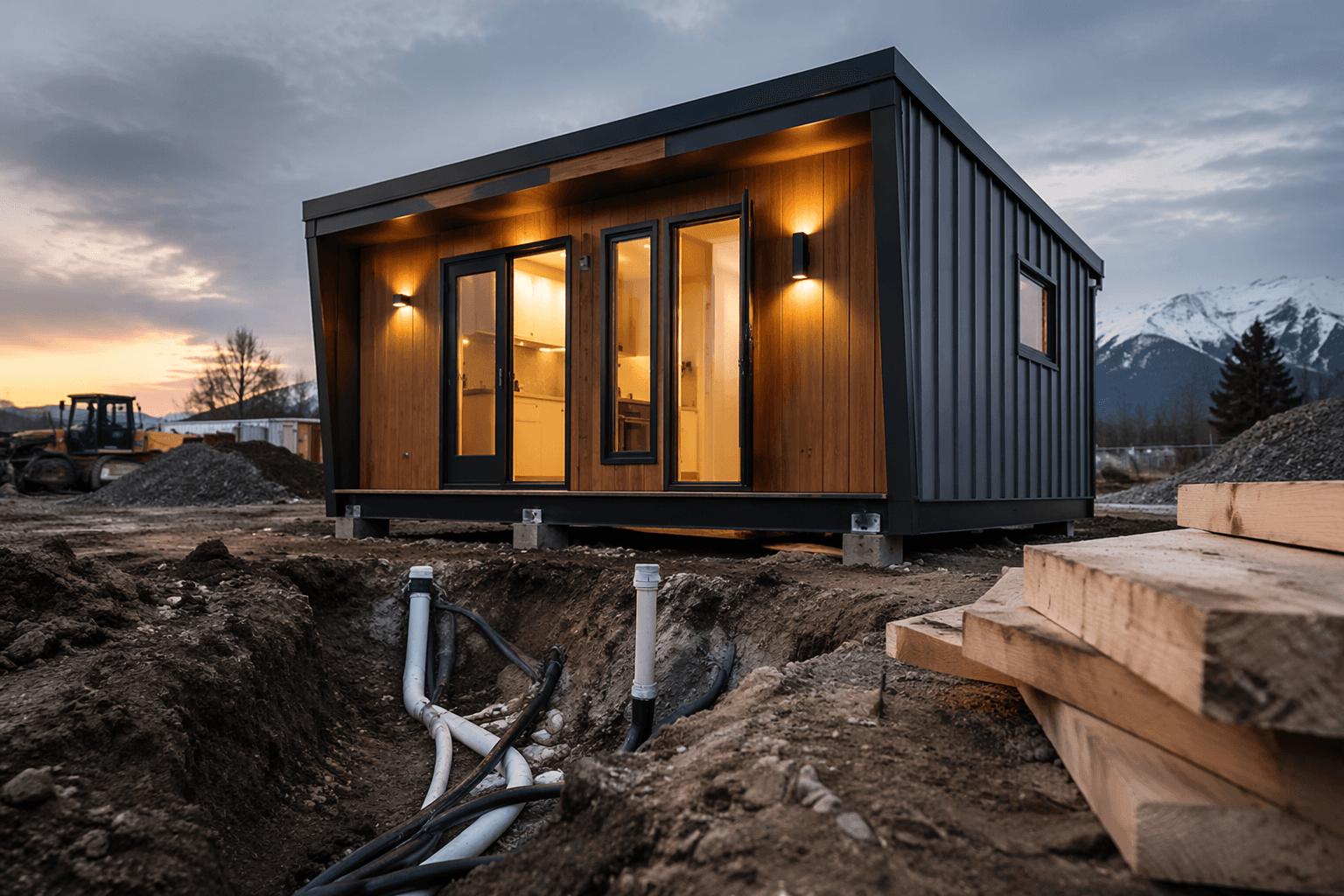
Your Complete Guide to Financing a Tiny Home on Any Budget
Tiny homes cost $30K-$70K on average, yet most can't get a traditional mortgage. Here's every real financing path, with the numbers that actually matter.
Financing a tiny home is genuinely different from financing a traditional house, and the sooner you understand why, the faster you can move toward actually owning one. Most tiny houses don't qualify for traditional mortgages. As Mint Tiny House explains it directly: "tiny houses are considered personal property and not real estate when they are not permanently affixed to land." That single fact eliminates the most familiar financing tool most buyers know, which is why you need a clear picture of what actually works.
The good news, as Rocket Mortgage puts it plainly: tiny-home financing is possible. It just requires knowing which path fits your specific build, your credit profile, and your plans for the home once you have it.
What a tiny home actually costs
Before you can match a financing product to your needs, you need a realistic number. According to home services data cited by NerdWallet, tiny homes cost from $30,000 to $70,000 on average. That range matters for financing because many traditional lenders set minimum loan amounts that can start at $50,000, meaning a $35,000 build might not even qualify for a conventional mortgage product on loan-size grounds alone, completely separate from the personal-property classification issue. Add to that NerdWallet's note that a lender may require your tiny home to have a foundation on land you already own, and you can see why the standard mortgage route closes off quickly for a lot of buyers.
Personal loans: the most flexible entry point
For many buyers, especially those purchasing a THOW (tiny home on wheels) or a build that won't be permanently affixed, a personal loan from an online lender, bank, or credit union is the most straightforward path. These loans are unsecured, meaning they're approved based on your credit score and income rather than collateral. The trade-off is rate: NerdWallet puts personal loan APRs at 6% to 36%, with borrowers carrying credit scores of 720 and above qualifying for rates at the low end of that range. Rocket Mortgage flags the other side of that equation honestly: personal loans can give you quick access to funds, but they often come with shorter terms and higher interest rates compared to secured options. If your credit is strong and your build cost sits in the lower end of the $30,000-$70,000 range, a personal loan can get you into your home quickly without requiring land ownership or a permanent foundation.
RV loans: a solid option with a certification catch
If your tiny home on wheels is built to the right standard, an RV loan can be one of the more attractive financing options available, often carrying lower interest rates and longer terms than a personal loan. The hard requirement: the home must be certified by the Recreational Vehicle Industry Association (RVIA). Without that certification, the loan simply isn't available. Rocket Mortgage also notes that an RV inspection is required before securing the financing. If you're shopping for a THOW and RV loan rates appeal to you, confirm RVIA certification with your builder before you get attached to a specific model.
Builder and construction loans: longer terms, bigger down payments
Many tiny home builders have established relationships with lenders who offer financing specifically for their builds. According to NerdWallet, these loans can be either unsecured (based primarily on your credit score) or secured by the tiny house itself. The upside is real: starting rates typically come in under 10%, and loan terms can run 10 to 20 years or longer, which produces more manageable monthly payments than a short-term personal loan. The catch is the down payment requirement, which can run 20% or more of the purchase price. If the loan is secured, defaulting means you can lose the tiny home. Rocket Mortgage advises carefully reviewing the rates and terms on builder financing before committing, since the convenience of one-stop financing can sometimes come at a cost. Tru Form Tiny, for example, works with buyers through a defined financing journey before beginning the actual build process.
HELOCs and home equity loans: the strongest rates for existing homeowners
If you already own a home with equity, this is likely your best financing route. Evergreen Tiny Homes states that "the most common type of financing for a Tiny Home project right now is a Home Equity Line Of Credit (HELOC)," with renovation loans and personal loans rounding out the available options they see their buyers use. NerdWallet reinforces the appeal: home equity loans typically carry low rates and repayment terms of more than 10 years, which keeps monthly payments low. This path is particularly well-suited for buyers adding a tiny home as an accessory dwelling unit (ADU) on their existing property. The risk is significant and worth stating clearly: if you miss payments on a home equity loan, you can lose your primary home, not just the tiny home you're building.
Paying cash and using a co-signer
Cash purchases deserve serious consideration, particularly if you're buying a tiny home as a vacation rental. Mint Tiny House makes the investment case directly: paying cash means no mortgage and, for rental properties, maximum cash flow from day one. There's no debt service eating into your rental income, and no lender requiring you to maintain certain insurance coverages or use the home in a particular way.
For buyers who don't have cash on hand, don't yet qualify for a loan, or are working with a credit score that won't yield favorable terms, a co-signer is a viable path. As Mint Tiny House explains it: a lender will take the risk and lend to you, but if you can't make your payments, the co-signer becomes responsible. It's worth having a frank conversation about that liability with anyone you ask to co-sign.
The hidden costs you need to budget for
The purchase price of your tiny home is not the full number. NerdWallet outlines the additional costs that catch buyers off guard:
- Purchasing land or leasing a lot (land is never included in the tiny-home price, as Rocket Mortgage specifically calls out)
- Parking fees at campgrounds and fuel costs if you take a THOW on the road
- RV insurance, construction insurance, or homeowner's insurance depending on your setup
- Property taxes and permit fees
These aren't optional line items. They're real costs that will affect whether your chosen financing structure is actually sustainable month to month.
Placement, zoning, and what your lender may require
Where you place your tiny home is as important as how you pay for it. Evergreen Tiny Homes, which has over 25 years of home-building experience and deep subcontractor relationships in Northwest Arkansas, notes that each city and HOA sets its own requirements covering setback distances, maximum ADU size based on local ordinance, and specific build standards. Getting those details wrong can delay or derail both your build and your financing.
On the lender side, expect scrutiny around whether the home is on a permanent foundation, whether you own the land, and how the home is classified. Rocket Mortgage advises factoring in your home's size, whether it's on a movable or permanent foundation, and whether it's manufactured or custom-built when evaluating which financing route makes the most sense.
Choosing the right path
The financing route that works for you depends on four things: your credit profile, whether you own land, how your tiny home will be classified (real property vs. personal property), and what you plan to do with it. A buyer with a 740 credit score adding an ADU to a property they own has excellent access to HELOC financing at favorable rates. A first-time buyer purchasing a THOW with no existing equity will likely be working with a personal loan or builder financing, and should prioritize getting their credit score as close to 720 as possible before applying.
The path has real checkpoints, as Tru Form Tiny frames it, and some of them require patience. But "a bit of diligence and research can go a long way towards getting you ready to dream big and live tiny.
This article was produced by Prism’s automated news system from verified source data, official records, and press releases, then run through automated quality and moderation checks before publishing. The system is built and supervised by the people who set the standards it runs under. Read our full AI policy.
Did this article answer your question?