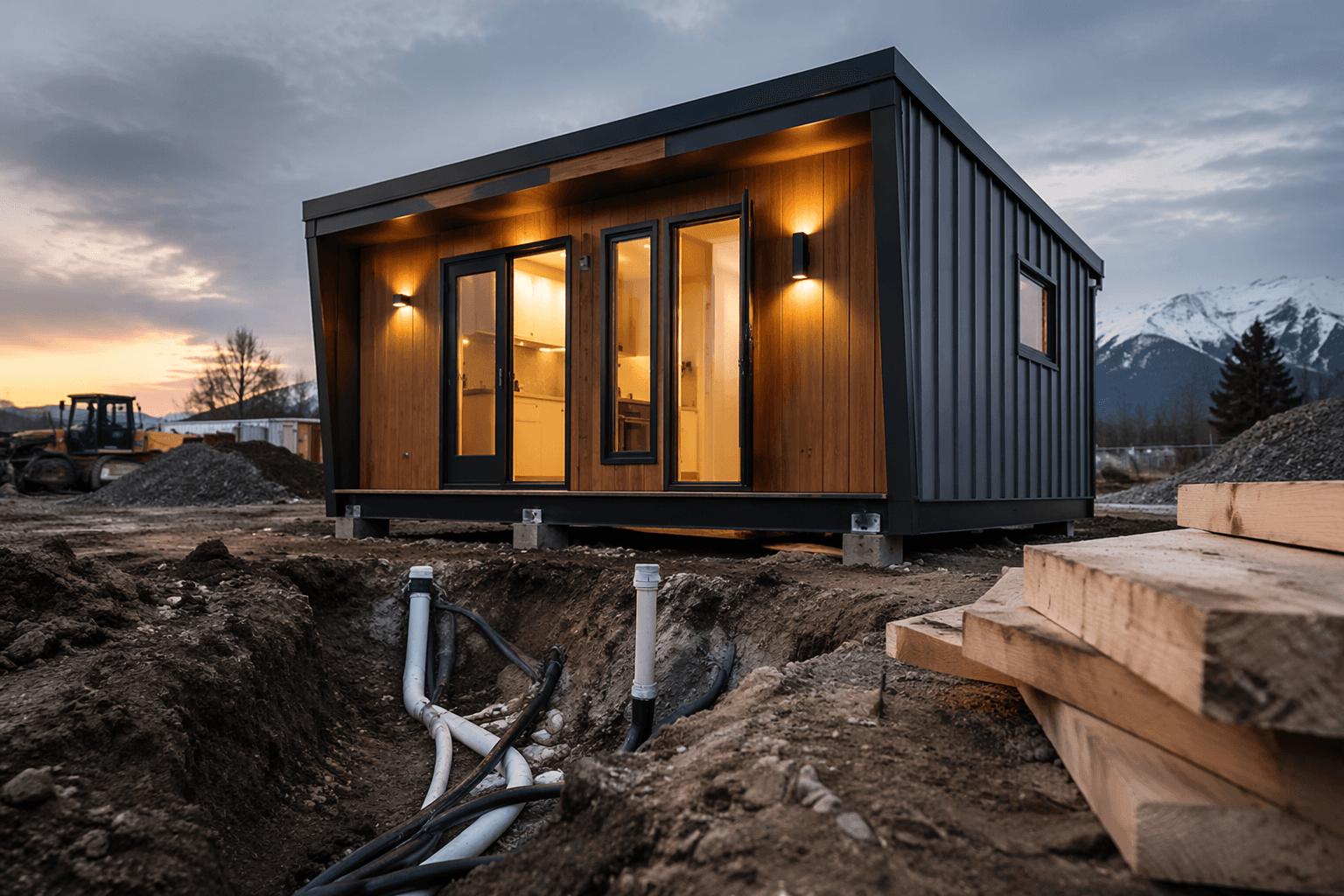
Zoning Laws, Not Technology, Block Rapid Deployment of Prefab Tiny Homes
A two-day Lincoln log build went viral and exposed the real barrier to prefab tiny homes: it's never been the technology.
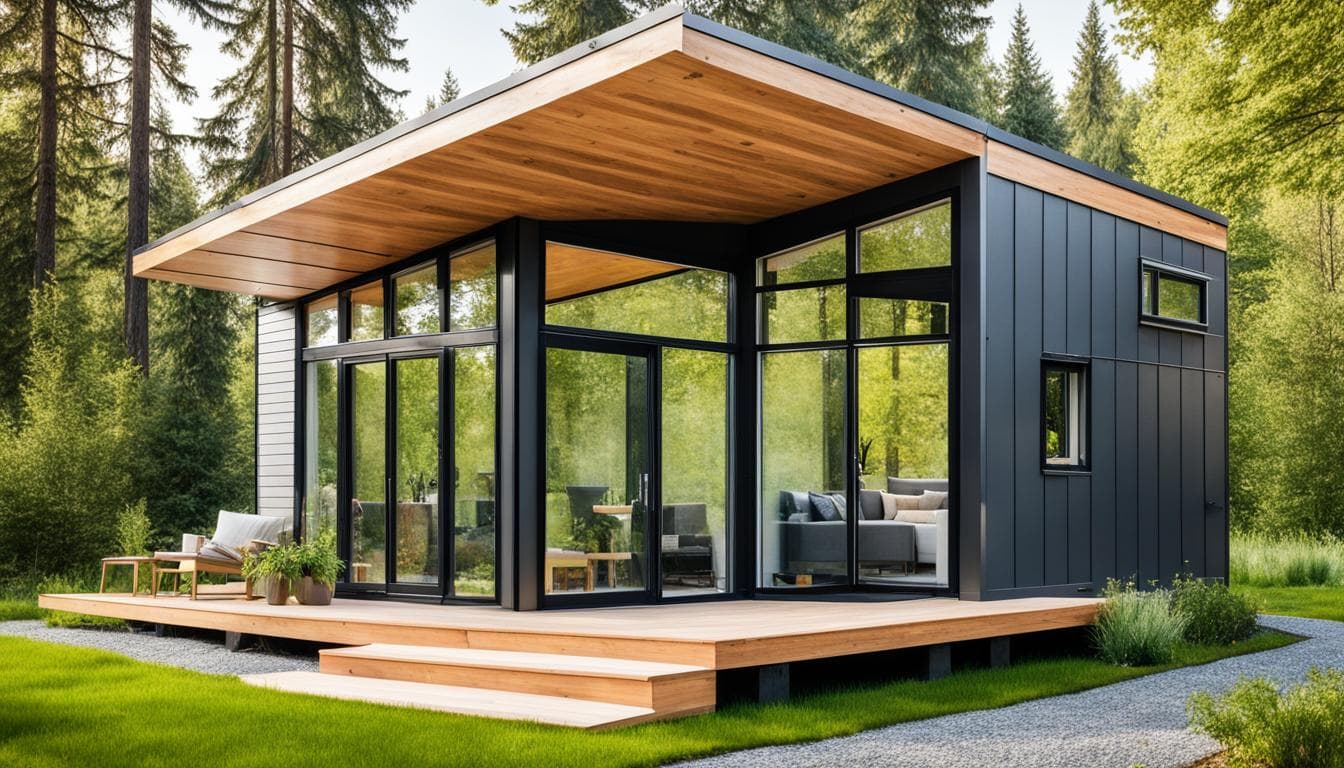
A house built in two days. Not a concept render, not a architect's fever dream — an actual structure, assembled using a method that evokes the Lincoln logs you had as a kid, captured on video and shared widely enough to stop a lot of people mid-scroll. That clip didn't just rack up views; it cracked open a conversation the tiny house and ADU community has been trying to have with the broader public for years. The technology to build fast, affordable, deployable housing exists right now. What doesn't exist, in most American jurisdictions, is the legal permission to use it.
The build that broke through
The video is straightforward in the best way: a prefab structure going up in roughly 48 hours using interlocking log-style construction. Think Lincoln logs scaled to human habitation, with the satisfying click-together logic of a system designed for speed. The reason it gained massive traction isn't because the method is exotic — it's because watching it makes the housing crisis feel solvable in a way that years of policy white papers never quite manage. You see the walls rise. You see the roof go on. You think: why isn't every empty lot in a high-cost city full of these?
That's exactly the question experts started answering in the wake of the video's spread, and the answer is grimly consistent. It isn't a materials problem. It isn't an engineering problem. It's a zoning problem.
What "ready technology" actually means
Prefab construction, modular homes, and ADUs built off-site have matured enormously over the past decade. Factory-controlled environments mean tighter tolerances, less waste, and faster assembly than stick-built construction on a muddy lot. The Lincoln log build in the viral video represents one end of the spectrum: simple, fast, visually intuitive. But the broader prefab ecosystem includes everything from panelized wall systems to fully finished modular units trucked to a site and craned into place.
The throughline is speed. Where a traditional site-built home might take six to twelve months from groundbreaking to certificate of occupancy, prefab and modular approaches can compress that dramatically. A two-day shell is an extreme example, but it illustrates the ceiling of what's technically achievable when you remove construction complexity from the equation.
Tiny homes and ADUs, accessory dwelling units built on existing residential lots, sit at a particularly useful intersection here. They're smaller, so they're faster and cheaper to build. They can be placed on land that already has infrastructure. They don't require new subdivisions or major utility extensions. On paper, they are exactly what a housing-constrained city should want.
Where policy becomes the wall
Experts responding to the viral build were consistent on one point: the bottleneck isn't the building, it's what happens before and after. Zoning laws in most jurisdictions were written for a single-family, site-built world. They specify minimum square footages that exclude tiny homes outright. They restrict ADUs to certain lot sizes, setback requirements, or owner-occupancy conditions that make them impractical. They require permits that were designed for conventional construction and don't map cleanly onto prefab timelines or methods.
The result is a situation where a contractor could theoretically build you a livable structure in 48 hours, but the permitting process to legally place and occupy that structure might take 18 months. That inversion — where the paperwork takes longer than the build — is what experts are describing when they call policy the key bottleneck to affordable housing.
This isn't a fringe or radical observation at this point. It's become close to consensus among housing researchers, tiny house advocates, and even some municipal planners who've watched demand for ADUs spike while approval pipelines clog. The viral Lincoln log video gave a lot of people a visceral sense of what that gap looks like: a house that can exist in two days, stuck waiting for a system that moves in years.
The ADU equation
Accessory dwelling units deserve specific attention here because they represent one of the most politically achievable paths to rapid housing deployment. An ADU doesn't require rezoning a neighborhood or overcoming the organized opposition that large-scale development often triggers. It's one unit, on one lot, often welcomed by the property owner who stands to benefit from rental income or multigenerational housing options.
California made significant moves to streamline ADU permitting starting around 2020, and the results were measurable: ADU applications in cities like Los Angeles surged. That's the proof of concept advocates point to. When you reduce the friction, the building follows. The technology was already there. The builders were ready. The market wanted it. What changed was a handful of statutory tweaks that made it legal and practical to proceed.
The challenge is that California's reforms took sustained legislative effort over multiple years, and most states haven't followed at the same pace. Zoning is hyperlocal, which means the patchwork of restrictions varies not just state to state but city to city, and sometimes neighborhood to neighborhood within the same municipality.
What actually needs to change
If you're in the tiny house community, you've probably run directly into the specific walls this article is describing. You've found a lot, or a property where an ADU would fit perfectly, and then spent months navigating minimum size requirements, utility hookup rules, foundation type restrictions, or outright bans on non-site-built structures. The experience is maddening precisely because the solution sitting in your driveway or on a vendor's lot is ready to go.
The policy levers that experts consistently point to include:
- Reducing or eliminating minimum square footage requirements that exclude tiny homes from residential zones
- Streamlining ADU permitting with by-right approval processes that don't require discretionary hearings
- Updating building codes to explicitly accommodate prefab, modular, and alternative construction methods
- Removing owner-occupancy requirements that limit ADU rentals
- Creating clear, fast-track pathways for manufactured and modular units that meet HUD or IRC standards
None of these are technologically complex. They're political and bureaucratic, which in some ways makes them harder, but also means they're achievable through advocacy, elections, and sustained pressure on local planning departments.
The bigger picture
The Lincoln log video went viral because it made something feel suddenly obvious that policy has kept obscure: fast, affordable housing construction is not a future technology. It's a present capability blocked by rules written for a different era of building. Every view that video accumulated was someone confronting that gap, some for the first time.
For the tiny house and ADU community, the work has always been on two tracks simultaneously: building the homes and changing the rules. The technology track is largely won. What's left is the harder, slower, less photogenic work of reforming the zoning codes, one jurisdiction at a time, until the build time and the permit time finally match.
This article was produced by Prism’s automated news system from verified source data, official records, and press releases, then run through automated quality and moderation checks before publishing. The system is built and supervised by the people who set the standards it runs under. Read our full AI policy.
Did this article answer your question?