Dateline spotlights unresolved missing and murdered Indigenous people cases
Dateline has gathered still-unresolved Indigenous cases into one page, turning visibility itself into a tool for tips, pressure, and case movement.
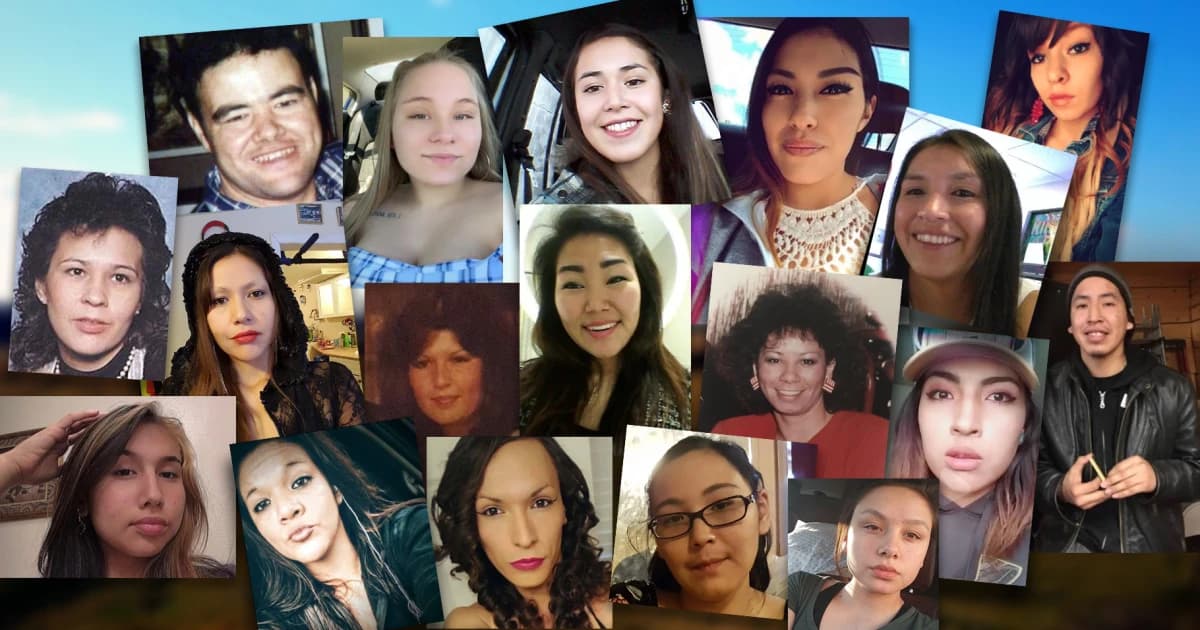
Dateline has pulled its unresolved missing and murdered Indigenous people cases into one place, and that matters because these cases often fade not from lack of harm, but from lack of sustained attention. The NBC News page is built around a simple premise: keep the names visible long enough for someone with information to come forward and for investigators to keep working the file.
What Dateline is trying to do
NBC News’ Dateline page is titled “Missing and murdered Indigenous people featured in Dateline NBC’s Missing in America and Cold Case Spotlight series,” and Dateline says it collects “the still-unresolved cases” of Indigenous people the program has already covered. The page also carries a direct appeal: “Please read and share their stories. Someone, somewhere, knows something that can help solve these cases.” That language makes the purpose plain. This is not a history page or a general explainer, but a living index meant to keep open cases in public view.
The structure matters because it organizes cases around the two Dateline brands that have repeatedly handled unsolved disappearances and homicides. Dateline: Missing in America is NBC’s original podcast series built around missing-person cases brought to the program by followers on social media, while Cold Case Spotlight is NBC News’ section for unsolved cases, with individual case pages and tip-seeking coverage. Together, those two efforts give the Indigenous-cases page a built-in investigative function: it is meant to hold attention where a single broadcast segment might otherwise end.
Why the visibility gap remains so damaging
The core problem behind this roundup is not mystery alone. In Indigenous communities, unresolved cases often sit at the intersection of jurisdictional barriers, underreporting, limited resources, and uneven media attention. Families have long argued that when a case does not stay in the news, tips dry up, pressure eases, and the chances of movement shrink. Dateline’s page tries to reverse that pattern by creating a central place where viewers can read, remember, and share.
That case-centered approach fits how true crime readers actually follow a story. People in this space tend to track names, timelines, evidence, and investigative milestones, not abstract statistics by themselves. A page like this turns that habit into something useful, because it gives a public trail to follow and a place for readers to return when a case develops or a tip line opens.
The Canadian inquiry put the crisis on record
The broader backdrop in Canada is the National Inquiry into Missing and Murdered Indigenous Women and Girls, which issued its final report on June 3, 2019. That inquiry produced 231 Calls for Justice after gathering more than 2,380 responses from family members of victims, survivors, experts, elders, and knowledge keepers. Those Calls for Justice are now part of the policy framework used by governments and Indigenous organizations working on violence prevention and support.
That inquiry also confirmed what families had already been saying for years: the harm was not isolated, and the record was incomplete. The report was built from testimony and lived experience, which is one reason it carries so much weight in conversations about accountability. Dateline’s page sits downstream from that reality, because it takes the public-facing side of the same problem and turns it into an accessible list of unresolved cases rather than a one-time news cycle.
The numbers show why case visibility still matters
A 2019 Urban Indian Health Institute report identified 506 missing and murdered Indigenous women and girls in data from 71 U.S. cities. That figure is striking not only for its size, but because it exposes the reporting gaps that still shape the record. The cases are real, but the system tracking them remains fragmented.
CBC News has also noted that MMIWG cases in Canada continued at roughly the same rate even after the national inquiry began, with about three deaths of Indigenous women and girls per month from 2016 to 2019. Taken together, those figures show why a public index of unresolved cases has value beyond storytelling. It can help keep pressure on agencies, help families push for answers, and remind readers that these files are active, not archived.
What the federal response looks like in the United States
In the United States, the Bureau of Indian Affairs operates a Missing and Murdered Indigenous People program, and the Federal Bureau of Investigation has a dedicated Missing or Murdered Indigenous Persons page. The Department of Justice also has tribal MMIP efforts. Those federal references matter because they show the issue is now recognized as a distinct public safety and investigative concern, not just a local matter that sits with one police department.
Even so, recognition does not equal resolution. The continued existence of Dateline’s unresolved-cases page is itself a clue about the gap between acknowledgment and closure. A case can be named by national institutions and still remain open for years, which is why public-facing tip lines, repeat coverage, and follow-up stories still have a role.
What renewed attention can still change
For true crime readers, the value of Dateline’s roundup is not that it packages a social issue neatly. It is that it keeps cold, unresolved cases in a form that can still produce movement. A viewer who recognizes a detail, a witness who has stayed silent, or a relative who finally sees a name in a national outlet can still change the trajectory of a file.
That is the logic behind Dateline’s appeal to read and share the stories. It treats visibility as part of the investigative process, not as decoration around it. And in a field where too many Indigenous cases have gone without sustained scrutiny, that kind of visibility can be the difference between a file that disappears and one that remains open long enough for someone, somewhere, to come forward.
This article was produced by Prism’s automated news system from verified source data, official records, and press releases, then run through automated quality and moderation checks before publishing. The system is built and supervised by the people who set the standards it runs under. Read our full AI policy.
Did this article answer your question?