How Sam Sheppard’s murder conviction was overturned by media frenzy
The Supreme Court threw out Sam Sheppard’s murder conviction after finding a media circus had poisoned the trial and denied him a fair hearing.
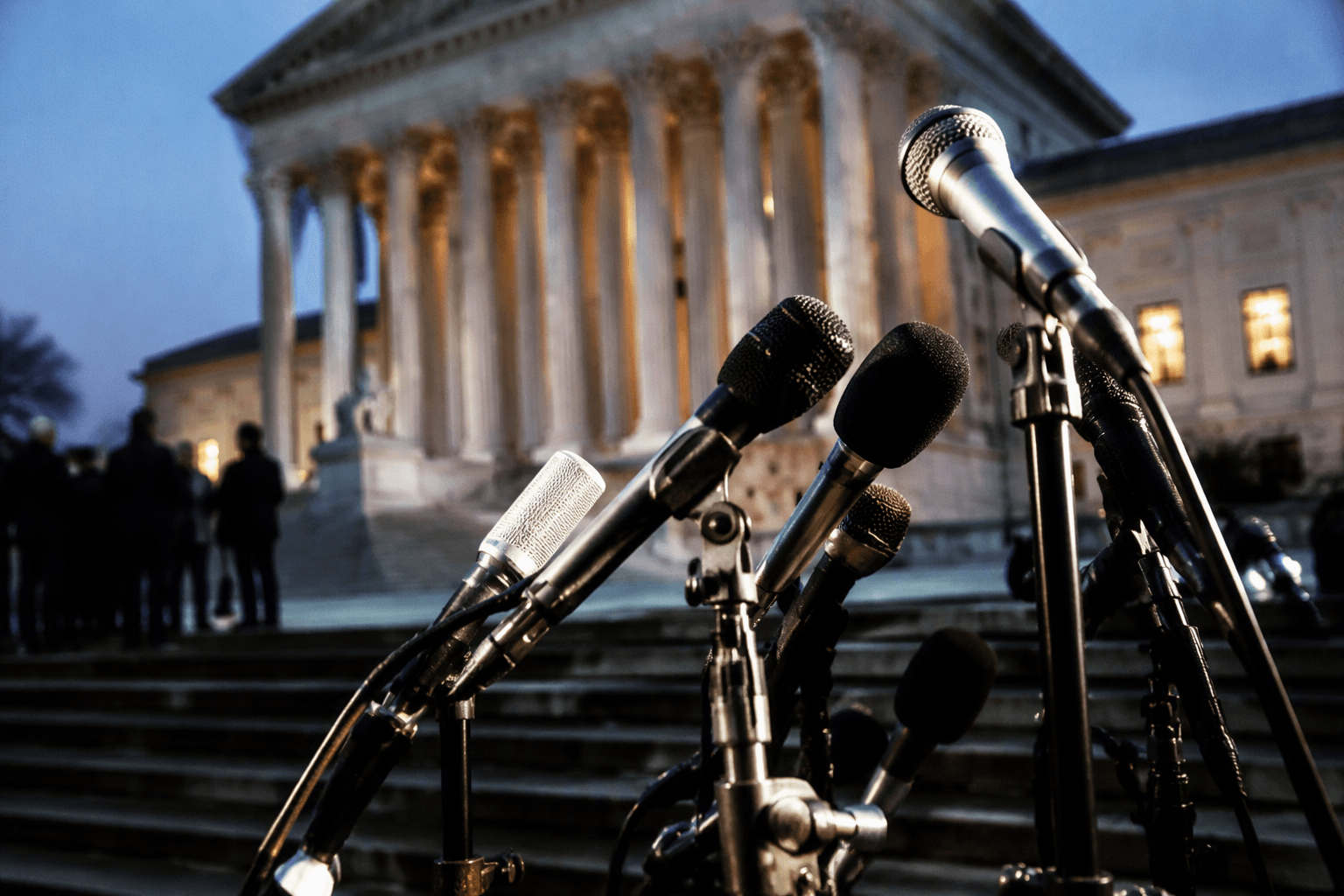
The U.S. Supreme Court overturned Sam Sheppard’s murder conviction after finding that prejudicial pretrial and trial publicity denied him a fair trial. In Sheppard v. Maxwell, decided June 6, 1966, the Court said the Cleveland doctor’s case had been pushed into a "circus atmosphere" that the trial court failed to control.
The case began with the killing of Marilyn Reese Sheppard on July 4, 1954. Sam Sheppard, a 30-year-old physician and osteopathic surgeon from Cleveland, Ohio, was arrested on July 30, indicted on August 17, and brought to trial beginning October 18, 1954. That first trial ended in a conviction on December 21, 1954, and the proceedings quickly became inseparable from the publicity surrounding them.
A murder case that became a media event
Sheppard was tried for the death of his pregnant wife, and the violence of the crime helped turn the case into a national obsession. The Supreme Court later said that, during the entire pretrial period, "virulent and incriminating publicity" about Sheppard and the murder made the case notorious. That publicity was not background noise; it became part of the legal controversy itself.
The media attention shaped how the public understood the trial before the jury ever heard the evidence. Legal summaries of the case describe a frenzy that overshadowed the courtroom record, and that framing is what keeps Sheppard at the center of fair-trial debates today. In true-crime terms, the story is not just about a murder charge in Cleveland, but about whether the system could still produce a reliable verdict once the case became a spectacle.
Why the conviction fell apart
The Supreme Court’s ruling came in an 8-1 decision led by Justice Tom C. Clark. The justices held that the combined effect of prejudicial publicity and the trial court’s failure to protect the defendant had compromised the integrity of the proceeding. The opinion made clear that a criminal trial cannot remain fair when the courtroom is left open to conditions that invite a public circus.
That decision did not erase the original conviction overnight, but it did reset the case. After nearly ten years in prison, Sheppard was acquitted on retrial in 1966. That retrial outcome, following the Supreme Court’s reversal, is one reason the case remains one of the best-known examples of appellate correction in American criminal law.
What Sheppard v. Maxwell changed
Sheppard v. Maxwell became a landmark for fair-trial and First Amendment jurisprudence because it forced courts to confront the practical problem of high-profile coverage. The ruling is widely cited for the principle that judges must take active steps to shield a defendant from prejudicial publicity, including controlling courtroom access and preventing conditions that turn a homicide trial into a sideshow.
That doctrine still shows up in discussions of gag orders, courtroom management, and a judge’s duty to preserve order when a case draws intense attention. The Sheppard opinion is not just a historical footnote; it is a working tool in criminal procedure, used to explain why publicity can become reversible error when a court does not respond decisively.
Legal teaching materials continue to treat the case as a touchstone because it draws a hard line between public interest and constitutional fairness. The question it answers is simple but lasting: when does coverage stop being observation and start becoming contamination?
Why the case still matters to true-crime readers
The Sheppard case has stayed alive because it sits at the center of the modern true-crime argument over trial contamination. It is the blueprint for later cases in which intense coverage, public speculation, and pressure on judges and prosecutors threaten to overwhelm the evidence. The same tension that surrounded Sheppard in 1954 still appears whenever a murder trial becomes bigger than the courtroom.
The case also reached far beyond legal textbooks. Historical accounts note that it inspired The Fugitive, which helped cement Sheppard’s place in American pop culture as well as in criminal law. He died on April 6, 1970, but his name remains attached to the legal warning that a sensational case can stop being a search for truth and become a test of whether justice can survive publicity.
That is why Sheppard’s story endures: the Supreme Court did not just say the trial was noisy, it said the noise mattered enough to undo the verdict. Once a case is swallowed by "virulent and incriminating publicity" and a "circus atmosphere," the fairness of the trial itself becomes the central issue.
This article was produced by Prism’s automated news system from verified source data, official records, and press releases, then run through automated quality and moderation checks before publishing. The system is built and supervised by the people who set the standards it runs under. Read our full AI policy.
Did this article answer your question?