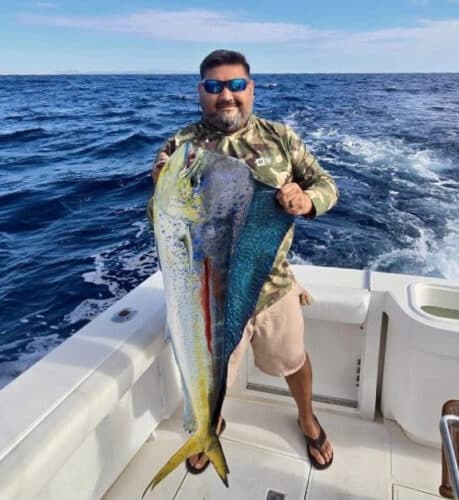
Baja Yellowfin Tuna Return Offshore, 30 Miles Out Near Porpoise Schools
Yellowfin were back about 30 miles offshore, and the real clue was the porpoise schools. That pattern points to a Baja window worth planning around, not just talking about.
Yellowfin tuna showed again about 30 miles offshore in Baja, and the useful part was the pattern, not just the catch. The fish were under porpoise schools, with tuna ranging from football-size models to 70-pounders and many running around 20 pounds. That is the kind of report anglers can actually use: it points to a lane, a distance and a feeding setup, not just a vague “they’re around” claim.
The porpoise-school detail matters because it matches one of the oldest tuna signs in the eastern Pacific. NOAA Fisheries says adult yellowfin often swim below schools of dolphin or porpoise, and the tuna industry has long leaned on that association to find fish. NOAA’s Tuna/Porpoise Observer Program has been collecting data on dolphin-associated yellowfin in the eastern tropical Pacific since 1971, which gives the pattern real history behind it. In other words, this was not a random spring rumor. It was the same classic offshore cue anglers have chased for decades.
The Reel Baja’s April update said spring was in the air across Baja California Sur, with dorado starting to show in better numbers and roosterfish still active inshore. Dorado were reported mostly in the 20- to 40-pound class, while the tuna were mixed enough to reward anglers willing to run offshore and match their tackle to the day. That split matters. A boat sliding out from Los Barriles or La Ventana toward the waters off Cabo San Lucas, or farther up the Pacific side toward Magdalena Bay, could choose between a nearshore roosterfish bite and an offshore shot at tuna and dorado.
The bigger takeaway is that Baja looked to be entering one of its more dependable late-spring transitions. The water had enough life moving through it to keep multiple species in play, and the tuna were showing in a pattern that often improves when bait and marine life stay organized around current lines and moving schools. The report said the numbers were improving day by day, but not wide open yet, which is exactly what makes the window interesting. It is the stage where smart runs, not blind hero casts, usually pay.
That offshore signal also sits inside a tightly managed fishery. The Inter-American Tropical Tuna Commission oversees long-term conservation and sustainable management of tuna in the eastern Pacific, and its 2025 benchmark assessment for yellowfin covered data from 1984 through the start of 2024. NOAA Fisheries also updated tropical tuna restrictions for 2025 and beyond after IATTC Resolution C-24-01. For anglers, the message is simple: Baja’s yellowfin are back in the picture, the porpoise-school pattern is real, and the early-season window is open enough to justify the run.
This article was produced by Prism’s automated news system from verified source data, official records, and press releases, then run through automated quality and moderation checks before publishing. The system is built and supervised by the people who set the standards it runs under. Read our full AI policy.
Did this article answer your question?