Bali tuna bite heats up after full moon, anglers find mixed bag offshore
Tuna were up with the moon fade, and Bali’s best signal was a mixed offshore bite built around 20-kilo GTs, queenfish limits, and tuna out wide.
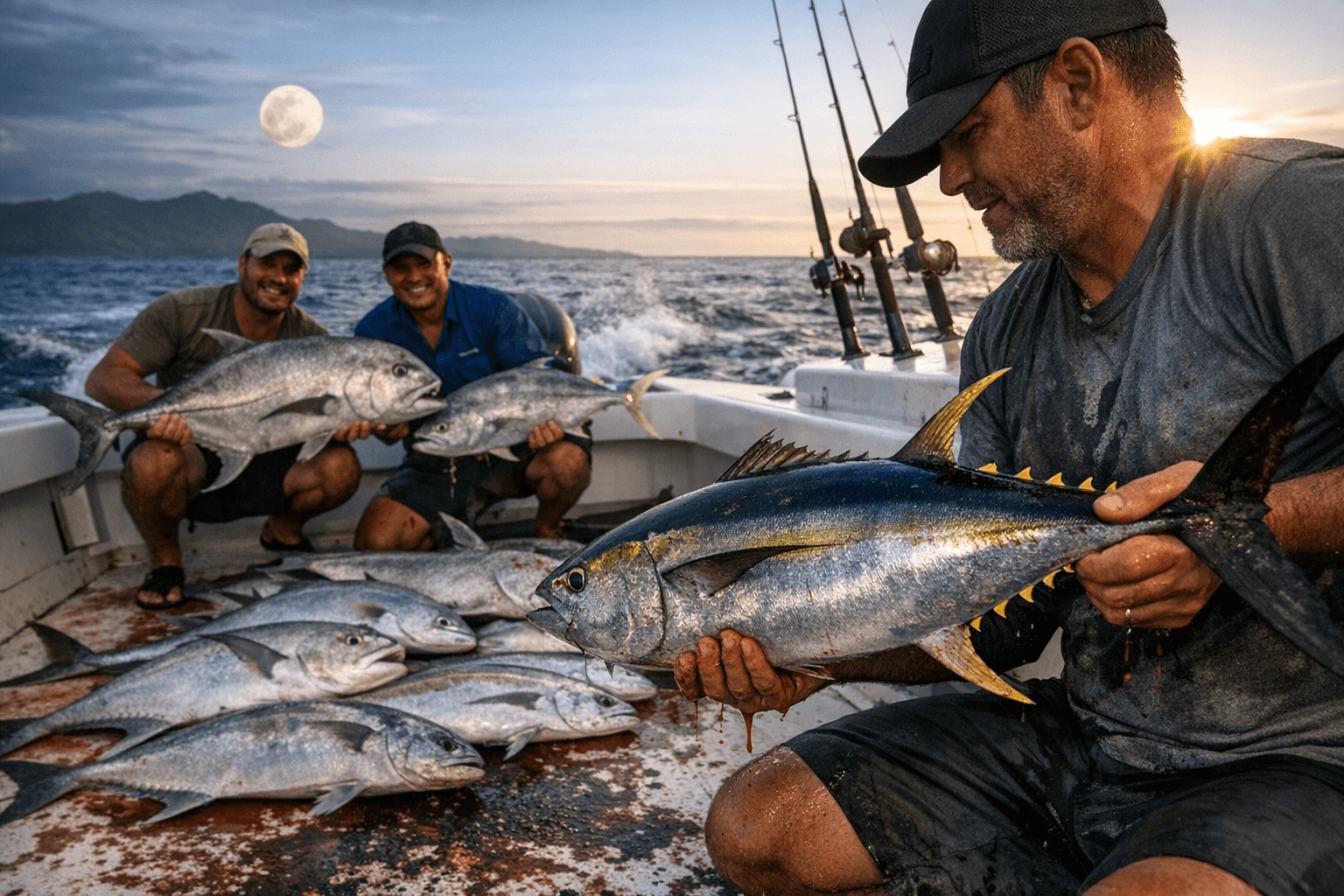
Tuna were feeding offshore while Bali’s inshore reefs kept throwing numbers, the kind of spread that tells you the island is moving into one of its better windows. The April 13 report tied tuna to giant trevally, queenfish, mahi-mahi, snapper, grouper, barracuda and milkfish, with recent charter hauls producing GTs up to 20 kilograms and 10- to 20-fish limits of queenfish and milkfish around Nusa Penida.
The timing mattered as much as the species list. Partly cloudy skies, light southeast winds around 10 to 15 knots and an incoming tide from midmorning onward set up a clean bite window after the full moon fade. That is the cue to watch over the next few days: if the weather holds and the tide keeps pushing, the action should stay dialed enough for both trolling and popper work, rather than collapsing into a one-species grind.
For tuna anglers, the bigger point is that this looked less like a fluke and more like a seasonal ramp. Bali’s dry season typically runs from April through October, and tuna, including yellowfin and skipjack, are regular targets in that stretch. Early-April reports already showed tuna packs hitting around 15 kilograms on the troll, GTs up to 20 kilograms off Nusa Dua, and even a separate push of GTs to 40 kilograms reported from the same offshore zone. That kind of back-to-back activity suggests the island is not just blinking on for a day and going dark again.
The practical play is to match the spot to the target. Nusa Dua reefs offered easier boat access, Sanur Beach lined up for dawn shore casting, and Benoa Harbour remained the clean launch point for charter runs toward mahi and tuna water. Around Nusa Penida, the mixed bag made the strongest case for flexibility: metal slugs and poppers for queenfish and trevally, soft plastics in white or pink for snapper, and live sardines or small mullet on circle hooks for everything else that decides to eat.
The wider backdrop explains why Bali keeps showing up in tuna conversations. The Bali-Nusa Penida corridor packs deep water and strong currents that concentrate baitfish and pull tuna in, while Benoa Harbour sits inside Indonesia’s much larger tuna economy. Indonesia accounts for more than 16 percent of global tuna, skipjack and neritic tuna catches in the study period cited, and Benoa still matters as a departure and landing point. Put together, the message is simple: Bali was in a mixed-species window with real tuna upside, and the next bite should open around the incoming tide rather than wait for the whole day to turn.
This article was produced by Prism’s automated news system from verified source data, official records, and press releases, then run through automated quality and moderation checks before publishing. The system is built and supervised by the people who set the standards it runs under. Read our full AI policy.
Did this article answer your question?