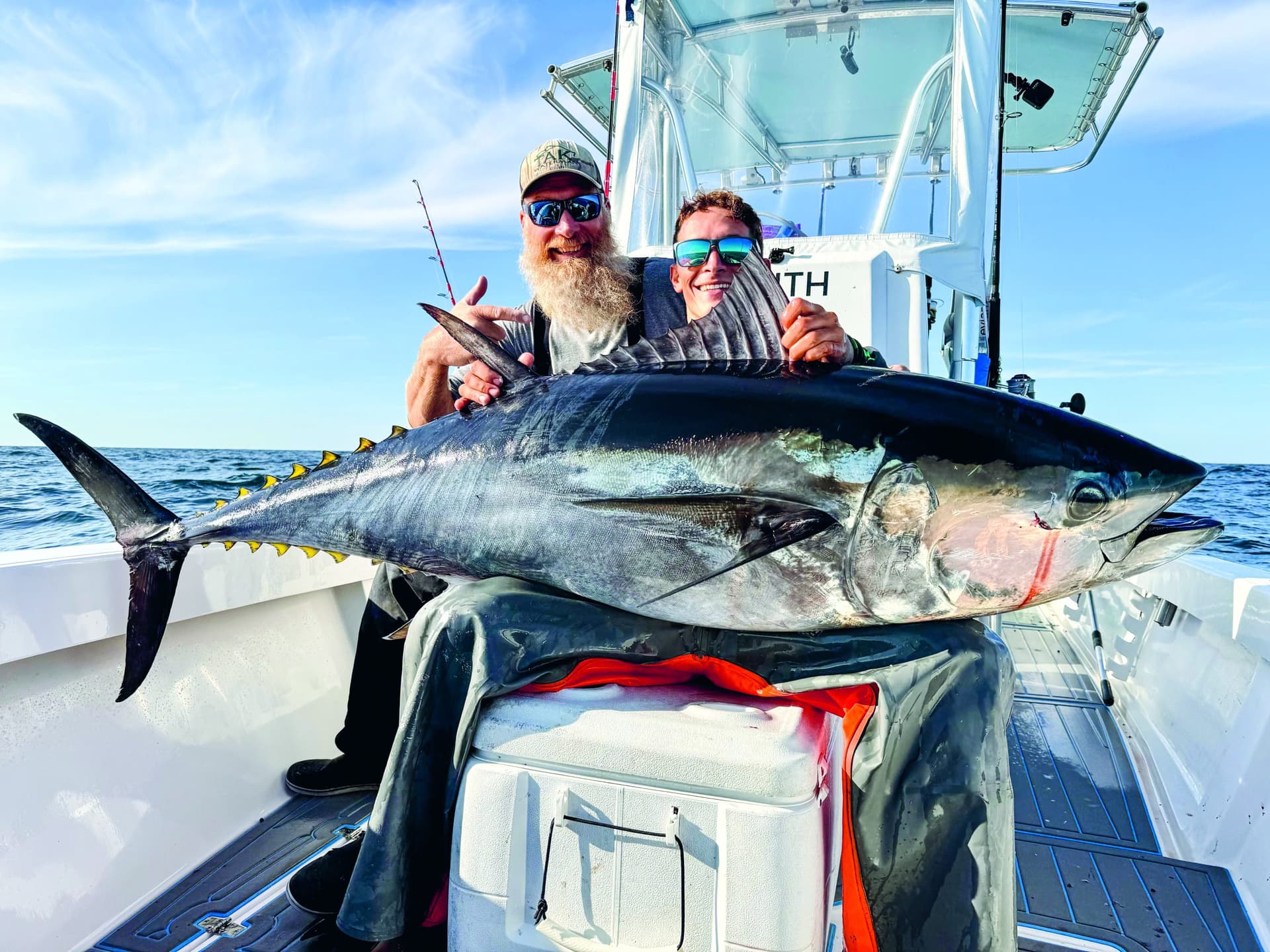
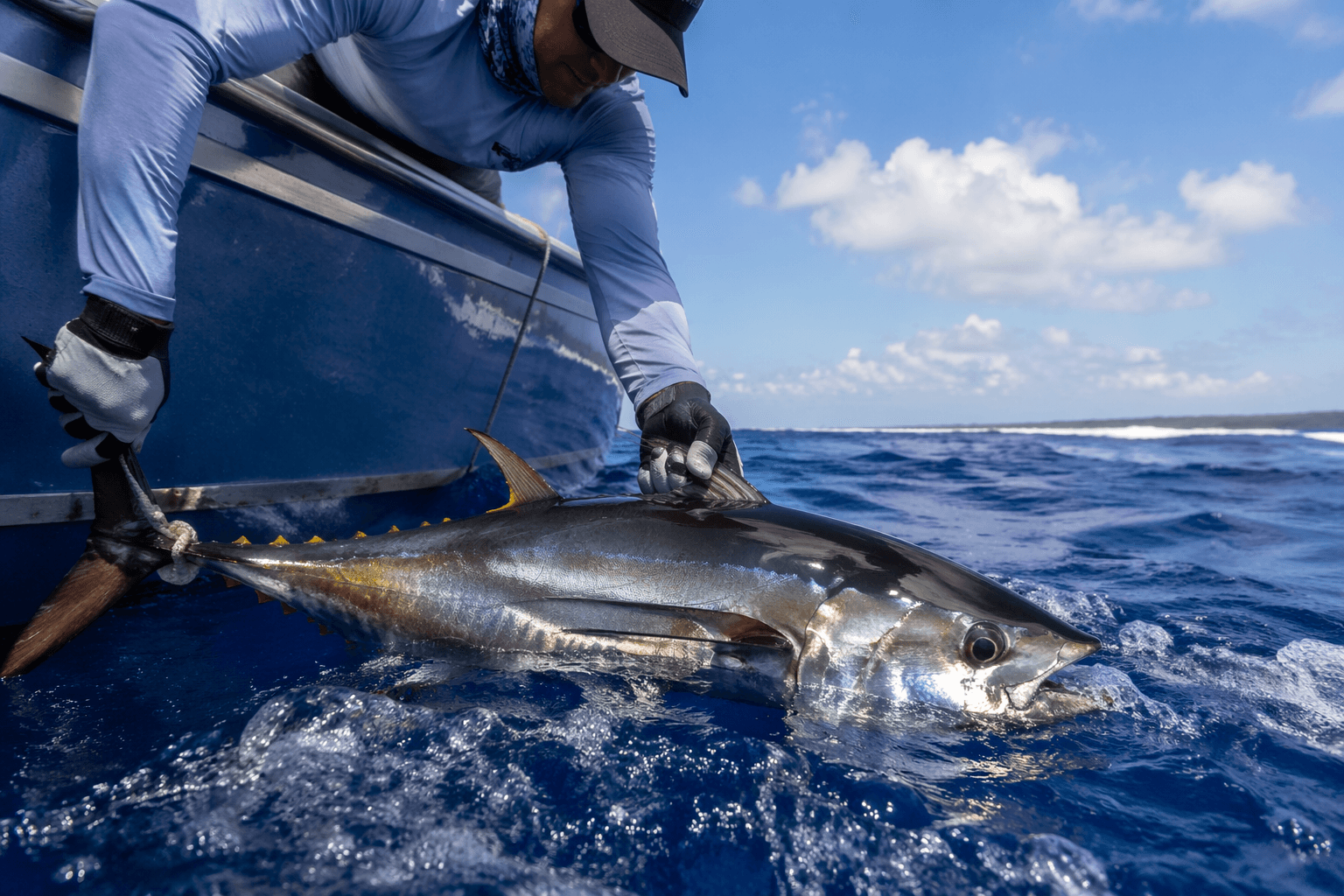
Blackfin tuna highlight strong early-summer bluewater bite off Carolina coast
Blackfin tuna are already lining up with wahoo and mahi in the Gulf Stream off North Myrtle Beach, and the early-summer transition favors longer bluewater runs.
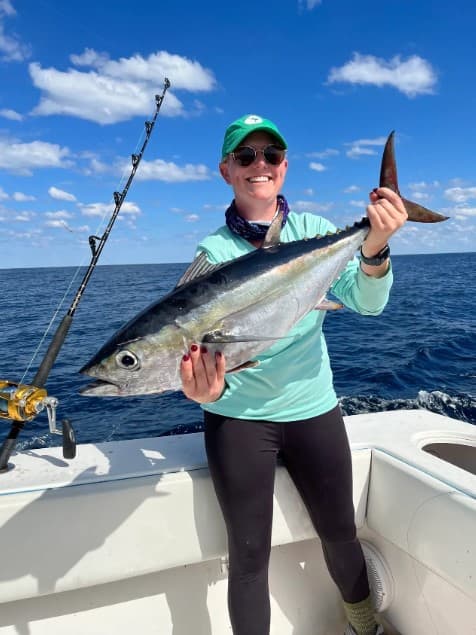
Blackfin tuna are setting the tone for the early-summer bluewater bite off North Myrtle Beach, and the Gulf Stream pattern is already telling crews where to point the bow. Late May and early June are the crossover weeks when tuna, wahoo, mahi, and the occasional billfish start organizing around the same offshore water. If you want the most useful read on the Carolina coast right now, it is this: the bluewater window is open, but it is still in transition.
The pattern shift offshore
The clearest sign of the seasonal turn is the way the fishery is splitting. As surface water warms to around 75 degrees near Little River Inlet, the inshore and offshore pieces stop behaving the same way, and that divide is helping define the bite. Inshore crews still have usable bait showing up in the creeks, especially mullet and shrimp, while offshore boats are being pushed toward temperature breaks, bait concentrations, and longer runs into cleaner water.
That is why blackfin tuna matter so much in this report. They are not showing up as a lone headline species. They are part of a broader bluewater package with wahoo and mahi, which is usually the sign that the same stretch of water can hold multiple pelagics on the same troll. When the bite starts organizing that way, it is less about wandering and more about making the right run to the right edge.
How to read the Gulf Stream right now
South Carolina Department of Natural Resources says tunas, dolphin, and wahoo live in the warm, cobalt-blue water of the Gulf Stream year-round, roughly 35 to 75 miles off the state’s coast. During early spring and summer, those fish follow warm ocean currents into shallower water about 20 to 25 miles offshore, which explains why the bite can feel like it slides closer as the season develops.
The Gulf Stream itself is a big part of the story. SCDNR says it sits about 75 miles offshore, averages 62 miles in width, and moves at about five knots. That moving conveyor belt of warm water is exactly why tuna, mahi, and wahoo can stack on the same trip when the temperature and bait line up. When the current pushes the right way, the edge becomes less of a map feature and more of a fish-holding lane.
For Carolina crews, that means the early-summer read is not just about miles run. It is about finding the water that looks and feels like the Gulf Stream is reaching up toward the shelf, then making your troll work in that corridor. The boats that focus on the transition, instead of chasing one isolated mark, are the ones most likely to stay connected as the pattern matures.
What the blackfin signal is saying
Blackfin tuna have long been an early-season favorite along the Grand Strand, and Carolina Sportsman has described late April and May as the peak window, with catches continuing through summer. That matters because the June action is not a surprise spike. It is the continuation of a spring run that has already proven it can hold.
Fisherman’s Post has been saying the same thing from a practical, dockside angle. Its May 2026 North Myrtle and Little River report said offshore trolling trips were already producing solid blackfin tuna and wahoo, and its June report said a bigger push of fish should come soon as water temperatures keep climbing. The same June note also tied in good numbers of blackfin tuna and wahoo with mixed trolling action, which is exactly the kind of combo that tells you the bluewater bite is settling into a more reliable rhythm.
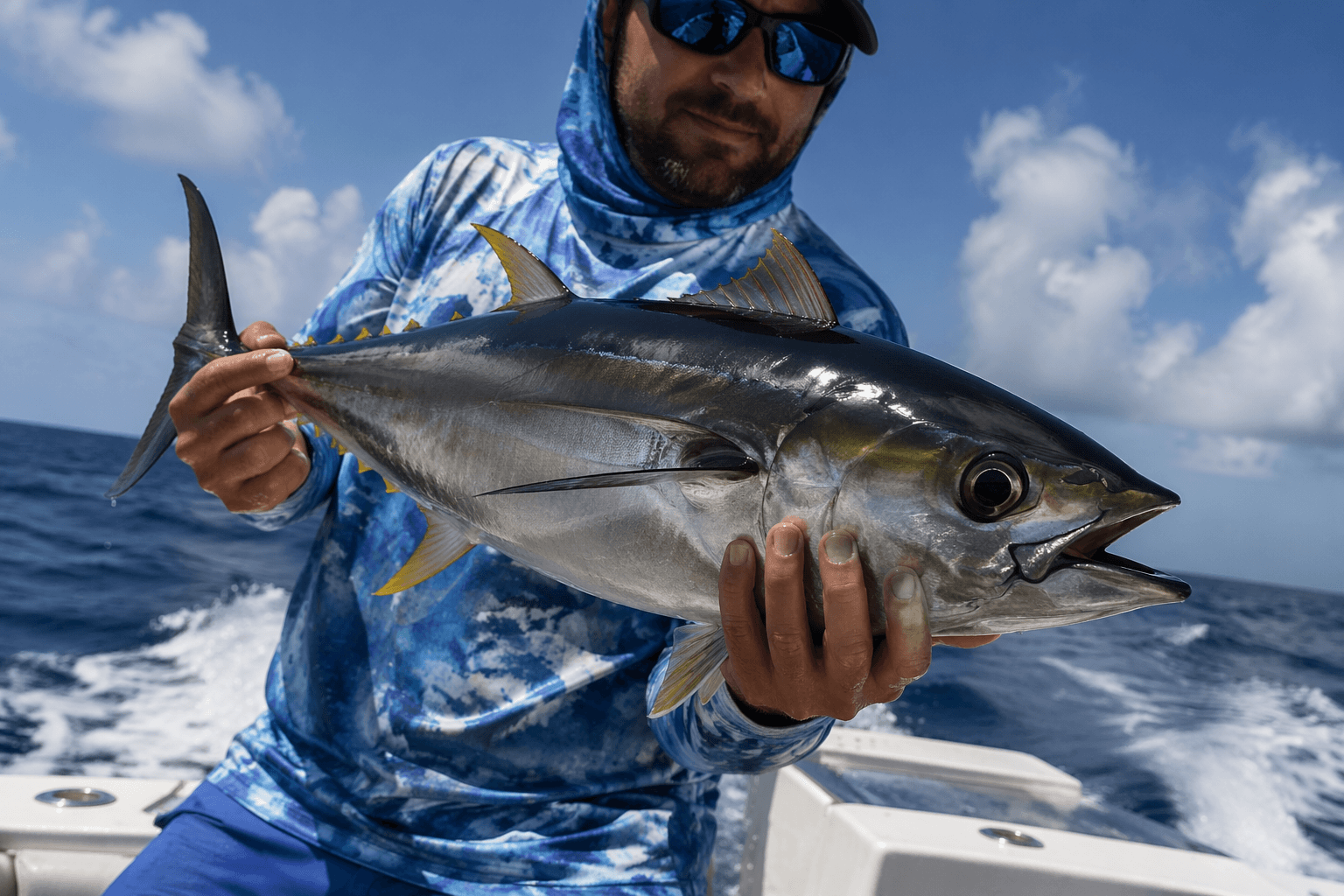
That is the key clue for trip planning. You are not looking at a one-day fluke or a narrow bite that needs to be caught at just the right tide. You are looking at a season shift that is already in motion, with blackfin tuna acting as the marker species for a broader offshore slide.
How to adjust your run strategy
If you are planning a tuna trip out of North Myrtle Beach or Little River, the first adjustment is mental: think in terms of target mix, not just target species. The report makes clear that 4- and 6-hour trips still make sense for nearshore action, but the offshore effort is better suited to crews willing to run farther and commit to bluewater structure.
A practical approach right now looks like this:
- Use the warm-water transition as your first clue, then build the run around bait and color change.
- Keep the spread flexible enough to cover blackfin tuna, wahoo, and mahi at the same time.
- Pay attention to trolling style, because mixed action has been coming on skirted ballyhoo and high-speed trolling.
- Treat occasional billfish as a bonus in the same water, not the main reason for the trip.
- If you want the more dependable nearshore punch, stay ready for Spanish mackerel and other structure fish while the offshore pattern keeps maturing.
That broader approach matters because the same report that flags blackfin tuna also notes strong nearshore Spanish mackerel activity, plus bluefish, cobia, spadefish, scattered king mackerel, and strong shark fishing. In other words, the coast still gives you options if you do not want to commit to a full bluewater burn. But for tuna hunters, the best read is still offshore: the fish are organizing around the warming Gulf Stream lane, and the boats that match their run length to that pattern are the ones most likely to stay on fish.
Before you leave the dock
There is one more layer that belongs in every offshore plan: the rules. NOAA Fisheries says the Atlantic bluefin tuna recreational retention limits were adjusted on June 1, 2026, and the HMS permit system applies to Atlantic tunas and other highly migratory species. South Carolina Department of Natural Resources also notes that federal South Atlantic regulations apply in federal waters, with anglers directed to the federal rules for the official details.
That does not change the fact that blackfin tuna are lighting up the early-summer offshore picture off the Carolina coast. It just means the better your timing, the better your run strategy, and the cleaner your paperwork, the more fully you can take advantage of a Gulf Stream bite that is already shifting into place.
This article was produced by Prism’s automated news system from verified source data, official records, and press releases, then run through automated quality and moderation checks before publishing. The system is built and supervised by the people who set the standards it runs under. Read our full AI policy.
Know something we missed? Have a correction or additional information?
Submit a Tip