Bluefin or yellowfin, choosing the right popper for tuna text
Bluefin and yellowfin want different popper cadences, and the best shots come only when tuna are already feeding on top, not when you're forcing a blind cast.
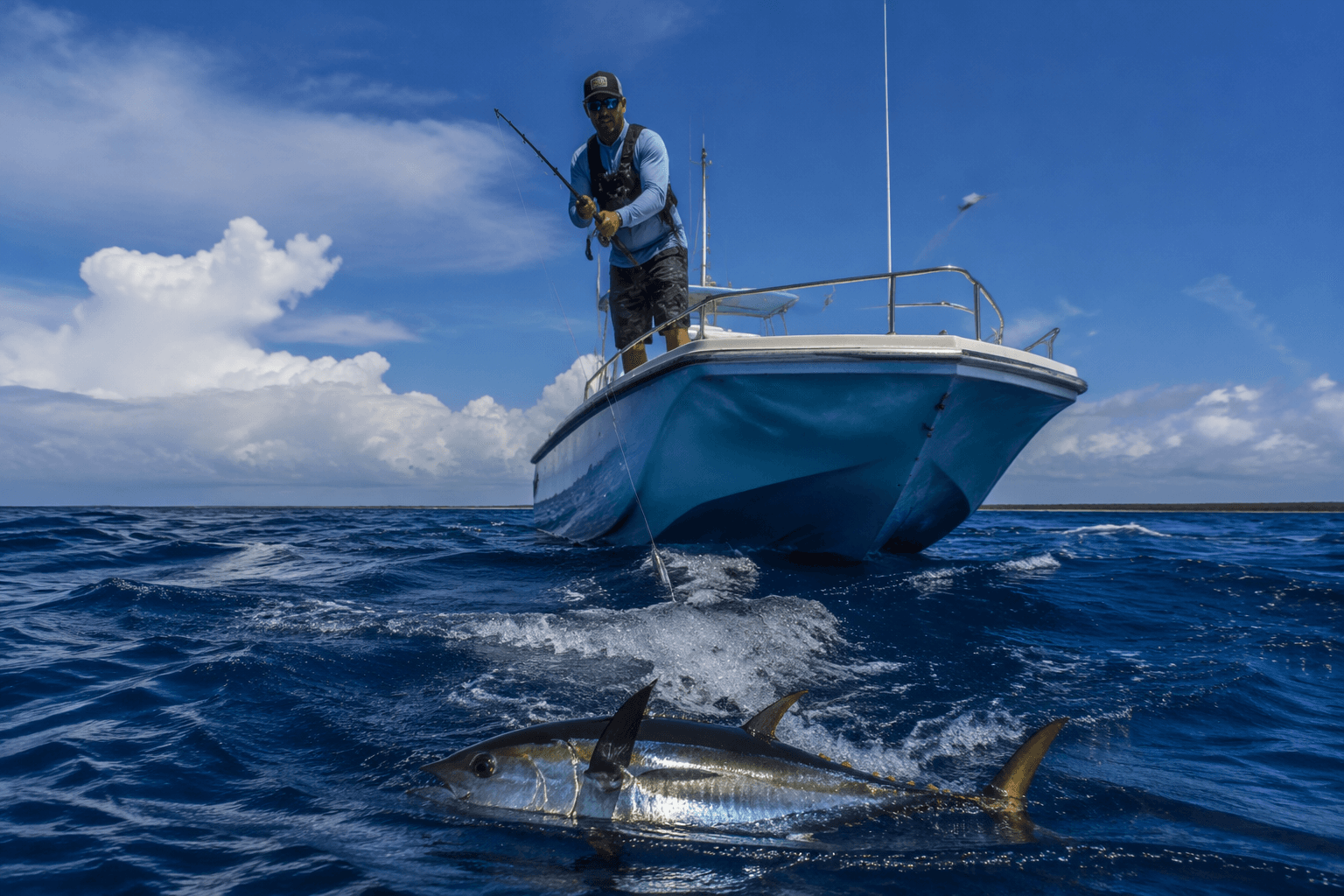
Birds working over bait pushed to the surface, foamers, boils, or a clean color change let you slide the boat into the lane without crossing the school. Bluefin and yellowfin are not the same fish, and they do not react to surface disturbance the same way.
Read the feed before you reach for the plug
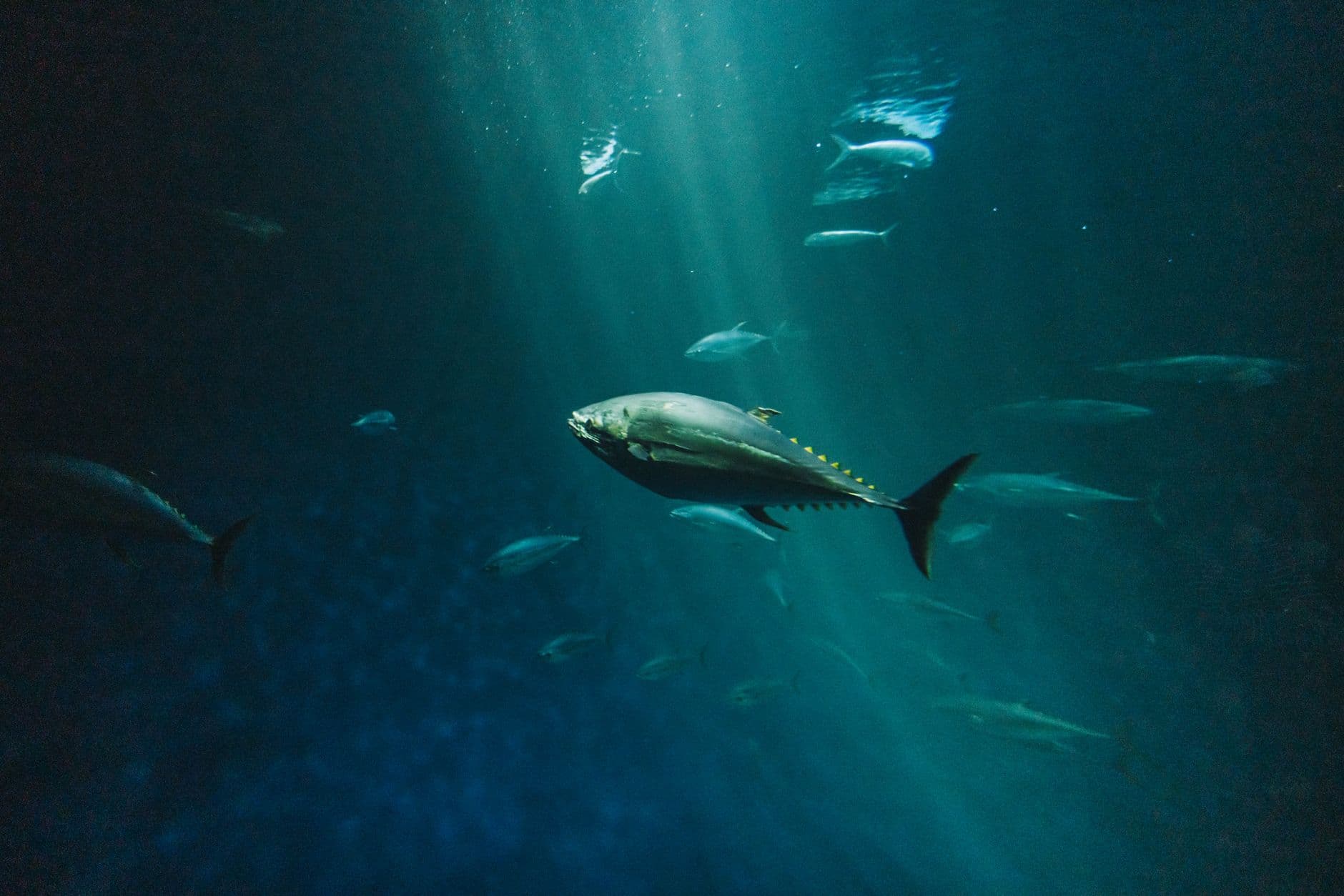
Yellowfin tuna in the eastern tropical Pacific are commonly found with sharks, birds, and dolphins, which is exactly the kind of surface life that gives a popper its best chance. In David W. Au’s NOAA paper, sharks occurred with tuna in 40% or more of purse-seine sets made around floating logs in 1974 and 1975, a reminder that yellowfin often sit inside a broader surface ecosystem, not alone in open water. When that kind of association is present, a popper is not just making noise. It is trying to imitate the disturbance already working against the bait.
Bluefin are a different conversation. NOAA’s study of Pacific bluefin tuna found the species specializes on high-energy, surface-schooling prey, which means they are often very responsive to topwater when the bait is pinned and the school is feeding hard. That same preference is why a popper works best on bluefin when the surface feed is obvious and concentrated, not when you are hoping noise alone will manufacture a bite.
Bluefin usually wants a slower, heavier presentation
NOAA Fisheries treats Pacific yellowfin tuna and western Atlantic bluefin tuna as distinct managed species, and the fishing approach should respect that split. J. Michael Scott and Glenn A. Flittner examined 8,059 purse-seine sets from 1960 to 1967, with 3,538 sets identified by school type and most of those sets made within 90 miles of the beach off southern and Baja California from 23°N to 34°N.
On the water, that translates into a slower, more deliberate popper cadence when bluefin are up and feeding. Longer pauses, heavier commotion, and a bait-like rhythm usually beat frantic churning when the fish are keyed in on a concentrated forage patch. If the school is visibly tracking a bait ball or holding under birds, the goal is to make the plug look like one more vulnerable target in the middle of the chaos.
Yellowfin often rewards speed and aggression
Yellowfin are more willing to punish a fast, erratic retrieve when the school is active and the bait is moving hard. Adult yellowfin tuna behavior and vertical habitat use were documented in NOAA’s 2020 fishery-independent study, reinforcing how mobile this fish can be. That mobility is why yellowfin popper fishing often comes down to timing the window, not simply choosing the loudest lure.
If the fish are busting with birds overhead, moving around floating debris, or sliding through a visible bait patch, a quicker cadence can be the highest-percentage play. In that mode, the plug is not being asked to coax a sleepy fish. It is being used to trigger a reaction from a school already feeding at speed. When yellowfin are traveling fast and the boat can get a clean angle ahead of them, the popper becomes a tool for interception.
Boat position decides more than lure choice
Getting into the right casting lane starts with the first read: birds, bait balls, foamers, surface boils, and color changes. The crew has to get into the right casting lane before the school sounds or slides away, and that part is every bit as important as the lure hanging from the rod tip. A perfect popper can still fail if the boat is too close, too loud, or cutting across the tuna’s path.
NOAA work on dolphin schools found avoidance of an approaching ship could begin at six or more knots of closing speed. That does not mean tuna behave exactly like dolphins, but it does explain why a sloppy approach can wreck a shot. Too much throttle, too much wake, or an aggressive approach angle can push the fish down before you ever make a cast. The best boat scenario is simple: approach low and controlled, stop outside the school, and cast ahead of the direction the fish are already moving.
When not to throw the surface plug
A popper is a lower-percentage choice when there is no visible feed, no bird life, and no sign that the tuna are willing to rise. In that situation, you are asking surface commotion to do the work of prey concentration, and NOAA’s long record of tuna-school research says that is rarely the smartest bet. The same goes for a school that is already sounding or sliding away from the boat. Once that window closes, the popper becomes a thrill play instead of a plan.
Tuna-school research has been building since the 1950s, through the 1970s logbook studies, the 1990s work on polyspecific schools and energetics, and into the 2020s movement research on adult yellowfin.
The mistakes that waste the shot
- casting before the boat is positioned cleanly over the activity
- working bluefin too fast when a longer pause would keep the fish interested
- working yellowfin too slowly when the school is clearly in attack mode
- throwing surface plugs at blind water instead of at visible life
- letting the boat drift into the fish and shut down the feed
A lot of tuna opportunities disappear because anglers rush the cast, ignore the lane, or fish the wrong cadence for the species in front of them. The biggest errors are easy to spot:
The Fisherman wrote, “Set the hook hard three times, you’re tight. Now hold on and enjoy the ride,” a fair warning that the strike is violent and the hookup has to be immediate. That is why lure size, leader material, knot strength, and casting angle are not small details in this fishery. They decide whether the popper turns a surface eruption into a fish in hand.
This article was produced by Prism’s automated news system from verified source data, official records, and press releases, then run through automated quality and moderation checks before publishing. The system is built and supervised by the people who set the standards it runs under. Read our full AI policy.
Did this article answer your question?