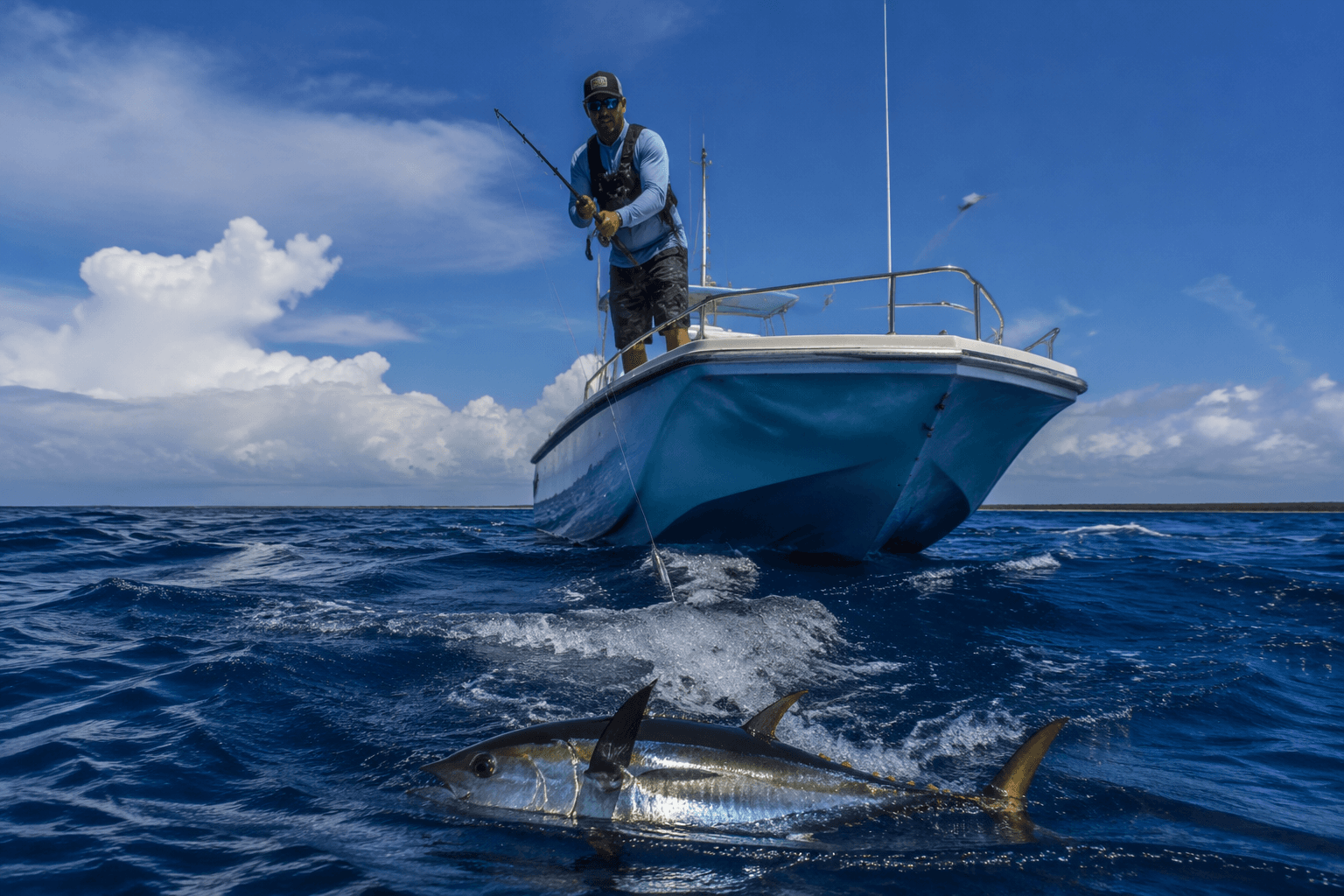
Tuna trip prep: gear, safety and planning for offshore success
The best tuna trips are won at the dock: fresh line, sharp hooks, enough ice and a rule check before you clear the inlet. Miss one step and the offshore window closes fast.
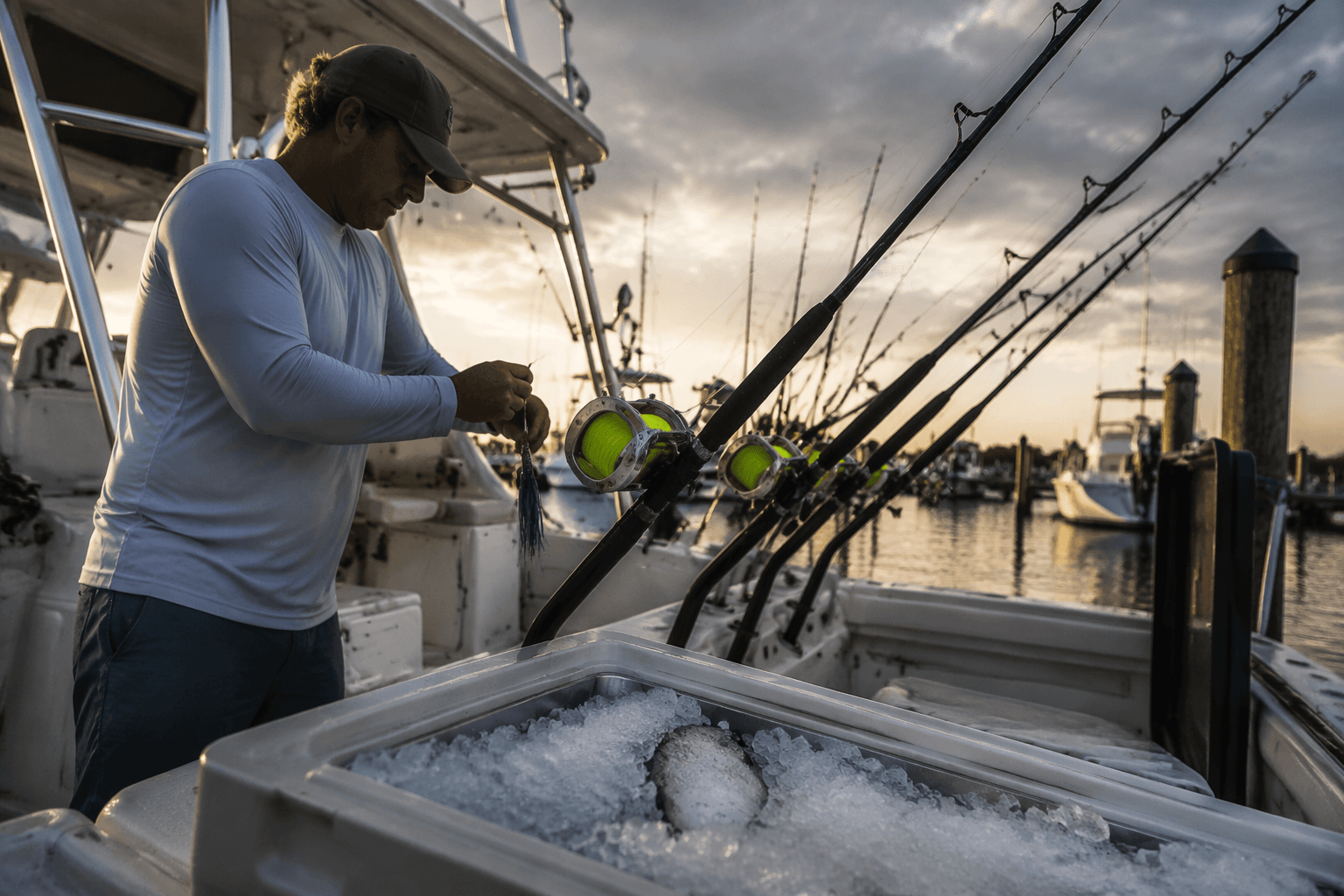
A drag that was never tested, bait that was not ready, a cooler packed too late, or a boat that never got a real offshore check can sink a tuna trip before the first run offshore. When the fish are holding on a sea-surface temperature break or a water-color edge, there is no time to solve those problems mid-run. The crews that turn a long offshore push into meat in the box get that work done before leaving the dock.
Start with the tackle that actually has to hold a tuna
Fresh line, smooth drags, sharp hooks and checked leaders are not small details on a tuna run. They are the difference between getting bit once and getting to the boat with a fish that stays pinned. A broken knot or a gummy drag can waste the one shot you get when a school shows under the screen or a bait gets eaten in the spread.
- spool fresh line where it belongs
- test every drag under pressure
- tie and inspect leaders ahead of time
- sharpen or replace hooks
- pack backup tackle for a broken rod, a parted leader or a lost fish
Build the rod and reel plan before you ever leave the dock:
Offshore problems rarely happen at a convenient time. A crew running far enough out for tuna is already gambling against weather, current and distance. If one setup fails and there is no spare, the whole boat is suddenly fishing one rod fewer.
Pack for the day, not just the bite
The offshore checklist is bigger than fishing gear. Fuel, ice, food, water, weather gear, charging cables, navigation electronics and emergency equipment all belong on the same list because the ocean punishes anything you forgot in the driveway. A run that starts calm can turn into a long, wet return if the weather shifts, and a tuna trip can become a logistics problem before it ever becomes a fishing one.
The Fisherman and On The Water center meticulous gear preparation and safety practices in offshore guidance, especially for night fishing. If you are planning a dark return or a first-light departure, the safety loadout needs to be complete before the boat leaves the inlet. Charter safety checks start with verifying U.S. Coast Guard compliance and confirming the onboard safety gear before departure.
Match the bait plan to the way tuna are feeding
A crew can burn fuel all day and still miss if the bait plan is weak. Sea-surface temperature breaks and water-color edges are the recurring signs when locating fish. Those are the places where the bait stacks up and the trip shifts from searching to fishing.
Once the trolling spread slows, chunking and live-baiting become the tools that keep the day alive. That means the bait station has to be ready before the first hit, not after the first missed opportunity. If the plan is chunking, the chunks need to be prepped. If the plan is live-baiting, the bait has to be healthy, available and handled as carefully as the tackle.
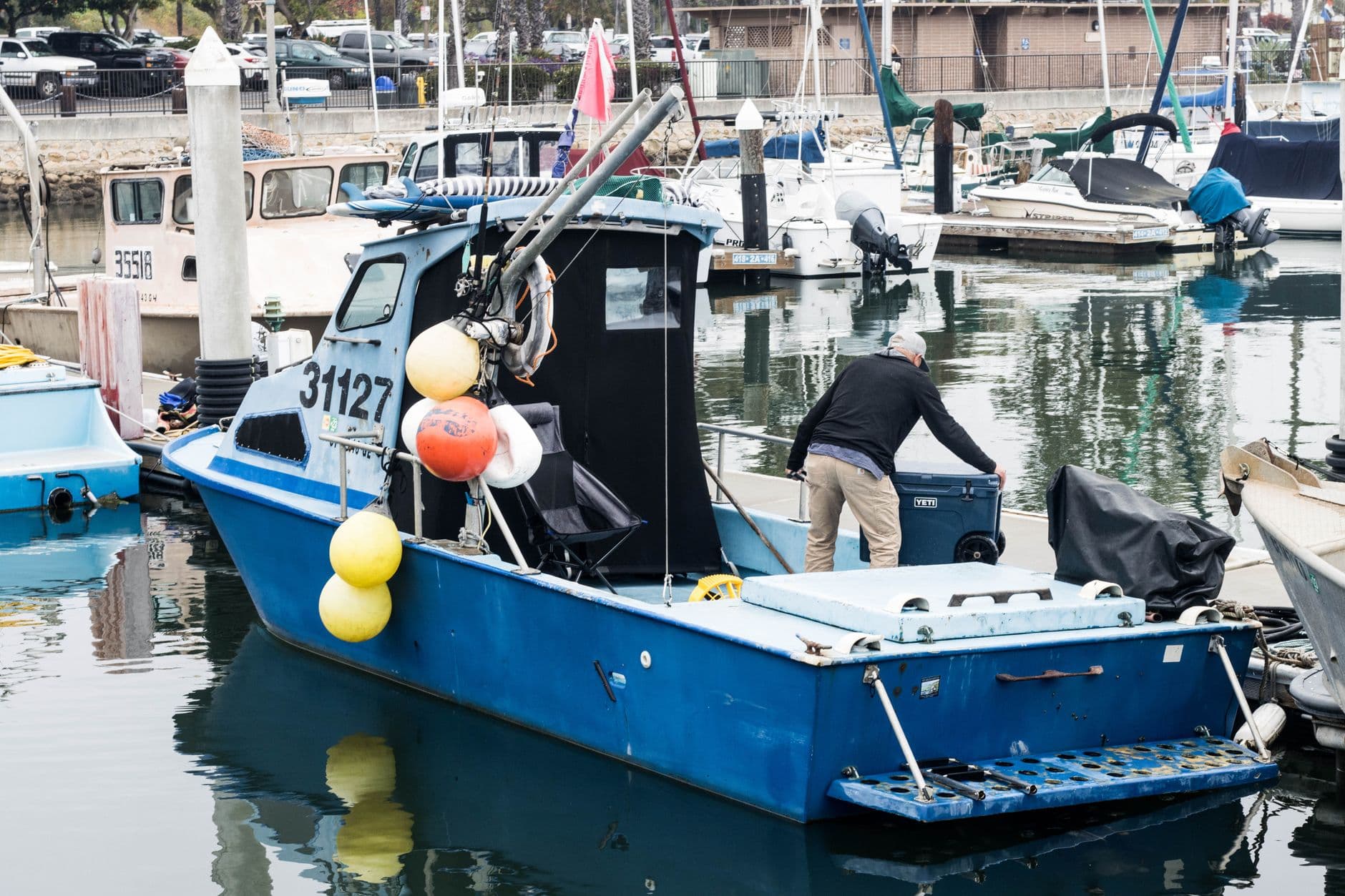
This is where tuna prep becomes crew work. One person should be on bait, another watching the screen, and another keeping the cockpit clear so a hookup does not turn into a tangle.
Know which tuna you are really planning for
Maine Sea Grant at the University of Maine identifies Atlantic bluefin, bigeye, albacore, skipjack, little tunny and bonito as tuna species relevant to Maine waters and the Northwest Atlantic. The fish, the range and the trip length change the way you rig, fuel and pack the boat.
The biggest practical mistake is assuming every tuna trip is the same. Bluefin workups, albacore runs and a mixed-species day in the Northwest Atlantic can all ask for different tackle strength, different bait choices and different meat-care plans. The trip goes better when the gear is matched to the target before the first rod goes over.
Check the rules before the first strike
NOAA Fisheries keeps separate recreational Atlantic bluefin tuna fishery status and bag-limit pages, plus commercial bluefin status, minimum-size and retention pages. It also maintains Atlantic highly migratory species permit and catch-reporting systems for tuna anglers. Know the legal frame around the fish before you hook one.
That regulatory reality is part of modern tuna prep. You do not want to be figuring out retention rules after a long day offshore, with ice melting and the boat still miles from home. The best prep routine includes the permit, the reporting system and the species-specific rules in the same mental slot as hooks, fuel and ice.
Remember why the tuna trip demands this much work
The Marine Stewardship Council traces the rise in Atlantic bluefin demand in the 1980s to overfishing, with catches in the 1990s estimated at 50,000 to 61,000 tons.
Tuna are highly migratory fish, moving long distances across the open ocean between feeding and spawning areas.
This article was produced by Prism’s automated news system from verified source data, official records, and press releases, then run through automated quality and moderation checks before publishing. The system is built and supervised by the people who set the standards it runs under. Read our full AI policy.
Did this article answer your question?