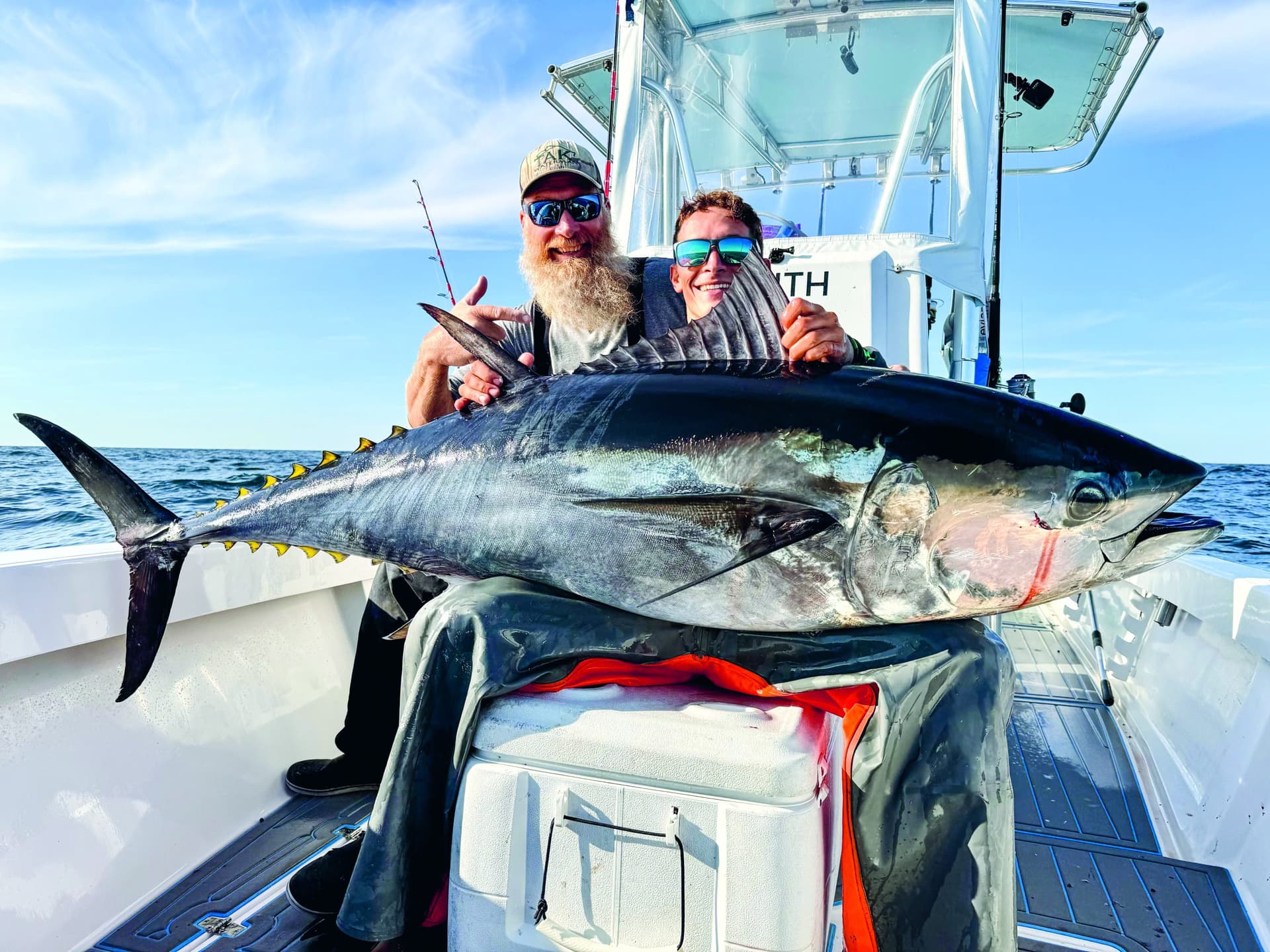
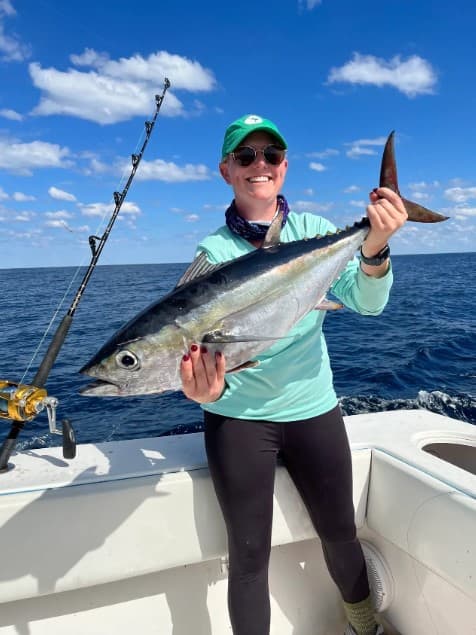
Cabo’s June offshore bite heats up with better yellowfin tuna action
Yellowfin are starting to line up with the June pattern off Cabo, and the offshore package now looks more reliable for the next few weeks.

Yellowfin are moving into the conversation now
The June offshore picture around Cabo San Lucas is getting easier to trust, and that is the biggest shift for tuna anglers right now. The bite is no longer reading like a scattered early-season tease. It is starting to look like a real summer setup, with improving yellowfin tuna opportunities joining stronger striped marlin activity and better dorado around the same offshore structure.
That matters because Cabo’s best June fishing is rarely about one isolated species. It is about the whole pelagic pattern coming together at once, with warm water, blue water, bait movement, and current edges starting to stack in the same places. When that happens, yellowfin are usually part of the package, not an afterthought.
Why June is the turning point
The seasonal change is driven by water temperature and water color. As the surface warms and blue water pushes closer to shore, the offshore bite becomes more active and more predictable. In Cabo, that transition usually starts showing up in June, and the June 3 report treats yellowfin as one of the clearest signs that the offshore season is opening up.
NOAA Fisheries helps explain why the timing makes sense. Pacific yellowfin tuna are highly migratory and favor water between 64° and 88° F. They also tend to gather around drifting flotsam, fish aggregating devices, anchored buoys, dolphins, and other large marine animals. In practical Cabo terms, that means the clean water is only part of the equation. The real targets are the lines, edges, and objects that collect bait and concentrate fish.
For anglers planning a Cabo run in the next few weeks, that points to a simple change in expectations: June is becoming a better go/no-go month for tuna because the offshore conditions are starting to line up with how yellowfin actually feed.
What the offshore pattern looks like now
The best June sign is not just “warm water.” It is the pattern that comes with it. Captains are watching current edges, weed lines, floating debris, and temperature breaks because those are the places where bait stacks up and predators show themselves first. The report’s offshore read is that blue water is sliding in, bait is moving, and the first stronger yellowfin opportunities are developing in the same window as marlin and dorado.
That broader pelagic transition changes how you should think about range. Instead of expecting a single hard run to a fixed tuna spot, the better play is to expect a mobile search for the right water. Clean blue edges, bird activity, floating weed lines, and debris lines all become part of the decision tree. If the water looks right and bait is active, yellowfin can show up fast.
A useful thing to keep in mind is that the tuna action is sitting inside a wider offshore package. Stronger striped marlin activity and better dorado movement near floating debris lines mean the same set of conditions is starting to support multiple species. That usually gives anglers more confidence to commit to longer runs and earlier departures, because the odds of a productive day are rising across the board.
What the regional tuna picture is already showing
The Cabo shift is also lining up with what nearby waters have already been reporting. On May 24, Gordo Banks Pangas described a hot tuna bite toward Vinorama and San Luis, with most fish in the 10- to 20-pound range and many in the 30-pound class. The same report noted dorado and an occasional wahoo mixed in on those tuna grounds.
That kind of neighboring action is important because it shows the early-summer build is already real, not just theoretical. It also gives anglers a useful size expectation. If you are heading into Los Cabos offshore waters now, you should be thinking in terms of school fish with the possibility of better-grade tuna mixed in, rather than waiting for one giant bite to define the whole trip.
The caveats are familiar to anyone who fishes this zone. The same grounds can still cost fish to sharks and sea lions, and strong currents can make some spots less consistent than they look on paper. That is another reason the most successful trips in this stretch tend to be the ones that stay flexible and move with the water.
Planning the run: what the morning looks like
The June rhythm in Cabo starts before sunrise. Boats are getting rigged, tackle is being checked, dredges are going out, and crews are reviewing the prior afternoon’s intel before heading offshore. That early push matters because the best water can be found before the day heat builds and before conditions start changing on the move.
The practical takeaway is straightforward: June is one of the smartest times to fish Cabo if you want a shot at a more reliable offshore bite without waiting for the deepest heat of summer. The marina activity, the calm Baja mornings, and the view from Land’s End all point to the same thing: the seasonal handoff is underway.
- leave early enough to cover range
- focus on current edges and clean blue water
- watch floating debris, weed lines, and bird life
- expect tuna to be part of a mixed offshore day, not always the only target
For tuna anglers, that means:
The bigger offshore calendar is already in motion
Cabo’s offshore fishery is also heading toward one of its major yearly markers. Bisbee’s Los Cabos Offshore Tournament is set for October 14 to 17, 2026, with registration on October 13 and a 7:00 AM shotgun start on the fishing days. That schedule underscores how central pelagic fishing remains to the local economy and why the summer build matters long before fall tournament pressure arrives.
There is also a weather reality that every skipper has to keep in the back of the mind. The offshore forecast for the Cabo San Lazaro to Cabo San Lucas zone on May 30 called for northwest to north winds of 15 to 20 knots and seas of 6 to 9 feet in parts of the offshore area. That is a reminder that the bite window and the boat window do not always match perfectly. The fish may be setting up, but the run still has to be managed around sea state.
That is where Cabo’s June offshore bite feels different from the spring uncertainty. The yellowfin are not just “possible” now. They are starting to fit the pattern that Cabo anglers know best: warm water, blue water, current edges, bait, and a full pelagic spread that makes the next few weeks worth watching closely.
This article was produced by Prism’s automated news system from verified source data, official records, and press releases, then run through automated quality and moderation checks before publishing. The system is built and supervised by the people who set the standards it runs under. Read our full AI policy.
Know something we missed? Have a correction or additional information?
Submit a Tip