Chinese vessels’ illegal tuna fishing exposes Somalia’s maritime security gaps
Illegal yellowfin catches off Somalia are squeezing a stock overexploited since 2015, while weak enforcement leaves Chinese vessels in a widening gap.
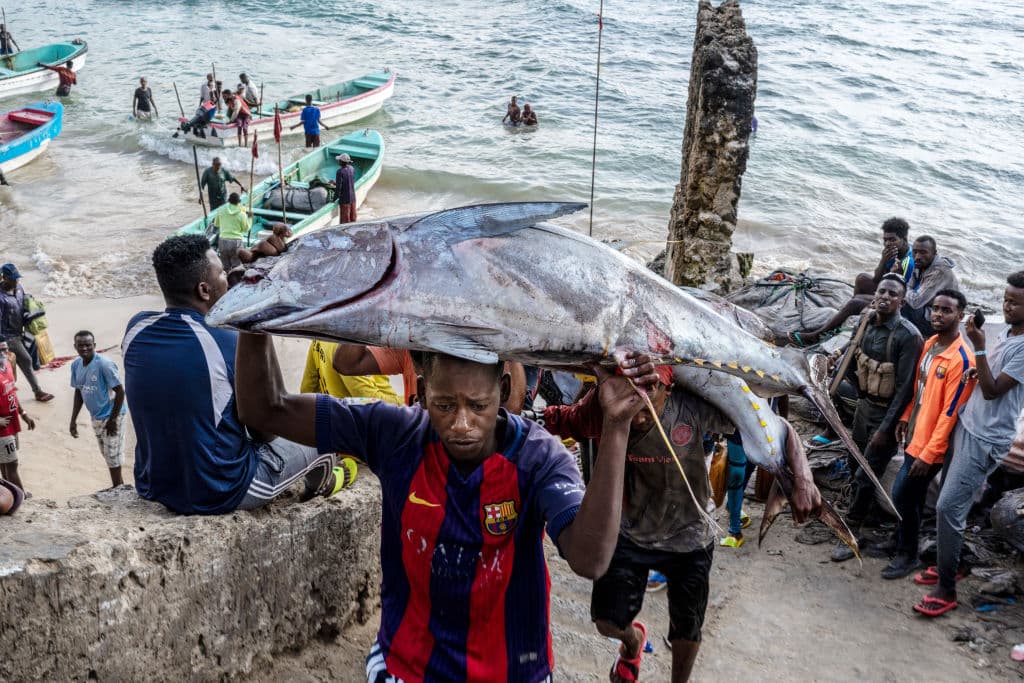
Illegal yellowfin fishing off Somalia is doing more than stripping local waters. It is tightening pressure on a tuna stock that has been overexploited for years, while exposing how easily vessels can work inside a maritime gap that Somalia still struggles to seal.
ENACT Africa said on January 16, 2025 that illegal yellowfin tuna fishing reveals weaknesses in Somalia’s maritime security and that weak governance systems, along with irregularly awarded deep-sea fishing contracts, could deplete fisheries resources including threatened yellowfin. A local Somalia news outlet had already reported on July 9, 2024 that illegal tuna fishing by Chinese vessels had reached alarming levels. ENACT and the Institute for Security Studies put the wider cost of illegal, unreported and unregulated fishing at about US$300 million a year for Somalia, a hit that reverberates through artisanal livelihoods and regional conservation efforts.
The core problem is not just the presence of foreign vessels. It is the split between who is supposed to control the fishery and who is able to enforce the rules. ENACT said the issue is transnational and often linked to organized criminal groups. The report also pointed to legal and jurisdictional complications inside Somalia’s federal system, where Puntland’s semi-autonomous authorities have reportedly issued their own licenses to Chinese operators, complicating national enforcement. Somalia’s Ministry of Fisheries and Blue Economy says it retains full and exclusive regulatory authority over foreign fisheries licensing, even as it uses SOMTURK PLC as its official service provider for the licensing process.
The licensing dispute reaches back to December 2018, when then fisheries minister Abdillahi Bidhan signed a deal allowing Chinese companies to fish within 24 nautical miles of Somalia’s shores for US$1 million. That agreement, plus the reported licensing activity in Puntland, has left enforcement fragmented at the exact moment the yellowfin stock needs tighter control, not looser oversight.
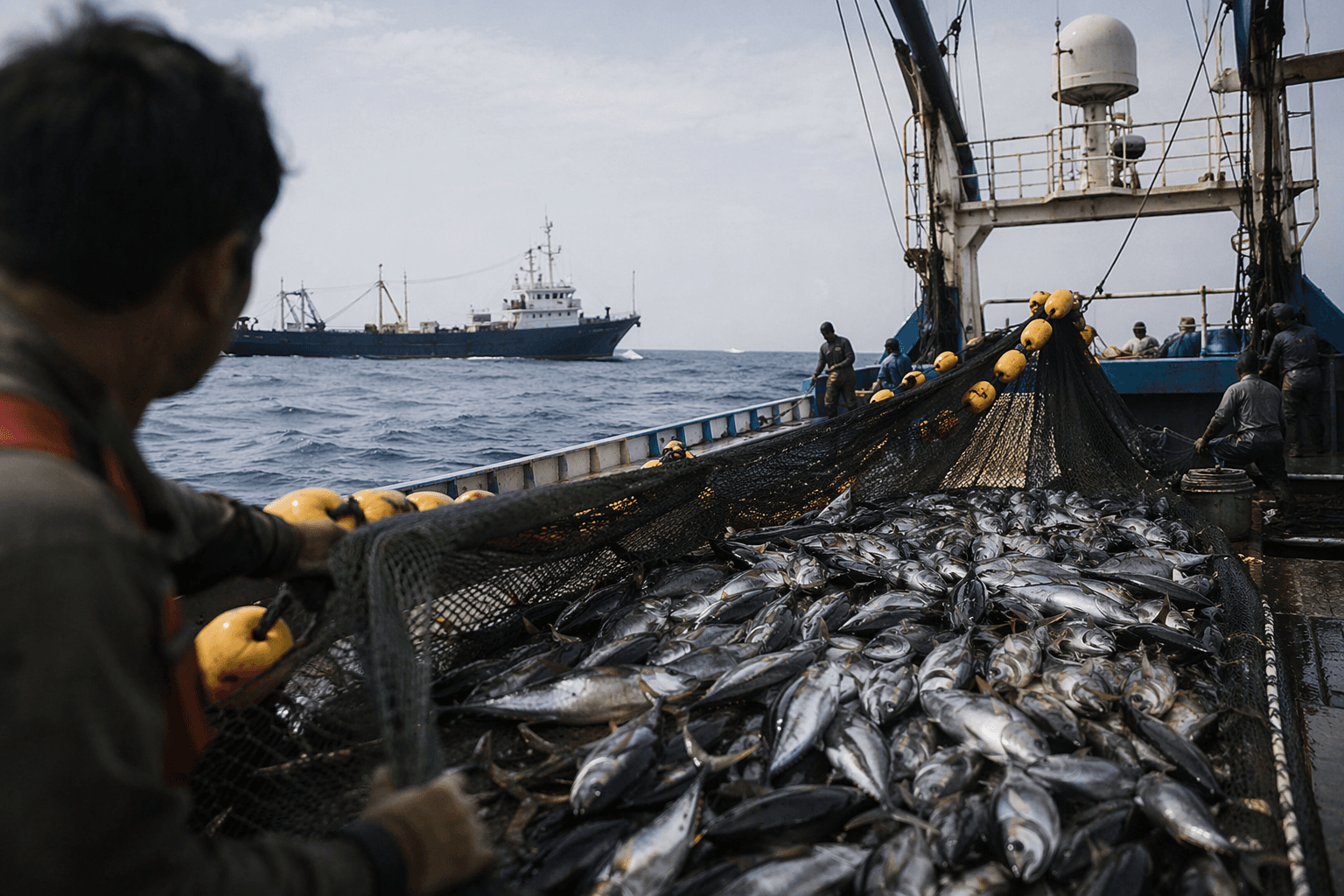
The international management picture is no stronger. The Indian Ocean Tuna Commission manages tuna and tuna-like species in the Indian Ocean, but it has no direct law-enforcement mandate, leaving member states to police the fishery themselves. ENACT and the Institute for Security Studies say that has not been enough. Since 2015, global commercial tuna catches have consistently exceeded sustainable catch limits, and the IOTC’s 2024 yellowfin stock summary says the Indian Ocean stock has been overexploited since 2015. Earlier assessments in 2018 and 2021 found the stock was overfished and subject to overfishing. In 2021, the IOTC said a sustained 30% catch reduction would give more than a 67% chance of rebuilding the stock by 2030.
The pressure is still visible offshore. Reporting linked to the Liaoning Daping Fishery Group says the Liao Dong Yu fleet has operated in Somali waters since at least 2019. One vessel, Liao Dong Yu 578, was hijacked off Puntland on January 1, 2026 near Bandarbeyla, after an earlier hijacking in November 2024 ended with a ransom payment and release in January 2025. Dave Harvilicz said the fleet is known for fishing illegally off Somalia and depleting the yellowfin tuna fishery. Unless Somalia closes the enforcement gap, yellowfin will keep drawing boats, money and pressure, while confidence in the fishery keeps sliding with every illegal set.
This article was produced by Prism’s automated news system from verified source data, official records, and press releases, then run through automated quality and moderation checks before publishing. The system is built and supervised by the people who set the standards it runs under. Read our full AI policy.
Did this article answer your question?