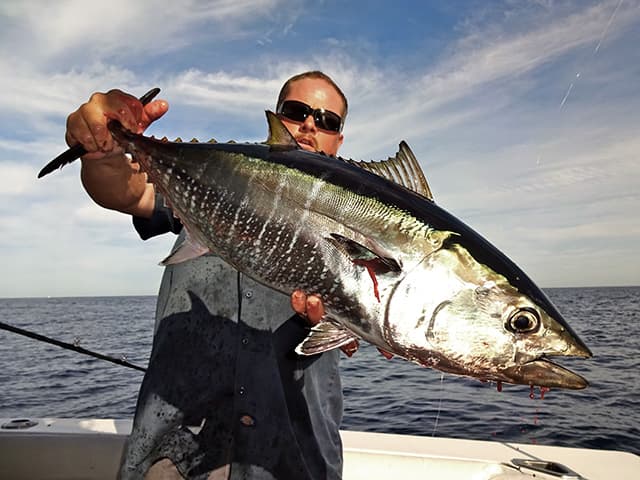
Chunking turns tuna fishing into a controlled feeding trail
When tuna show on the meter but won’t stay put, chunking builds a feeding lane the fish keep circling. The payoff is control: better drift, better timing, and a bait that looks right in the trail.
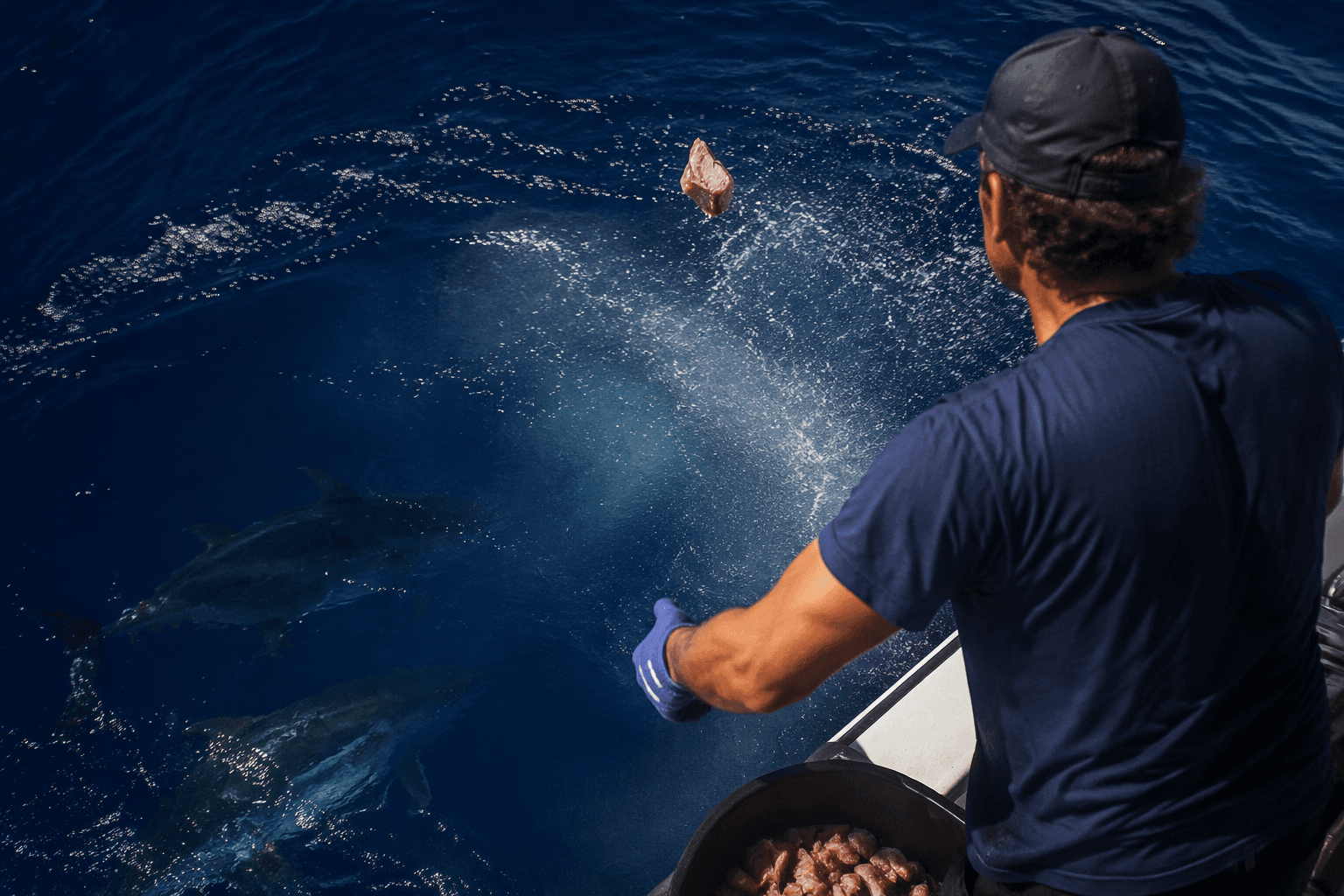
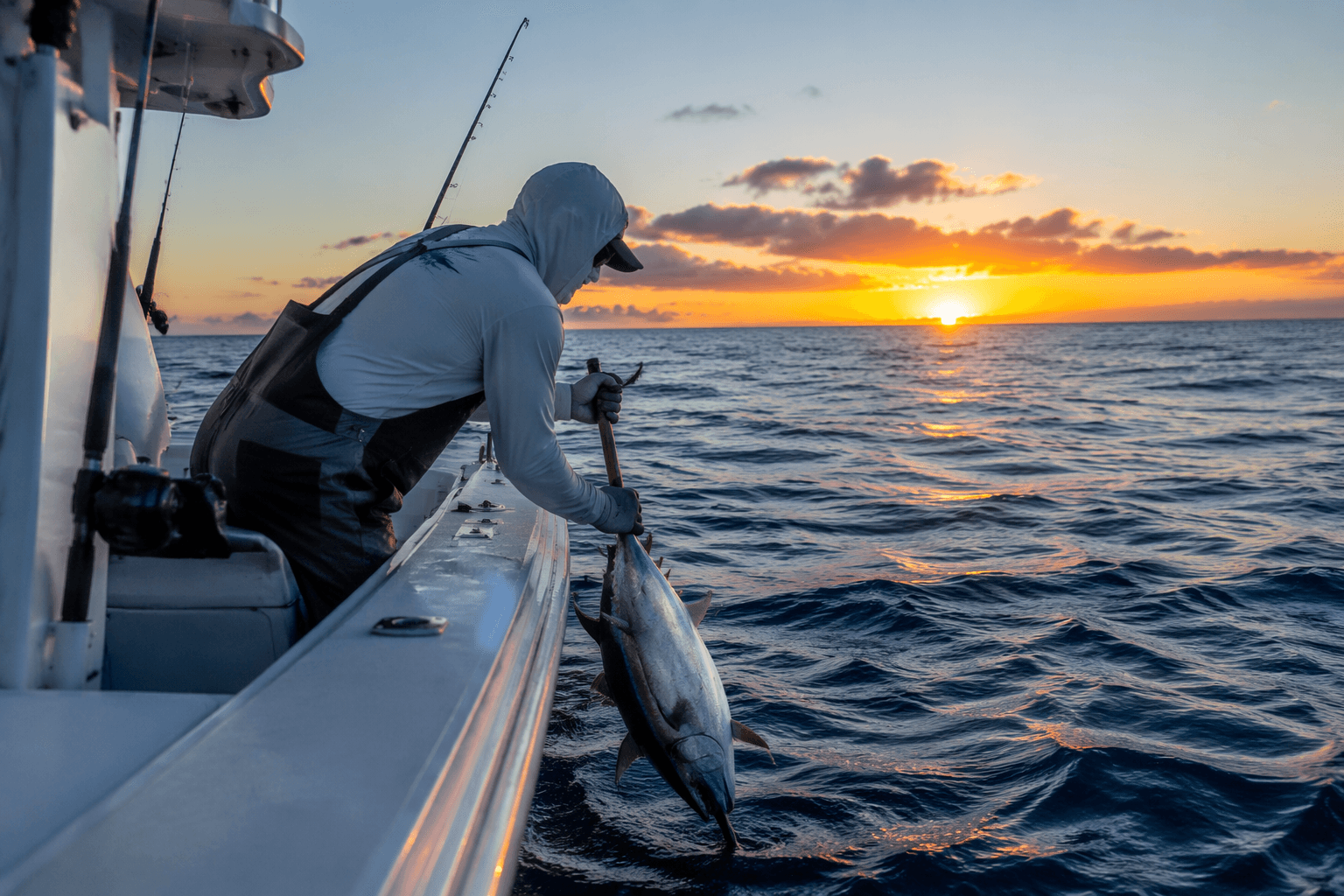
Cut bait drifting off the transom can hold yellowfin, bluefin, bigeye, and albacore behind the boat. Instead of chasing marks at trolling speed, you cut bait into chunks and feed the current, building a chum slick that gives tuna a reason to hang around. When the trolling bite slows, that controlled trail often does more than a bigger spread ever will.
Why chunking changes the game
At its core, chunking uses the tuna’s own feeding behavior against them. The free pieces fall and drift in a pattern, the scent spreads, and the visual trail pulls fish toward the boat long enough for a hooked bait to get eaten in the lane. It works best when fish are showing on electronics but not committing to moving baits, because the boat stops trying to cover water and starts managing one feeding line.
In the Mid-Atlantic and Northeast, that approach is especially tied to offshore canyon fishing. September through November is the classic window, when tuna season and bait movement often line up and the current can turn a good slick into a dependable one. The method also fits Atlantic highly migratory species fishing off the U.S. East Coast, where NOAA Fisheries manages yellowfin tuna as part of the Atlantic HMS framework and keeps recreational statuses, minimum sizes, and bag limits updated for species including bigeye, albacore, yellowfin, and skipjack.
Build a slick that fishes clean
A clean chunk line starts with consistency. Menhaden, mackerel, butterfish, and sardines are all common chunk baits because they shed scent and oil well, which helps the trail hold together as it drifts. The trick is to make every piece behave the same way, because if some chunks sink fast and others flutter off line, the slick gets sloppy and the fish stop treating it like a food lane.
Current speed is the next decision. If the current is too fast, the chunks spread too thin and the trail breaks up before it reaches the strike zone. If it is too slow, the bait piles up instead of stretching into a lane, so you lose the long, narrow feeding trail that keeps tuna under the boat. The best drifts are the ones where the boat and the slick move together just enough to carry scent, but not so fast that the trail outruns your bait.
How to manage the drift
Chunking is not passive. You want the boat positioned so the slick passes where you can fish it, with enough room for the chunks to sink naturally and move back under you. The goal is to let the chum column stay organized, then drift a bait through it on slack so the hookbait behaves like part of the trail rather than a lure racing through it.
That is why anglers keep adjusting chunk size, bait type, and whether the pieces carry skin or not until the fish react. A baited hook also needs to stand out just enough from the free chunks to get eaten after the school settles in. Too much difference and the fish get wary; too little and the bait disappears into the pile.
Rigging that helps tuna stay honest
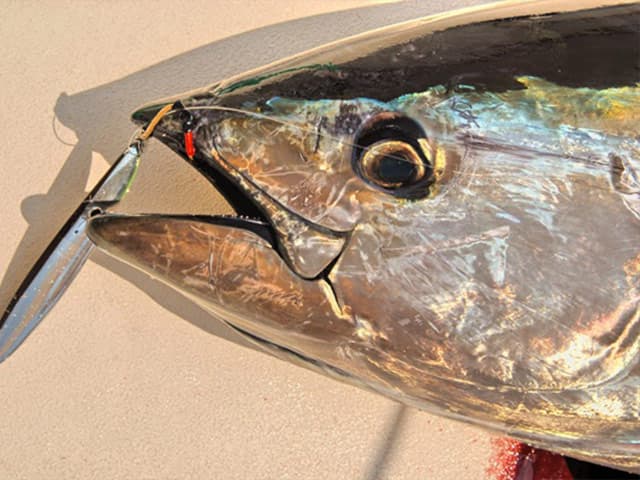
Modern chunking leans hard on simple, strong terminal tackle. Circle hooks are common in tuna fishing now because they pair well with drifting baits and reduce deep-hooking risk, and NOAA Fisheries' recreational Atlantic HMS guidance reflects that broader move. In a slick, the bait often gets picked up while it is sitting naturally in the trail rather than moving hard.
The leader and hook choice need to match the presentation, not fight it. You need to let out enough slack for the bait to drift naturally through the chum column, because a tight line ruins the illusion of a free piece in the slick.
When chunking beats trolling or blind drifting
Chunking shines when trolling stops producing and you still know fish are in the area. That is why captains such as Jack Sprengel and Max Dispoto switch to chunking for yellowfin and bluefin when the trolling bite slows down. It is also why many charter crews out of Ocean City and Indian River still do it, even if they will tell you it is messier or more boring than pulling spreader bars and lures.
Blind drifting leaves too much to chance when tuna are scattered. Chunking gives them a reason to stack up under the boat, which is a big advantage in offshore canyons where current and bait are already working in your favor. Charter fleets were chunking every day in the 1990s unless clients specifically wanted billfish.
Bluefin and yellowfin do not always call for the same mindset
Yellowfin are the cleanest fit for classic Atlantic chunking, especially in canyon water during the September to November window. NOAA Fisheries manages Atlantic yellowfin under the highly migratory species framework, and recreational rules are part of the same status system that covers other tuna species. When yellowfin are on the meter and the trolling bite is fading, chunking is often the simplest way to turn a mark into a repeat bite.
Bluefin require more caution. In the Gulf of Mexico, hook changes were designed to protect bluefin tuna while still allowing catches of yellowfin tuna and swordfish. If bluefin are likely to show up in the slick, circle hooks and careful handling move from good practice to essential practice.
This article was produced by Prism’s automated news system from verified source data, official records, and press releases, then run through automated quality and moderation checks before publishing. The system is built and supervised by the people who set the standards it runs under. Read our full AI policy.
Did this article answer your question?