Late-season tuna reward long offshore runs to Tanner Bank
Tanner Bank pays when warm water, bait, and structure line up, but the 100-mile run only makes sense when bluefin reports and deck-ready tackle justify the fuel.
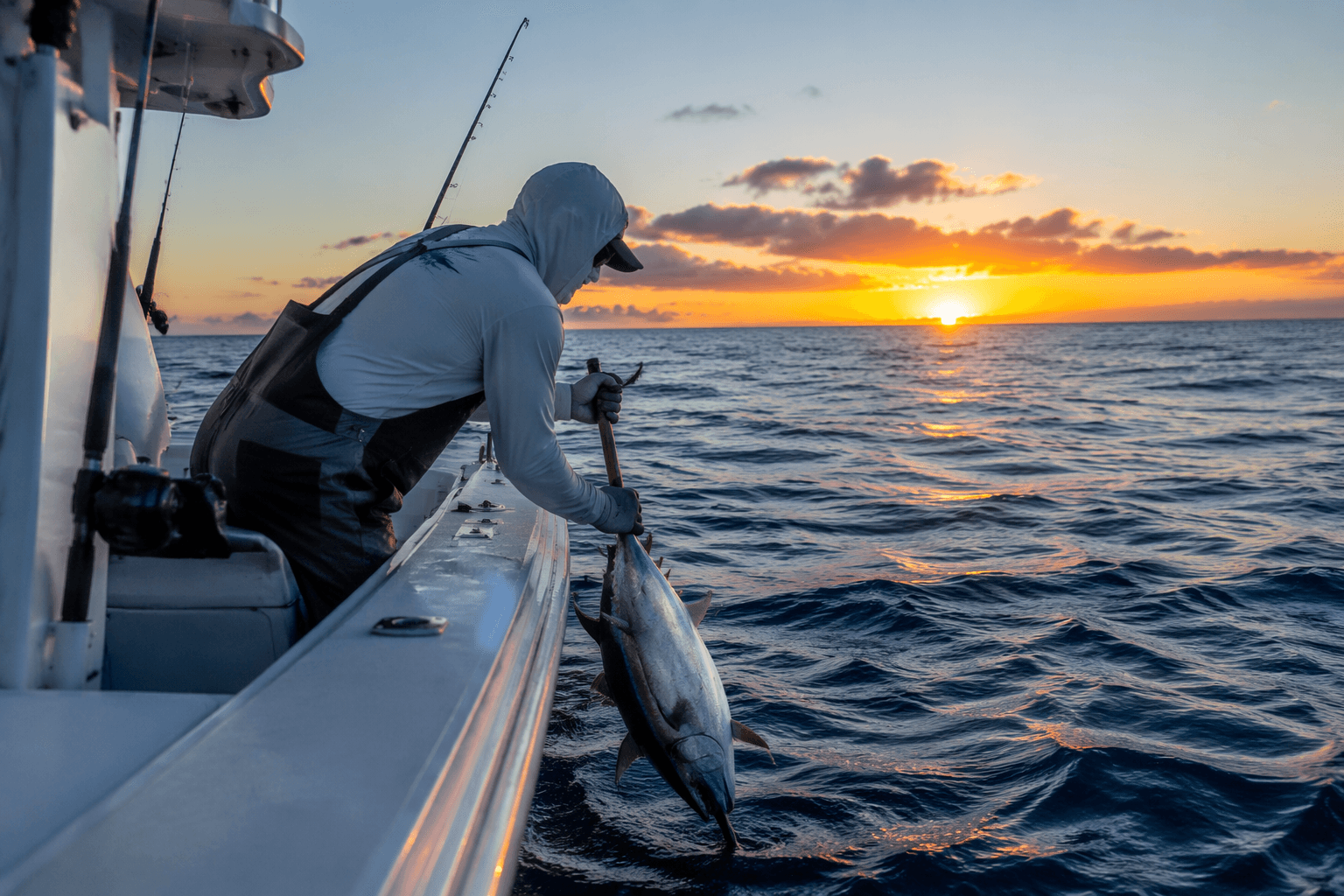
Tanner Bank is not the kind of offshore stop you make on impulse. Capt. Brandon Hayward’s FishTrack writeup puts the Cortez and Tanner banks roughly 100 miles from the Southern California coast, which is far enough to make private boaters think hard about fuel, weather, and daylight, but close enough to run when the fish justify it. That is the whole Tanner decision in one sentence: if the water, bait, and timing are right, the long haul can pay.
Why the run is a decision, not a default
The bank works as a confluence fishery, not a random waypoint. FishTrack frames the place around four pieces that have to line up together: warm water, structure, bait presence, and seasonal timing. That is why Tanner feels different from a closer offshore hop, where an angler can gamble on shorter runs and still get home with a story. At Tanner, the run itself becomes part of the forecast.
The offshore geography backs that up. Marine Conservation Institute described Cortes and Tanner Banks as recreation and biodiversity hotspots in 2019, a reminder that these are significant pieces of seafloor, not just tuna names on a chart. Islapedia places Cortes Bank about 100 miles west of Point Loma and 50 miles southwest of San Clemente Island, which helps explain why the whole zone sits on the outer edge of what many private boats will attempt.
The bluefin you are chasing
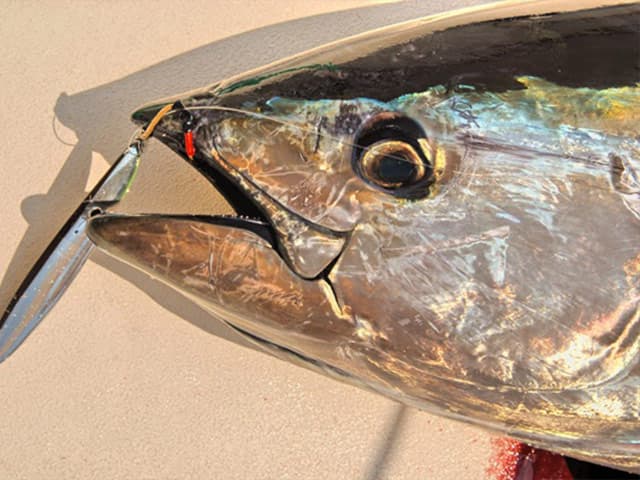
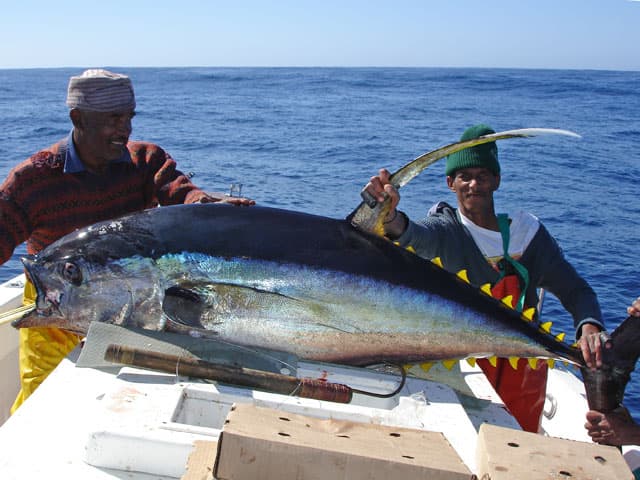
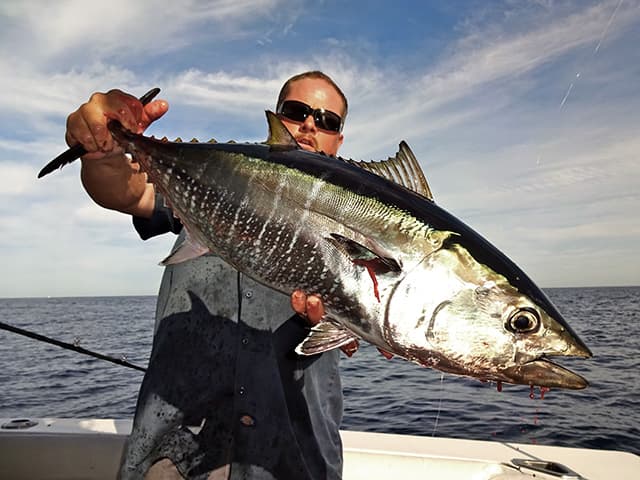
Pacific bluefin tuna are the species that keep Tanner in the conversation. California Sea Grant says they can dive as deep as 550 meters, or 1,800 feet, and grow to 450 kilograms, or 990 pounds, so this is not a fishery built around small bets or light gear. NOAA Fisheries maintains a Pacific bluefin tuna species profile, and the size ceiling alone tells you why crews go prepared for real fights, not quick taps.
That history runs deep in California too. The San Diego History Center notes that U.S. tuna canning began in 1903, and that California’s tuna fishery later grew into the state’s largest fishery in value and pounds landed. Tanner sits inside that long offshore tradition, where the biggest reward has always gone to crews willing to leave the coast behind and fish where the tuna actually live.
What the recent bite said about the banks
Late-season signals around Tanner have been strong enough to make the run worth watching. A September 22, 2024 Friedman Adventures briefing called out “Tanner/Cortez Bank bluefin tuna” and said both local fishing and long-range fishing were hot that day. Two days later, SD Kook said bluefin fishing had been tough in 2024 unless anglers were going to far offshore banks like Cortez and Tanner, and tied that run to the Rosendin Electric Offshore Classic fishing tournament.
That matters because it shows how Tanner gets used when the bite tightens up closer to shore. When local fish are inconsistent and the offshore banks are the target for tournament crews, Tanner stops being a scenic option and becomes a practical one. For private boaters, that is the clearest go/no-go clue: if the reports are pointing hard to the far banks, the long run can be the shortest path to tuna.
How to match tackle to the bank
The tackle question changes with the way the fish show. A 2024 Fish the Legend San Diego Sportfishing tackle guide on Tanner and Cortez focused on dropper loop and fly line fishing, plus reel and rod recommendations, which fits a bank where fish can move from surface feeds to more cautious bites without warning. If the tuna are up and willing, flylining is the cleaner presentation. If they are hanging a little deeper or the bite wants more control, the dropper loop stays in the game.
When the fish go deeper or the bite shifts to nighttime, vertical metal becomes the answer. A 2025 BDOutdoors Long Range Report episode on bluefin jigging highlighted RIP Roller, SK Jigs, Tuna Bombs, and tungsten lures, and stressed depth control and effective vertical jigging. That is a useful match for Tanner because Pacific bluefin can run deep, and the bank often rewards crews that can keep a jig where the fish are instead of hoping they come up.
A simple Tanner deck plan usually looks like this:
- Flyline bait when bluefin are showing high, foaming, or responding to chum
- Dropper loop when the school sits a little lower or wants a more controlled presentation
- Yo-yo iron when the fish are marking deep or the bite is built around speed and sink
- Night jigs with tight depth control when the action shifts after dark
The lesson is not to bring every piece of gear you own. It is to bring enough range that you can change with the fish instead of burning the run on one presentation.
How private boaters and local crews read the same water differently
Private boaters usually treat Tanner as a weather, fuel, and confidence call. The distance alone, roughly 100 miles, puts it on the edge of what many owners want to do without a strong bite report, a clean forecast, and a solid plan for the return ride. The FishTrack framing makes that tension explicit: the bank is just far enough that the run can feel too long, until the fish prove otherwise.
Local long-range crews read it through a wider lens. In the 2024 briefings, Tanner and Cortez were not isolated spots, they were part of a broader offshore push that included local fishing, long-range runs, and a tournament target. That is the real Tanner pattern every late season: crews that can commit get first crack at the far-bank payoff, while everyone else waits for the next window to open.
Tanner Bank rewards commitment, but only when the offshore pieces line up. Warm water, bait, structure, and timing decide whether the 100-mile run feels reckless or smart, and the 2024 bluefin chatter made clear that the farther banks were where the action concentrated when Southern California fishing got picky. When Tanner is on, the run stops being the story and starts looking like the right move.
This article was produced by Prism’s automated news system from verified source data, official records, and press releases, then run through automated quality and moderation checks before publishing. The system is built and supervised by the people who set the standards it runs under. Read our full AI policy.
Did this article answer your question?