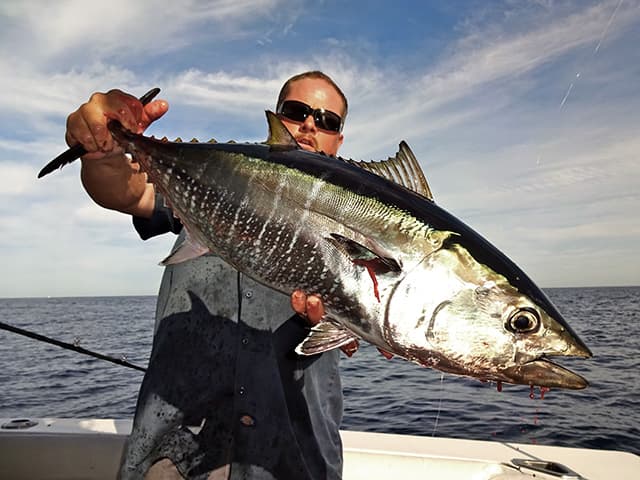
Small boat anglers can target summer Mid Atlantic bluefin tuna
A trailerable boat can get into Mid-Atlantic bluefin if you time the run, respect the weather, and fish the Middle Grounds instead of chasing big-boat miles.
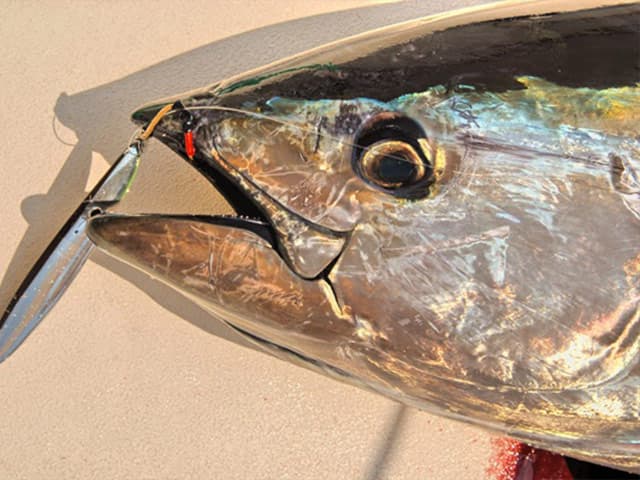
Bluefins have been caught between A Buoy and the Delaware Lightship Buoy, no more than 20 miles from the entrance to Indian River Inlet. Summer bluefin in the Mid-Atlantic set up close enough to reach from smaller outboard boats when the weather, fuel, and sea state all line up. The real edge is discipline: know your range, watch the water, and leave yourself a safe ride home.
Where the small-boat window opens
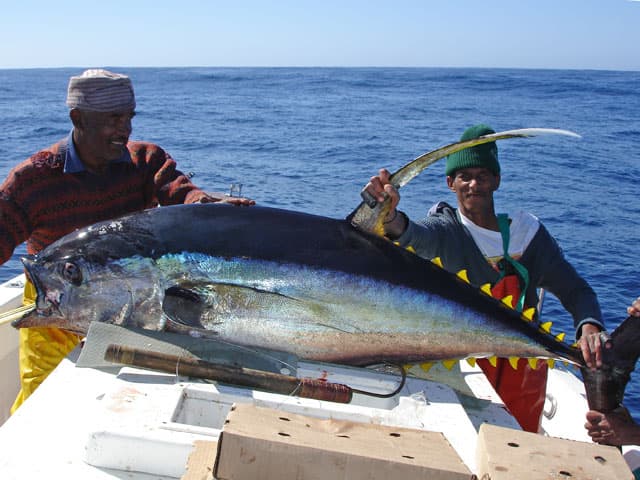
On the Middle Grounds — the core of FishTrack’s “Tuna From a Small Boat” — schools of small-to-midsize bluefin tuna take up residence in summertime. On the DelMarVa coast, bluefin and yellowfin show up close to shore in early summer where smaller boats can reach them, a pattern also reflected in PropTalk.
Anglers today have to travel farther than they used to, but bluefin still move into accessible water often enough that smaller crews can build a trip around them.
In Ocean City, tuna fishing typically starts in late May and is in full swing by the second week of the season, matching BDOutdoors’ local season timeline.
Plan the run like a safety problem
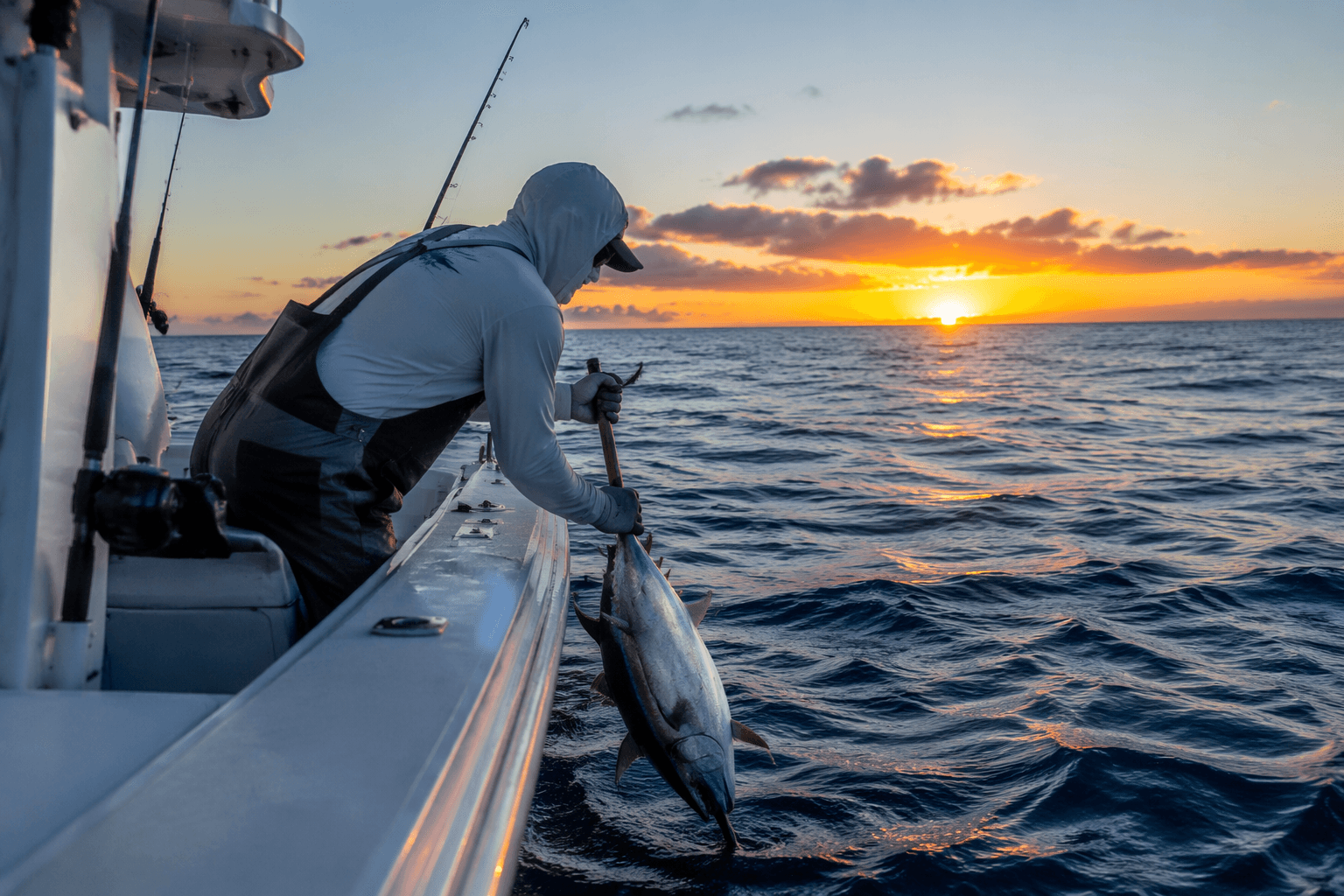
The biggest small-boat mistake is treating a tuna run like a pure fishing decision. It is really a navigation problem with a fishing payoff at the end, and the boat has to be able to handle the entire trip, not just the outbound leg. Before you leave the inlet, the question is simple: can you make the run, fish long enough to matter, and still return with reserve fuel and enough daylight to stay sharp?
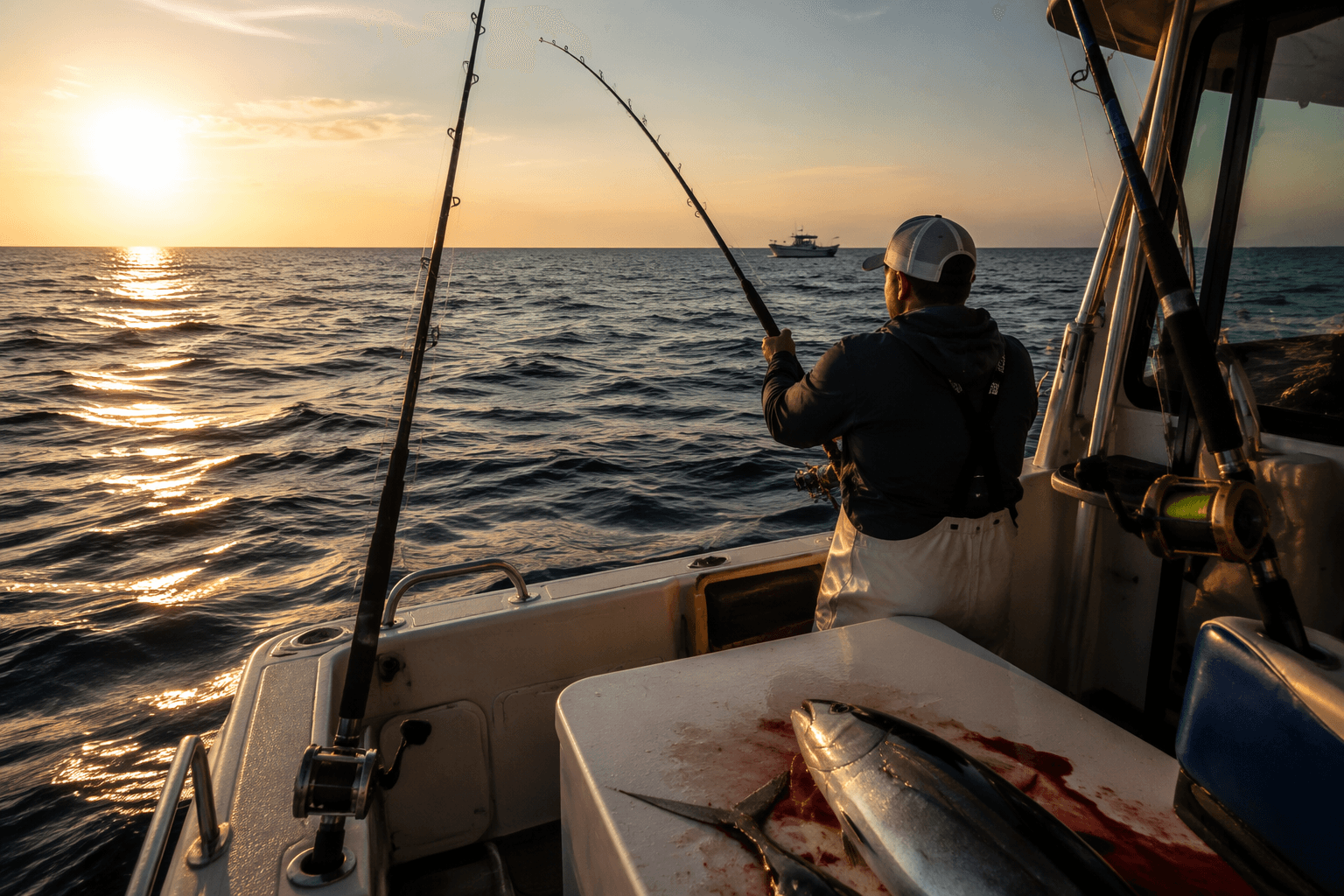
The Middle Grounds fishery is useful because when the schoolies and midsize bluefin hold on a known piece of structure, you are not burning fuel wandering aimlessly over open water. You can point the boat at a specific zone, fish the edges, and avoid the trap of running too far because you assume tuna must be farther out than they really are.
A smart small-boat plan usually comes down to a few non-negotiables:
- Know your fuel burn before you clear the inlet
- Check the sea state for the whole day, not just the morning run
- Carry enough reserve to turn around early if the weather changes
- Pick a target area like the Middle Grounds, not a vague offshore guess
- Watch bait concentrations and temperature edges on the way out
Summer bluefin are a pattern fish. When water, bait, and structure line up, you do not need to force a heroic run.
Choose tackle that fits the cockpit
The small-boat version of bluefin fishing is not about copying a giant sportfisher spread rod for rod. It is about keeping the setup lean enough that you can fight a tuna safely without turning the deck into a tangle of gear. Bluefin gear is absolutely doable without a big platform — the premise of The Fisherman’s small-boat how-to, “Yes You Can! Gear Up For Small Boat Bluefin.”
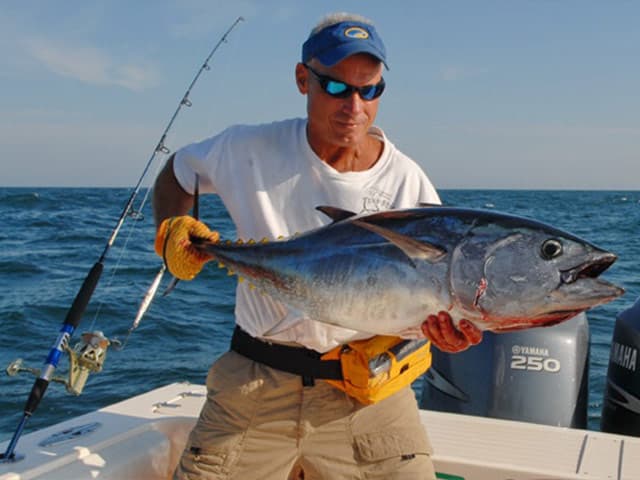
That means every piece of gear has to earn its place. On a smaller boat, room for rod holders, coolers, bait, and a clear fighting area matters as much as line class or lure count, because a crowded cockpit becomes a safety issue fast. If the bite is on small-to-midsize bluefin in reachable water, the goal is a setup that lets you fish efficiently without sacrificing movement around the boat.
The other compromise is mental, not mechanical. Small-boat crews need to accept that the day is built around conditions, not ego, and that the best setup may be the one that keeps the boat simple enough to stay organized when a fish eats close to the transom.
What small-boat crews get wrong
The first mistake is chasing the old stories without adjusting for the present. The A Buoy to Delaware Lightship Buoy lane shows how accessible bluefin once were off Indian River Inlet, but anglers today have to travel farther than they used to. If you plan the day around nostalgia instead of today’s actual range, you burn fuel and patience before you ever see a surface mark.
The second mistake is ignoring the summer timing. Ocean City’s tuna season starts in late May, with the fishery fully engaged by the second week of the season. If you launch too early and expect the full bite too soon, you may be running on hope instead of a real seasonal pattern.
The last mistake is pretending a small boat can absorb bad decisions the way a larger boat sometimes can. Small-boat tuna works because the fish come close enough, the Middle Grounds hold school-sized bluefin in warm weather, and the run can be planned with discipline.
This article was produced by Prism’s automated news system from verified source data, official records, and press releases, then run through automated quality and moderation checks before publishing. The system is built and supervised by the people who set the standards it runs under. Read our full AI policy.
Did this article answer your question?