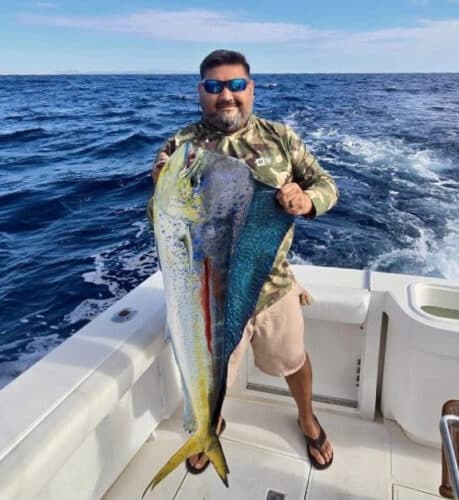
Devin Acton breaks down tuna reports, glidebaits, and weather windows
Acton’s most useful advice is simple: read the reports, match the spread to the bite, and time the run around the weather and the bluefin rules.

Devin Acton’s June 25 appearance on Episode #87 becomes a practical summer tuna checklist: trust the right reports, build around the glidebait bubble, and keep one eye on the weather. Jimmy Fee’s conversation with Acton is built for anglers trying to turn scattered intel into a real offshore plan. The topic list runs through fractional fish reports, Panamanian yellowfin, Cape Cod bluefin, and days of wind and darkness, which is exactly the mix that decides whether a run is worth making.
Read the report for what it can actually tell you
Reports have become part of the decision-making process itself. Fractional fish reports are the kind of partial, fast-moving intel tuna anglers now sift through from captains, shops, and online communities to choose the right day, the right water, and the right bait.
Treat reports as a narrowing tool, not a guarantee. If the same area, bait, or body of water keeps coming up in different places, that is the signal to take a harder look. If the reports are vague, scattered, or already stale, hold back and wait for something cleaner.
Do not ignore the glidebait conversation
Acton and Fee’s discussion of the glidebait bubble is a reminder that lure trends do move through the tuna world, and fast. That does not mean every bluefin or yellowfin trip needs to become a glidebait-only mission. The spread should reflect what anglers are actually throwing, how the bite is evolving, and whether the fish are responding to a newer presentation or a more basic one.
His recent On The Water work spans Saltwater Bluefin Lessons from the Jimmy Rig, The 30-Year-Old Surf Virgin, and How to Catch Trophy Largemouth on Wakebaits, which fits the way the podcast bridges bass-style lure thinking and offshore tuna application. When a lure style like a glidebait starts showing up in tuna conversation, the smart move is to understand where it belongs in the spread, not to assume it is the whole answer.
A good practical test is simple: if the report is built around baitfish and finicky fish, a glidebait may belong in the rotation. If the fish are keyed on a specific forage, the better play may be the presentation that matches that forage, the way jigs matched sand eels off Cape Cod.
Let weather windows set the trip, not just the bite
Weather still decides more offshore days than enthusiasm does. On August 1, 2024, Devin Acton and Jimmy Fee caught bluefin on jigs east of Cape Cod during a blustery weekend, and Friday was the best offshore window before conditions went downhill. That is the kind of detail tuna anglers live with every summer, where the right forecast can matter as much as the right trolling spread.
Plan your tuna day around the safest, cleanest run window, then fit the fishing around it. If one day is clearly better for getting offshore and home, that day often beats waiting for a theoretical better bite. In this fishery, timing the run can be as important as timing the first drift.
Read the fishery as a region, not a single spot
Cape Cod bluefin and Panamanian yellowfin show how serious tuna anglers compare fisheries across regions to sharpen their own decisions. The point is not that those fisheries are the same, but that the thinking is transferable: match your approach to the water, the season, and the species in front of you. Since 2022, OTW has used its tuna podcast to interview Northeast tuna captains and scientists about bluefin.
Acton’s mix of Cape Cod and Panamanian references also keeps the conversation grounded in named species. Bluefin off the Northeast, yellowfin in Panamanian waters, and the changing offshore scene around the Northeast Canyons all demand different reads.
Know the rule sheet before you clear the inlet
This is also a rule-sensitive fishery, and NOAA Fisheries has made that clear by adjusting recreational Atlantic bluefin tuna retention limits effective June 1, 2026. Those limits can vary by permit, vessel type, fish size, and region, so the same boat that is legal in one setup may not be under another. Tunas sit inside the broader Atlantic highly migratory species rules alongside swordfish, sharks, and billfishes, so bluefin trips begin with paperwork as much as fuel.
As of June 26, 2026, NOAA listed both the Gulf of Maine and Southern New England trophy areas as open, and Southern New England showed 1.4 metric tons landed to date out of a 2.3 metric ton base quota. Check that live quota picture before planning a trophy-area run.
This article was produced by Prism’s automated news system from verified source data, official records, and press releases, then run through automated quality and moderation checks before publishing. The system is built and supervised by the people who set the standards it runs under. Read our full AI policy.
Did this article answer your question?