EPA Guidelines Explain Safe Weekly Tuna Consumption Limits for Mercury Exposure
A single 4-ounce albacore steak delivers roughly 40 micrograms of mercury; know your species and the EPA math before your next tuna meal.
Every tuna angler knows the feeling: you've worked hard for that fish, cleaned it perfectly, and you want to eat it. The good news is you absolutely can. But the question of how often, and which species, is worth understanding properly, because the answer varies dramatically depending on what's in the cooler.
All tuna contains some methylmercury, a form of mercury that accumulates in fish tissue over their lifetimes, and larger, longer-lived species build up more of it. The numbers matter more than most anglers realize, and the EPA's framework gives you a concrete way to work through them.
The Number at the Center of Everything
The EPA sets the safe daily intake at 0.1 micrograms of methylmercury per kilogram of body weight. For a 150-pound adult, that works out to about 6.8 micrograms per day. That figure, formally called the reference dose (RfD), is the foundation for every consumption recommendation you've ever seen on a fish advisory chart.
An RfD is determined to be a rate of exposure that a person can experience over a lifetime without appreciable risk of harm; however, the RfD for mercury is specifically protective of neurodevelopmental effects from a critical window of development for a fetus during pregnancy. In other words, the standard is calibrated to protect the most vulnerable possible consumer, which means there's meaningful buffer built in for a healthy adult angler.
Why Species Selection Changes Everything
The pattern is straightforward: bigger tuna species live longer, eat more prey, and accumulate more mercury. Skipjack are small and short-lived, which is why canned light tuna is the safest everyday option. But for anglers targeting bluefin, yellowfin, or bigeye, the calculus shifts considerably.
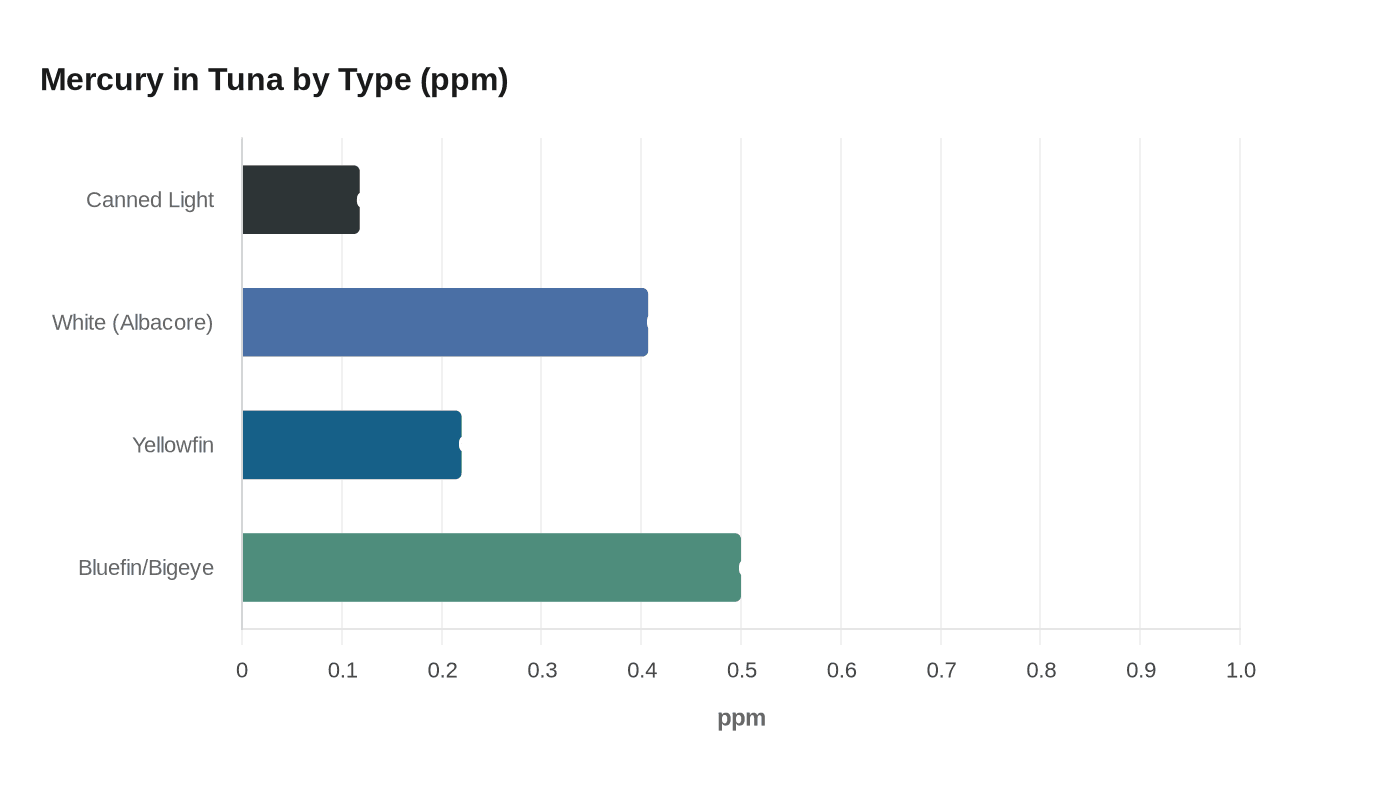
A study comparing canned varieties found white tuna averaged 0.407 ppm versus 0.118 ppm for light, confirming that simply switching from white to light cans cuts your mercury intake by more than half. Scale that up to a fresh-caught albacore or bluefin steak, and the numbers climb further. Eating a single 4-ounce serving of albacore tuna delivers roughly 40 micrograms of mercury in one sitting.
Yellowfin and albacore tuna have average mercury concentrations that are slightly above the US-based consumption guideline of 0.22 parts per million. Atlantic and Pacific bluefin, bigeye, and blackfin tunas exceed the European Commission threshold guideline of 0.5 ppm. Bluefin tuna mercury levels are generally high, but vary by ocean basin.
The Practical Weekly Limits by Species
The FDA and EPA translate the reference dose into a three-tier system that tells you exactly how often you can eat each species:
Any fish with an average mercury concentration at or below 0.15 µg/g falls into the "best choices, eat 2-3 servings a week" category. Skipjack-based canned light tuna clears that bar comfortably.
Fish with average mercury concentrations from 0.15 µg/g up to 0.23 µg/g fall into the "good choices, eat 1 serving a week" category. Canned light tuna sits in "best choices," while albacore (white) tuna and yellowfin tuna land in "good choices," and bigeye tuna falls into "choices to avoid."
Using the EPA reference dose as the yardstick, here's where fresh and processed tuna species land for a typical adult:
- With canned light tuna, you can safely eat about three servings per week and stay well within the EPA's limit.
- With albacore or yellowfin, two servings per week is a more appropriate ceiling.
- If you're eating tuna steaks at restaurants (which are often yellowfin or bigeye and tend to be larger than 4 ounces), one serving per week is a reasonable limit.
- Bigeye tuna is on the FDA's "avoid" list during pregnancy entirely.
How Mercury Actually Accumulates in Your Body
Your body absorbs methylmercury easily when you eat fish, and it crosses into the brain and nervous system. In small amounts, your body clears it gradually. But if you consistently eat more than your body can process, mercury accumulates and can cause real harm.
These aren't hard cutoffs where one extra can triggers poisoning. Mercury builds up gradually over weeks and months. The concern isn't a single heavy-tuna week but a sustained pattern of eating it daily or near-daily. For most anglers who go out, land a nice yellowfin, eat well for a few days, and then move on, the risk is minimal. It's the daily-tuna-for-lunch crowd that needs to recalibrate.
More than one-third of Americans' exposure to methylmercury comes from tuna, because tuna is fairly high in mercury and Americans consume it frequently. That stat alone explains why the EPA and FDA focus so heavily on this one species group.
Who Needs to Be Most Careful
Mercury is most dangerous to developing brains. A fetus, infant, or young child is far more vulnerable to neurological effects than an adult, which is why the guidelines are stricter for these groups.
The FDA recommends pregnant and breastfeeding women eat two to three servings of lower-mercury fish per week, including light tuna, but limit albacore tuna to no more than one serving.
Children need smaller portions. A serving is about 1 ounce for ages 1 to 3, 2 ounces for ages 4 to 7, 3 ounces for ages 8 to 10, and 4 ounces by age 11.
In infants and fetuses, high doses can lead to cognitive difficulties, cerebral palsy, deafness, and blindness. In adults, mercury poisoning can affect fertility and blood pressure regulation.
The Nutritional Case for Keeping Tuna in the Rotation
None of this means cutting tuna out. The reason this is a balancing act rather than a simple "avoid tuna" message is that tuna is genuinely nutritious. It's high in protein, low in fat, and one of the more affordable sources of omega-3 fatty acids. A 3-ounce serving of canned light tuna provides about 190 milligrams of the omega-3 fats DHA and EPA combined, which support heart and brain health.
These omega-3 numbers are moderate compared to fatty fish like salmon or sardines, which deliver significantly more omega-3s with less mercury. If you're eating tuna primarily for the omega-3 benefits, those alternatives give you more nutritional value per serving with less risk. But few anglers are going to swap their bluefin spread for a sardine run.
Brand-to-Brand Variation Matters More Than You Think
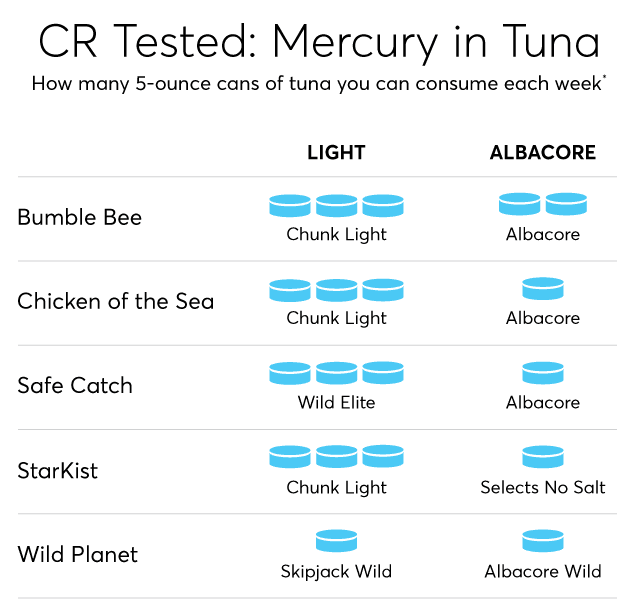
Even within a species, not all cans or cuts are equal. Albacore has much more mercury than light or skipjack tuna, regardless of the brand, which isn't surprising since albacore is larger and lives longer. But the disparity was quite wide: albacore products had three times more mercury, on average, than others in one Consumer Reports test.
For example, Chicken of the Sea's albacore had 10 times more mercury than its light tuna, but mercury levels in Wild Planet's albacore and skipjack tunas were very close to each other. Geographic origin of the catch plays a real role: geographic origin is a critical factor in determining mercury concentration in fish, as demonstrated in wild yellowfin and bluefin tuna.
About half of Americans said they did not know that different varieties of canned tuna have different levels of mercury, and 18 percent said they didn't know that canned tuna has any mercury at all. For anyone in the tuna fishing community, that kind of knowledge gap is hard to imagine, but it underscores why this guidance matters beyond the boat ramp.
The bottom line for anglers: skipjack and light tuna give you the most dietary flexibility. Yellowfin and albacore warrant a one-to-two-serving weekly ceiling. Bigeye and bluefin, the prized tournament species, deserve the most caution, especially for anyone sharing the table with young children or pregnant family members. Fish them hard, but eat them smart.
This article was produced by Prism’s automated news system from verified source data, official records, and press releases, then run through automated quality and moderation checks before publishing. The system is built and supervised by the people who set the standards it runs under. Read our full AI policy.
Did this article answer your question?