Gujarat trawlers land 12 tonnes of yellowfin tuna off Mangrol
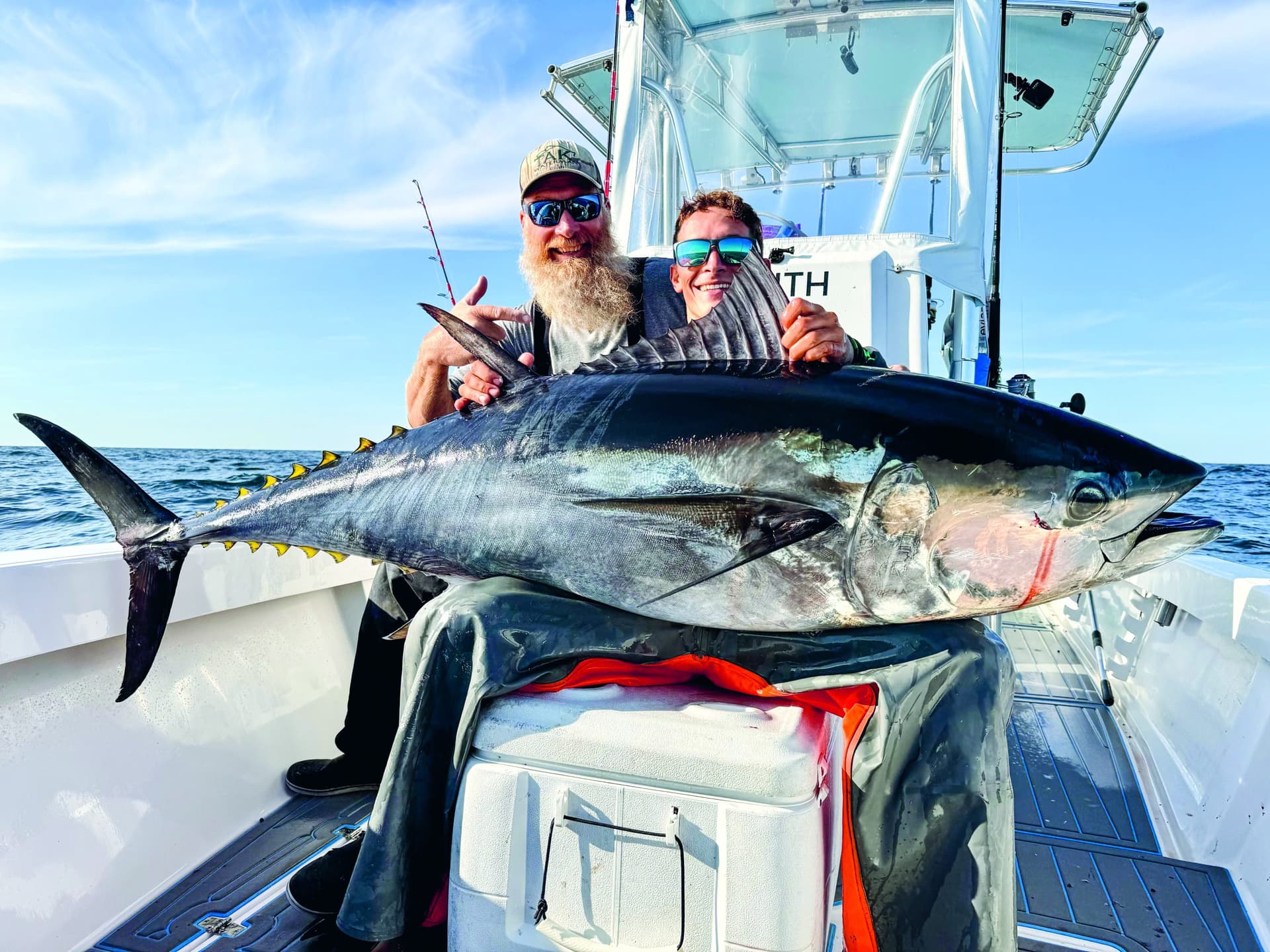
Two trawlers brought in about 12 tonnes of yellowfin from 100 nautical miles off Mangrol, with fish mostly in the 60-90kg class. The haul points to a strong offshore pocket that tuna crews will be watching closely.
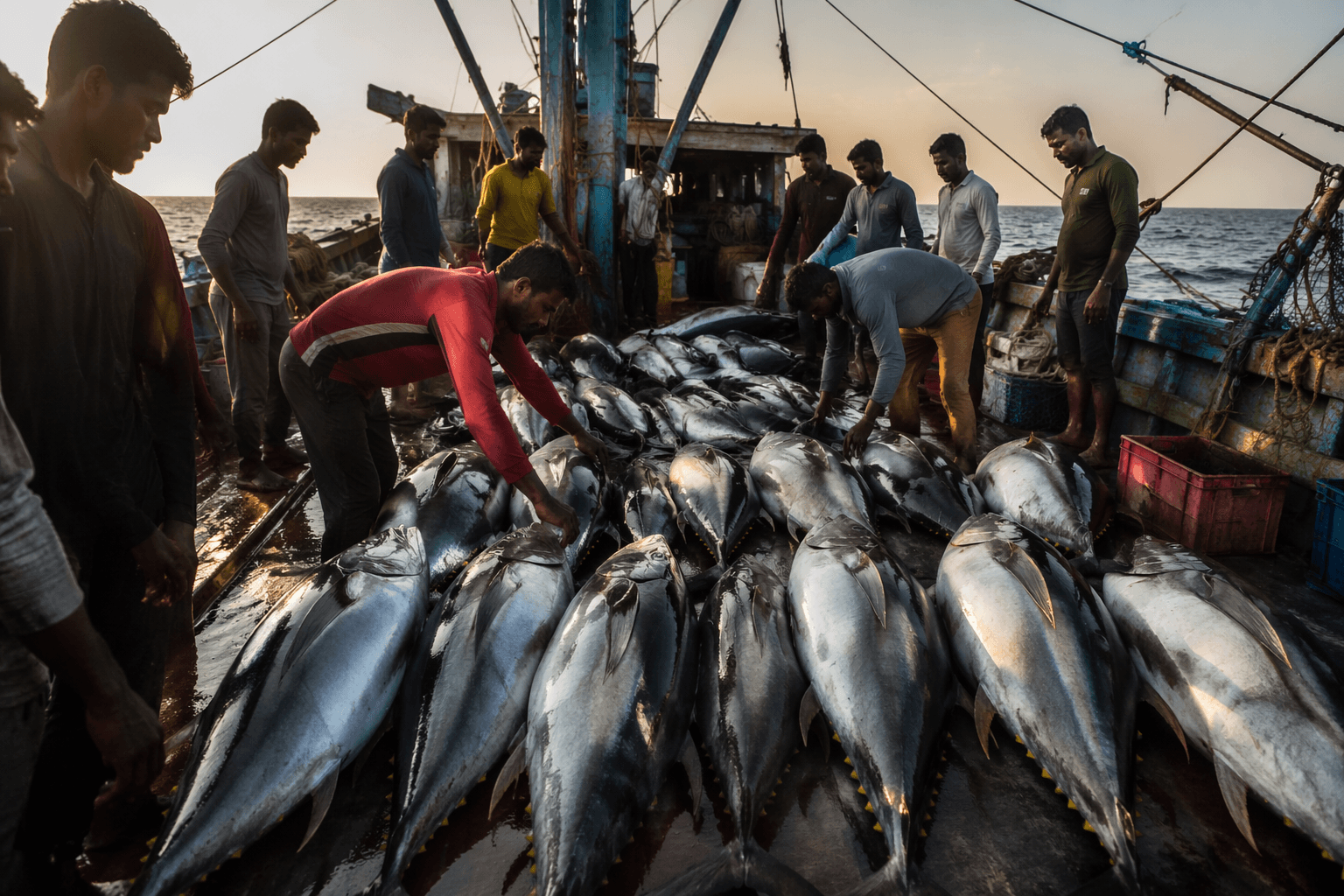
A pair of deep-sea trawlers has landed around 12 tonnes of yellowfin tuna after working roughly 100 nautical miles off Mangrol in Gujarat’s Junagadh district, a catch that puts a sharp spotlight on what may be a concentrated offshore run of larger fish in that stretch of the Arabian Sea.
The yellowfin were mostly in the 60-90kg range, a size band that immediately matters to tuna crews because it signals mature fish holding well offshore rather than scattered school-size movement close inshore. For Mangrol, an important harbour on Gujarat’s Saurashtra coast, the landing is more than a strong day’s work: it suggests there is meaningful tuna pressure out beyond the usual nearshore grounds, and that crews with the range and the gear to push offshore are finding payoff there right now.
The Department of Fisheries highlighted the haul as one of the season’s biggest and credited both crew skill and the wider growth of India’s marine fisheries sector. That context fits Gujarat particularly well. The state fisheries department says Gujarat has 18 marine fish landing centres, while Mangrol port is being developed with support from the central Sagarmala scheme, part of a wider push to strengthen the coast’s fishery infrastructure.
The state’s scale is hard to miss. Gujarat has a 1,600 km coastline, and its Department of Fisheries reported marine fish production of 26,828 metric tonnes in 2024-25 in a recent departmental update. CMFRI’s latest marine catch estimates put Gujarat at 754,000 tonnes of marine fish landings in 2024, the highest among Indian states. In that setting, a 12-tonne yellowfin landing off Mangrol stands out not just as a local success but as a sign of where the state’s offshore fishery is still delivering.
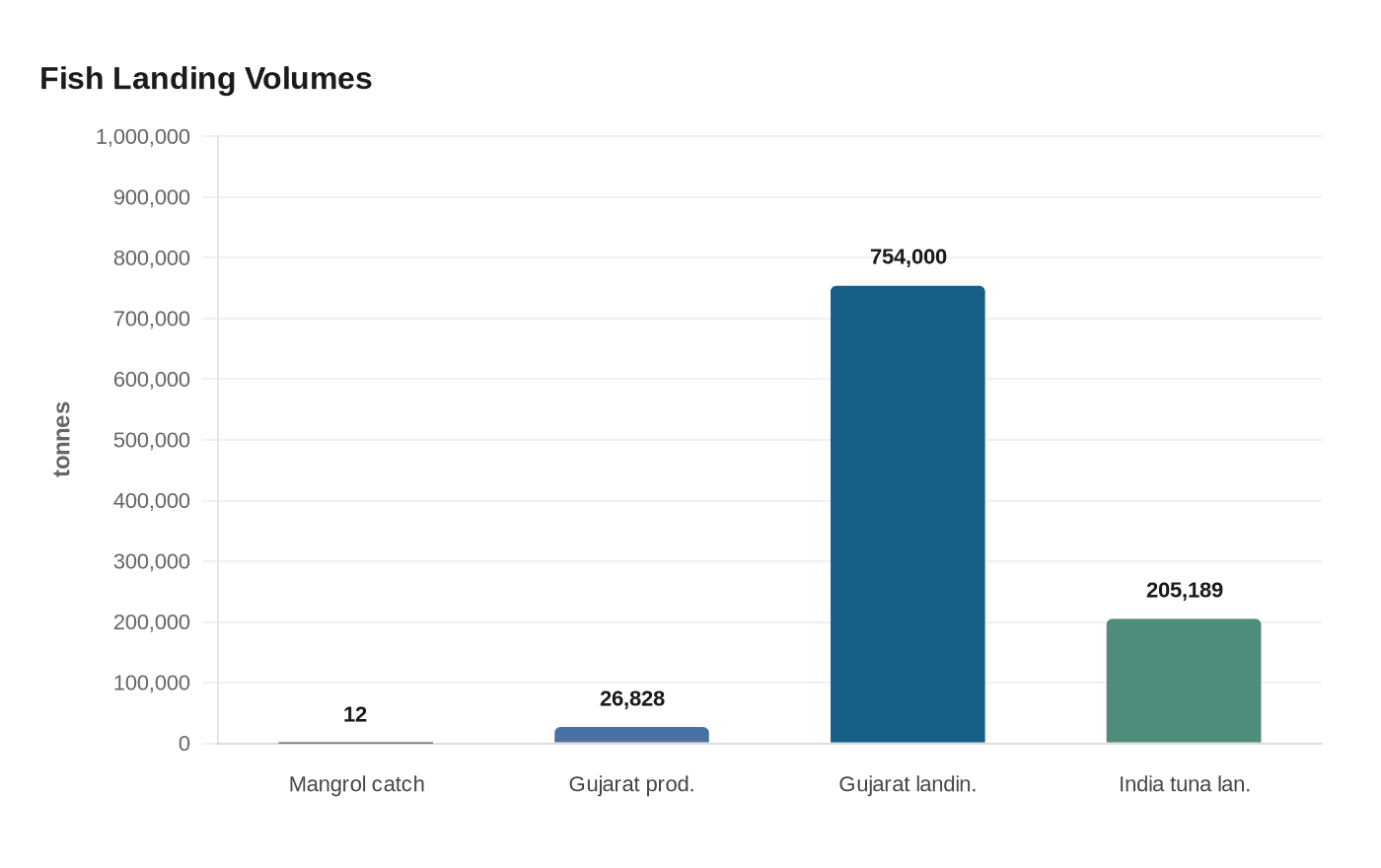
The wider Indian tuna picture adds another layer. India’s report to the Indian Ocean Tuna Commission estimated tuna and tuna-like landings at 205,189 tonnes in 2023, up 6.3% from 2022. Gillnets accounted for the largest share of that catch, while trawls and ring seines also contributed. At the same time, yellowfin remains under conservation scrutiny, even after the Indian Ocean Tuna Commission eased some fishing curbs in May 2026 amid sustainability concerns.
That is what makes the Mangrol landing worth watching. A big yellowfin haul this far offshore, with fish in the 60-90kg class, can mean a temporary concentration, a productive pocket along the west coast, or a wider movement pattern that regional operators may be able to track again if conditions hold. For now, Mangrol has the kind of catch that tells the fleet to keep an eye on that line offshore.
This article was produced by Prism’s automated news system from verified source data, official records, and press releases, then run through automated quality and moderation checks before publishing. The system is built and supervised by the people who set the standards it runs under. Read our full AI policy.
Know something we missed? Have a correction or additional information?
Submit a Tip