Iberian orcas use fishing lines to locate Atlantic bluefin tuna
Four Iberian orcas were filmed riding a fishing line in the Strait of Gibraltar, a clue that hooked bluefin may be giving themselves away to predators.
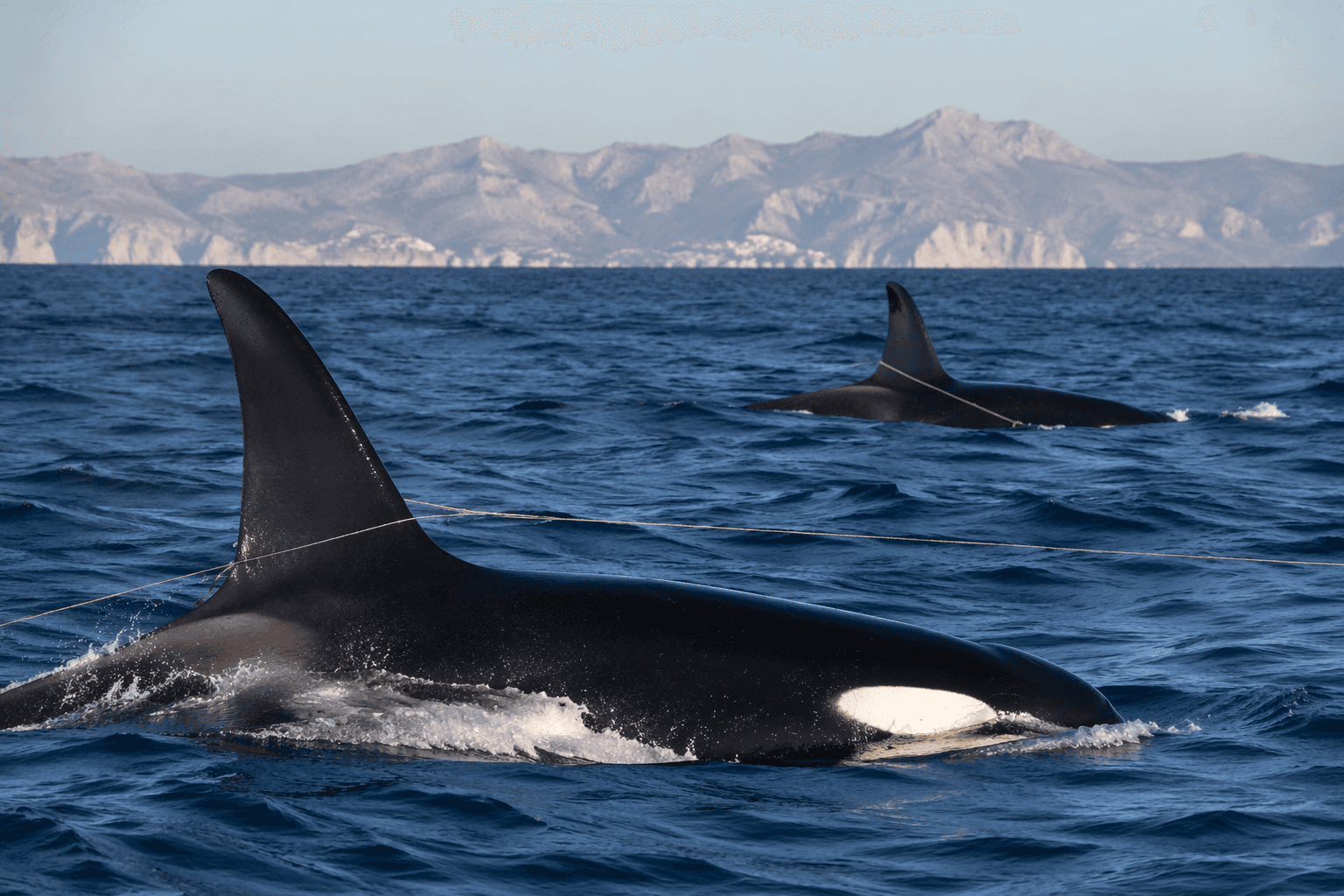
Four Iberian orcas in the Strait of Gibraltar were video-recorded swimming repeatedly along a deep-set fishing line and then pressing, holding, pushing, or even draping it across their backs, behavior that points to a new way of finding hooked Atlantic bluefin tuna. The paper, titled Iberian killer whales assess deep-set fishing lines to detect hooked Atlantic bluefin tuna, went online in Journal of Ethology on June 7, 2026.
That detail lands hard for bluefin crews because it shifts the focus from the fish to the gear. The whales were not just hanging around the line by chance; the study suggests they may be using the line itself as a cue to locate tuna that are already hooked, which is exactly the kind of advantage that matters when a fish is still digging and the fight is still live. The Strait is already a seasonal choke point, where bluefin migrate through and the Iberian orcas follow that movement, and researchers and observers have previously documented the whales taking Atlantic bluefin tuna from fishing lines there.
The bigger fisheries context is not getting any simpler. A 2025 review of killer whale-fishery interactions found documented encounters in all oceans, with longline depredation the most common pattern and tunas among the main prey taken. In the bluefin fishery, ICCAT set 2026-2028 total allowable catches at 3,081.6 tonnes for the western stock and 48,403 tonnes for the eastern stock, while OSPAR’s 2025 status assessment says Atlantic bluefin tuna is in good status, with spawning-stock biomass at its highest levels since the 1960s.
For crews on the water, the practical questions are immediate: does a longer fight make the line easier for orcas to track, do certain set locations in the Strait draw more attention, and should encounters be logged more carefully so the next trip starts with better local knowledge? The Iberian orca subpopulation is still tiny, with conservation sources putting it at about 39 individuals and classifying it as critically endangered, which means every new interaction sits inside a population already built around the bluefin run itself. When the line becomes the clue, the whole encounter gets tighter, faster, and harder to miss.
This article was produced by Prism’s automated news system from verified source data, official records, and press releases, then run through automated quality and moderation checks before publishing. The system is built and supervised by the people who set the standards it runs under. Read our full AI policy.
Did this article answer your question?