Islamorada blackfin tuna bite opens and closes with changing Keys weather
The blackfin window in Islamorada is short, and the logs show it opens before daylight, then shrinks fast as Keys weather turns.
The pre-dawn window that matters
The bite is not staying open all day in Islamorada. The captain’s logs show a reef-edge fishery that tightens and loosens with every front, tide swing, and change in wind, which means the real advantage is not simply knowing blackfin tuna are “around,” but being in position before the first light hits the water.
That is the lesson threaded through the June 1 to June 4 log: the fish are moving through a connected system of Hawk Channel, reef edge, and offshore current, and the window is only as good as the weather around it. When the conditions line up, the reef edge produces; when they rough up, the same fish are still there, but the timing gets much more unforgiving.
What the captain’s log is actually showing
The clearest pattern starts on June 3, when a front arrived and northeast winds settled in at 5 to 10 knots. The page flags a pre-dawn incoming tide as the play, which is exactly the kind of short, repeatable setup that makes a Keys tuna window worth burning fuel for. The fish are not being treated like a broad seasonal rumor, but like a bite that can be planned around the tide and the first hours of light.
On June 2, the log shifts again. North winds at 5 to 10 knots took over, seas stayed at a foot or less, and the reef outlook stretched across Molasses Reef, Conch Reef, Davis Reef, Crocker Reef, Alligator Reef, and Tennessee Reef. That spread matters because it shows the program is not pinned to one magic spot, it is a reef-and-edges route, with blackfin part of a broader line that also includes mutton snapper, amberjack, and cero mackerel.
By June 1, the setup had changed once more, this time to light southwest to west winds around 5 knots and a negative low tide. The fishery still wanted a window, just a different one: a short, tide-sensitive opening that rewarded anglers willing to chase the edge early and fish with the water movement instead of against it.
Why the reef edge keeps producing
The June 4 report is the best proof that the edge is doing the work. Northeast to east winds were running 10 to 15 knots, Hawk Channel seas were 2 to 3 feet, offshore seas were 3 to 4 feet, and scattered thunderstorms were in the mix. Even in that rougher picture, the page says the mahi were tight to the reef edge and calls it the best bite seen in years, while yellowtail stayed steady on structure.
That is the practical clue for anyone planning a short run out of Islamorada: the reef edge is not just a place on the chart, it is the moving seam where bait, tide, and weather are stacking fish. When the water is clean enough and the wind has not blown the system apart, the edge acts like a conveyor belt for blackfin, mahi, and yellowtail moving through the Florida Keys.
It also explains why timing beats optimism. A boat that leaves late may still find fish “around,” but it can easily miss the pulse that matters, especially when thunderstorms, rising breeze, or a front compress the bite into a narrow dawn stretch. In this fishery, being near the right structure before daylight is not a preference, it is the advantage.
What blackfin tuna mean in this fishery
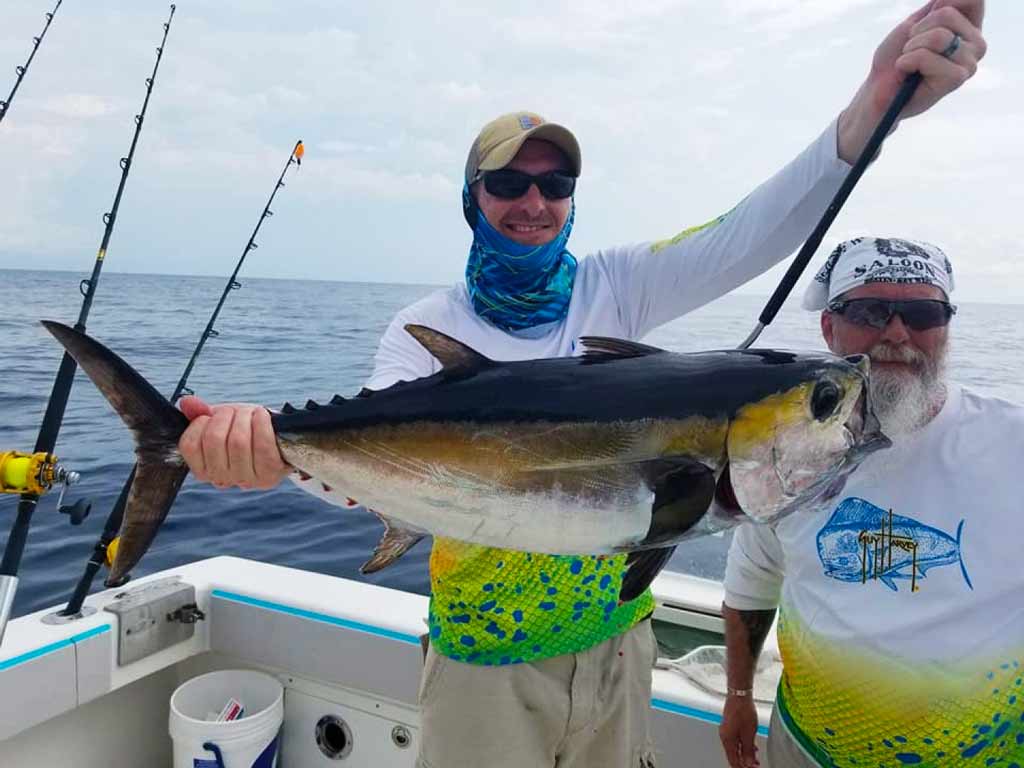
Blackfin tuna are native to Florida and live in coastal to offshore waters, feeding on small fishes, invertebrates, and plankton. FWC lists them as commonly up to 28 inches, which fits the way this fishery tends to fish, fast-moving, action-oriented, and often more about a quick, repeatable bite than a giant one-fish trophy hunt.
The biology helps explain the June pattern too. FWC’s blackfin presentation says peak spawning in southeast Florida occurs from May through June, which puts this Islamorada window right in the heart of a biologically active period. That same presentation says blackfin are relatively fast-growing and not known to make trans-Atlantic migrations, a reminder that this is a local and regional fishery built around Keys conditions rather than a bluewater migration story.
NOAA Fisheries treats Atlantic tunas as highly migratory species because they cross long distances and international boundaries, but blackfin are a little different in the way anglers experience them here. They are still part of the tuna family and part of a managed HMS world, yet in the Keys they behave like a nearshore-to-offshore edge fish that answers to weather and structure first.
The rules matter before the run
The bite may be hot, but it is still a managed fishery. NOAA Fisheries says recreational fishing for Atlantic highly migratory species generally requires an HMS Angling permit or an HMS Charter/Headboat permit, and blackfin tuna fall inside that framework. Before leaving the dock, that permit side of the trip matters as much as the bait tray.
Florida’s blackfin rule is just as specific. Recreational harvest is limited to 2 fish per person per day, with a 10-fish vessel limit or 2 per harvester per day, whichever is greater. That rule took effect on January 1, 2020, and it frames the fishery as one anglers can enjoy hard, but not loosely.
FWC’s 2019 presentation noted that the recreational sector accounted for 92 to 95 percent of blackfin harvest in the data reviewed, and that anglers had reported increased participation in the fishery. It also noted broad stakeholder support for reasonable species-specific regulations, which fits the way this bite is being managed now, as a real working fishery rather than a casual bycatch note.
What to remember when the weather turns
The log from June 4 is the caution sign and the opportunity at the same time. Rougher seas, thunderstorms, and a fresh east wind did not erase the fish, they tightened the opening. The same reef edge that produced on calmer days still held mahi and kept yellowtail steady, which tells you the system is there, but the clock matters more when the Keys weather gets messy.
That is the real takeaway from Islamorada right now: do not chase a generic “blackfin are here” idea. Watch the front, watch the tide, and get to the reef edge before first light, because in this fishery the window opens quietly and closes just as fast.
This article was produced by Prism’s automated news system from verified source data, official records, and press releases, then run through automated quality and moderation checks before publishing. The system is built and supervised by the people who set the standards it runs under. Read our full AI policy.
Know something we missed? Have a correction or additional information?
Submit a Tip