ISSF updates tuna bycatch report, highlights healthier global stocks
ISSF says 97% of commercial tuna catch now comes from healthy stocks, and its new bycatch update points skippers toward cleaner gear and faster releases.
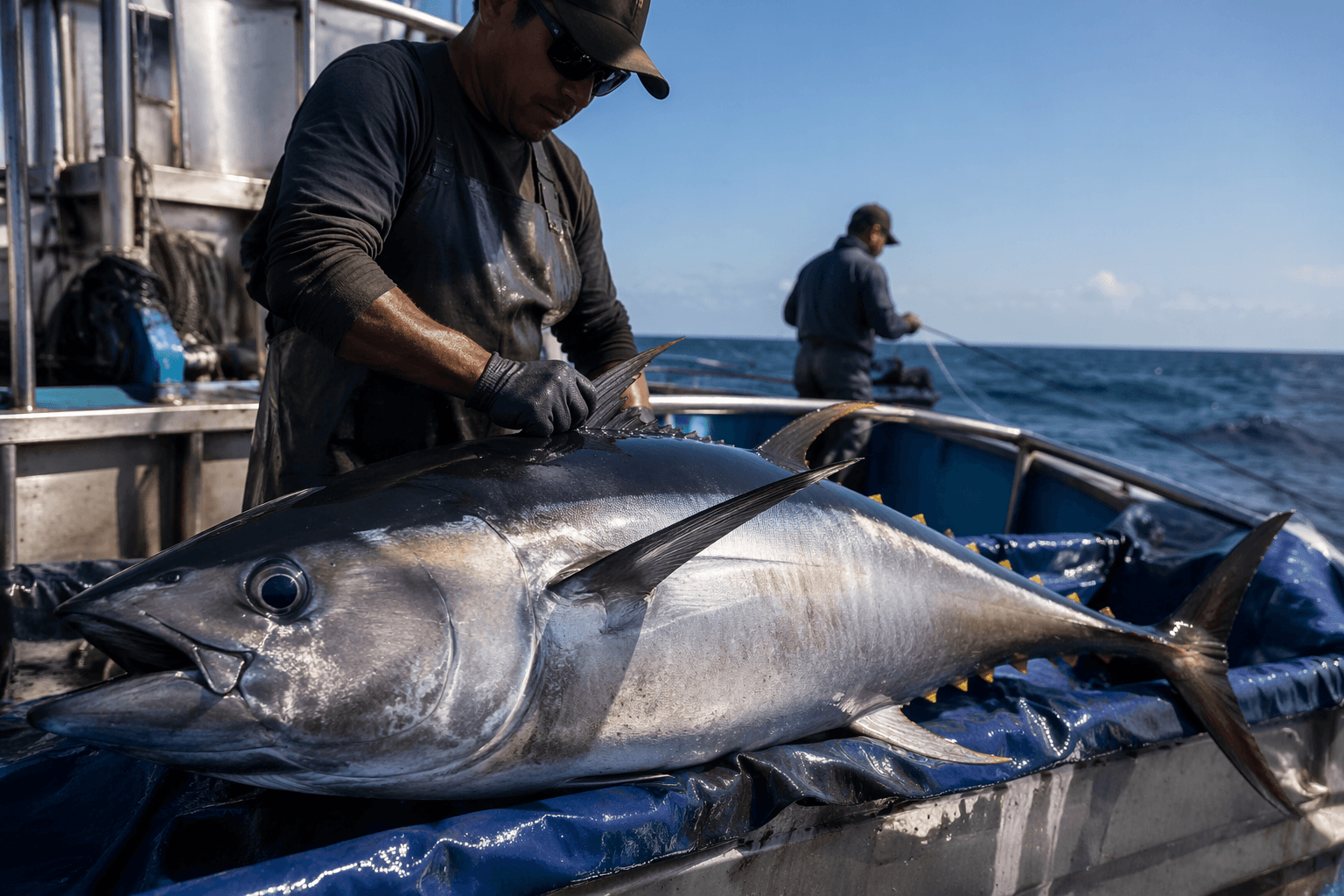
A new ISSF update lands with a striking number: 97% of the world’s total commercial tuna catch now comes from stocks at healthy abundance levels, even as purse seine fisheries still account for about 66% of the global catch. With global tuna landings at about 5.8 million tonnes in 2024, the message is not that the work is done. It is that the next gains will come from how boats handle everything around the tuna.
The technical report, ISSF 2026-03: Tuna fisheries’ impacts on non-tuna species and other environmental aspects: 2026 update, puts hard figures behind that point. It cites estimated non-tuna catch in purse seine fisheries at about 1.4% of target tuna catch, or 0.92% when minor tunas and bonitos are excluded. In observer data reviewed for purse seine FAD sets, sharks and rays together made up less than 0.5% of total catch. For a skipper trying to keep a set clean, those numbers are a reminder that bycatch is not an abstract conservation theme. It is a day-to-day operating problem, and one that shows up in the deck pace, the release routine, and the choice of gear before the school ever comes alongside.

That is where the fourth edition of ISSF’s Skippers’ Guidebook to Sustainable Purse Seine Fishing Practices becomes the practical piece of the story. Released in March 2026 and available in 10 languages, it adds guidance on non-entangling and biodegradable FADs, bycatch mitigation, safe release of sharks and rays, species identification, handling, and FAD monitoring and data collection. It also streamlines overviews of the five tuna RFMOs and updates the conservation measures crews are expected to know. For a private-boat angler, the takeaways are immediate: reduce entangling material, know what is coming over the rail before the leader tightens, and treat every release as a handling exercise, not a bycatch afterthought.

The rulebook around that work is tightening too. ISSF says tropical tuna RFMOs now prohibit netting material in drifting FADs. The Western and Central Pacific Fisheries Commission required non-entangling FAD design for deployed FADs beginning in 2024, and the Indian Ocean Tuna Commission adopted a major drifting FAD measure in 2024, including an IOTC-wide FAD register. FAO notes that tuna fisheries can accidentally catch seabirds, sharks, turtles and whales, while the Bycatch Management Information System points to the eastern Pacific as a case study in what happens when boats learn to change course: dolphin mortality fell after backdown, the Medina panel and later bans on setting on dolphin schools.
The healthy-stock headline matters because it shows what’s possible. The more durable win will come from the same unglamorous habits ISSF keeps pushing: better gear, cleaner handling, sharper species ID and tighter reporting every time a boat comes tight on tuna.
This article was produced by Prism’s automated news system from verified source data, official records, and press releases, then run through automated quality and moderation checks before publishing. The system is built and supervised by the people who set the standards it runs under. Read our full AI policy.
Did this article answer your question?