Japan Bluefin Prices Hit Decade Low as Landings Surge 18 Percent
Fresh bluefin dropped to 4,700 yen per kg at Tokyo's Toyosu market, the lowest price in more than a decade, as landings climbed 18% to 14,200 tonnes.
The paradox at the heart of Japan's bluefin market is hard to ignore: stocks are recovering, landings are up, and the fishers doing the hauling are seeing their per-kilo returns crater to levels not recorded in over ten years.
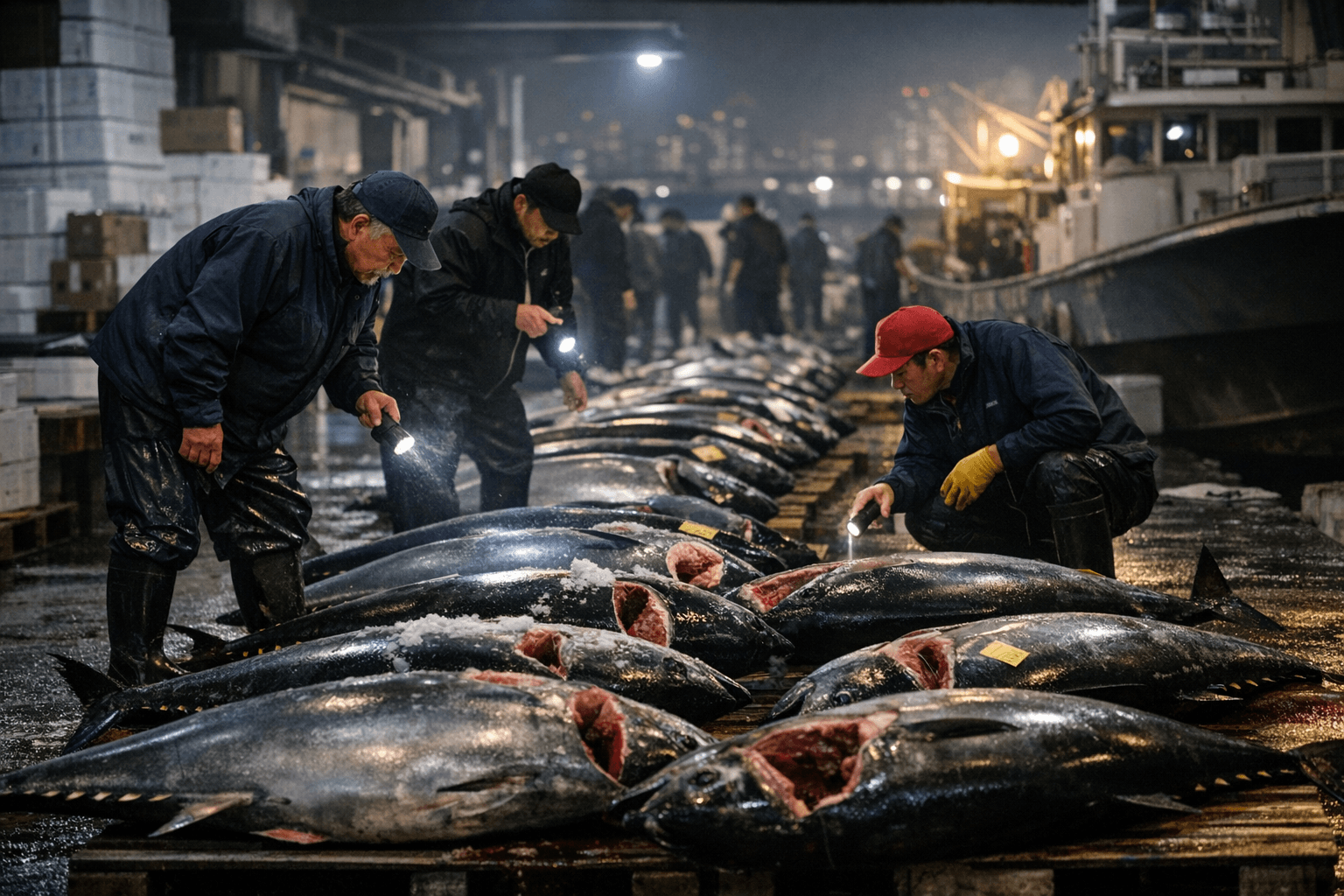
Tokyo's Toyosu market closed out the year with roughly 14,200 tonnes of bluefin landed, up from 12,000 tonnes the previous year, an 18 percent surge in volume that pushed fresh bluefin prices down to approximately 4,700 yen per kilogram, or about £22.50. That figure represents a year-on-year drop of more than 22 percent and marks the softest price the market has seen in more than a decade.
The supply-side math is straightforward: more fish, lower unit values. But the economics underneath are anything but simple. Japan's distant-water fleet is simultaneously wrestling with crew shortages, particularly among Russian workers who have historically staffed significant portions of the fleet. Tighter labor availability is driving wages up even as the price per kilogram of landed bluefin falls, compressing margins from both ends.
Adding another layer to the market picture, distant-water operators are also supplying ultra-low-temperature frozen bluefin, held at around -70°C, to sashimi and sushi markets. That product stream runs alongside fresh landings but serves a different segment of the trade, giving processors some flexibility in how they route catch to buyers.
The response from thirteen of Japan's distant-water tuna fleet companies has been to move toward eco-certification. Those companies are pursuing accreditation through Japan's Marine Ecology Research Institute, with certification decisions expected before the end of 2026. In a market where fresh bluefin has softened considerably, an eco-label represents a potential mechanism for product differentiation and value recovery, a way to command a premium when spot prices won't cooperate.
Japan's position as the global benchmark for bluefin pricing means this correction carries weight far beyond Toyosu. Price movements in Tokyo shape auction dynamics, export valuations, and processing decisions across the Atlantic and Pacific. For operators running long-range fleets against high fuel and labor costs, a 22 percent price drop in their primary market creates real pressure on the bottom line. On the other side of the ledger, restaurateurs and processors sourcing fresh bluefin stand to benefit from the most competitive input prices in years.
Whether eco-certification outcomes, shifting labor costs, or continued landing trends put a floor under prices is the question the industry will be tracking closely through the rest of 2026.
This article was produced by Prism’s automated news system from verified source data, official records, and press releases, then run through automated quality and moderation checks before publishing. The system is built and supervised by the people who set the standards it runs under. Read our full AI policy.
Did this article answer your question?