Lab Tests Find High Mercury and Arsenic Levels in US Canned Tuna
Arsenic turned up in nearly all albacore samples tested, and two cans exceeded mercury safety limits outright — findings that put every brand on the shelf under scrutiny.

Mercury showed up in all 34 tuna products run through an EPA-certified laboratory by the consumer group Mamavation, whose community members donated samples collected from across the United States and Canada between March and July of 2025. The tested products spanned chunk light, albacore, skipjack, yellowfin, and tongol varieties, arriving in cans, pouches, and glass jars — and every single one came back positive for the neurotoxin.
The Mamavation findings land alongside peer-reviewed research published in the journal Processes (2023, 11, 824) that applied Kruskal-Wallis statistical analysis to heavy metal concentrations across multiple canned tuna samples. That study found arsenic and mercury together accounted for more than 85 percent of the total target hazard quotient across all cans studied. Two cans specifically exceeded safety limits for mercury under two of the study's proposed exposure scenarios. Cancer risk limits for mercury were "the most concerning ones among all the heavy metals studied," the paper concluded, citing tuna's well-documented tendency to bioaccumulate mercury at high rates.
Arsenic emerged as a parallel concern. The Processes study called arsenic "a rising contamination issue" and urged regulators to establish concentration limits in food products similar to those already in place for cadmium, mercury, and lead. That call carries weight given that testing found arsenic in nearly all albacore samples examined across the broader body of research.
The FDA's action level for mercury in commercially sold tuna sits at 1 part per million (1,000 ng/g). The agency sets separate, lower thresholds for subsistence fishing, acknowledging that populations depending on fish for survival face heightened exposure risk. Industry representatives pointed to the commercial threshold as evidence of safety. The National Fisheries Institute said mercury levels found in Consumer Reports testing "were well below the limit that the FDA allows in canned tuna." StarKist and Chicken of the Sea stated their products are monitored and meet the FDA limit. Bumble Bee argued that "the health benefits of consuming seafood far outweigh any potential risk, including concerns about mercury."
Consumer Reports' own food safety team landed in a different place. James E. Rogers, PhD, director of Food Safety Research and Testing at CR, flagged the unpredictability of can-to-can variation as the core problem: "From can to can, mercury levels can spike in unpredictable ways that might jeopardize the health of a fetus." CR's experts recommended that pregnant people consider avoiding tuna altogether based on that variability, even acknowledging that average levels in light tuna remain relatively low.
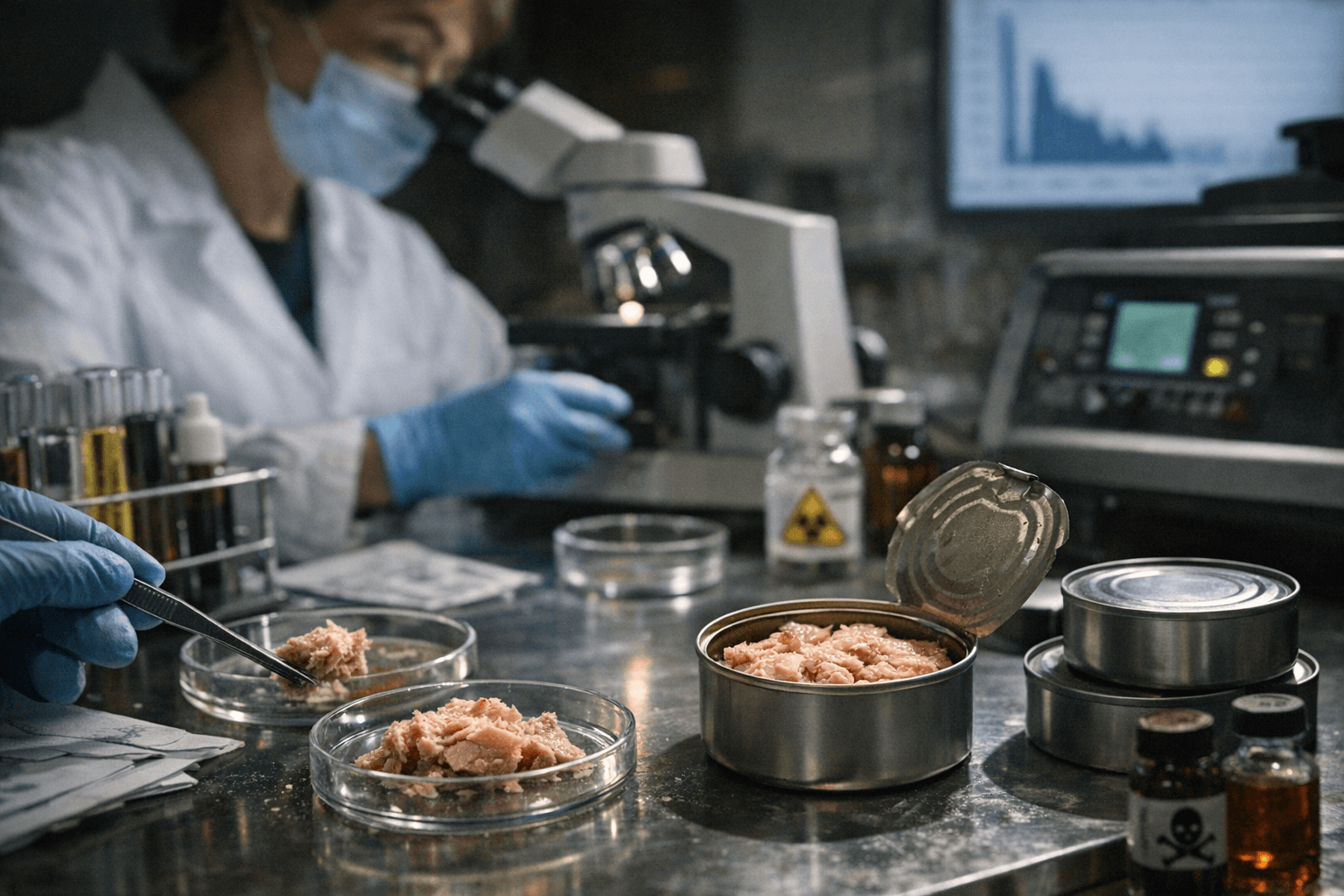
Wild Planet's Skipjack Wild Tuna registered the highest mercury levels of any light tuna in Consumer Reports' tests. The company acknowledged a direct tradeoff, stating it "had to make a choice between offering tuna with the very lowest possible mercury level or offering tuna from the best sustainable practice." Safe Catch, meanwhile, markets itself with the claim of "lowest mercury of any brand" printed directly on its cans.
Zinc was the most abundant heavy metal found across the analyzed samples in the Processes study, but researchers flagged it as the least worrying because it functions as a metabolic metal with a role in immune and growth functions — a sharp contrast to mercury, which the study described as "way more dangerous for human health, especially during fetuses' development." The Processes researchers recommended better monitoring of mercury concentrations in canned tuna given health risks that include cancer and neurodevelopmental effects.
What neither the academic study nor the Mamavation investigation has published publicly are the brand-level concentration numbers: exact mercury readings per can, arsenic values for specific albacore products, or the identities of the two cans that exceeded safety limits. Those details remain the critical missing data point between aggregate findings and actionable consumer guidance.
Know something we missed? Have a correction or additional information?
Submit a Tip