NOAA guide helps tuna anglers navigate federal compliance rules
Miss the permit check and a bluefin day can turn expensive fast. NOAA’s HMS tools spell out what to verify before fuel, bait, and entry fees go overboard.
A tuna trip can go sideways before the first line ever hits the water. NOAA Fisheries’ Atlantic Highly Migratory Species compliance tools put the pressure point where it belongs: on the dock, with the permit, the current fishery status, and the retention limit checked before you spend on bait, fuel, or a tournament entry.
Start with the permit, not the first cast
NOAA Fisheries’ Atlantic Highly Migratory Species Management Division issues federal vessel permits for commercial and recreational fisheries in the Atlantic Ocean, the Gulf of America, and the Caribbean Sea. That makes compliance a pre-trip task for more than just New England bluefin runs. If the boat is headed for tuna grounds anywhere in those waters, the vessel paperwork needs to match the trip.
The HMS Permit Shop is built around that reality. Anglers can buy a new vessel permit, renew one, check status, update permit information, transfer a vessel permit, replace a lost permit, or cancel a vessel permit. In practical terms, that means the dockside checklist starts long before the bait cooler is packed: confirm the permit is active, make sure the vessel information is current, and verify the trip fits the permit category you are carrying.
Know which NOAA tool answers which question
NOAA separates its compliance resources for a reason. One set of pages handles permits, another covers reporting, and another tracks fishery status updates. That separation matters when a trip is already planned around weather windows, crew schedules, and a launch out of Cape Cod, Maryland, New England, the Mid-Atlantic, or the Southeast.
If you are loading the boat for a bluefin shot, the status page answers whether the fishery is open and what the current bag limit is. If the question is paperwork, the permits page does that job. If the fish is already on ice, the reporting tools take over. That split is what keeps a successful fishing day from becoming a compliance mistake after the boat is already back on the trailer.
Bluefin is where the rules get real fast
The recreational bluefin tuna fishery shows why anglers need to watch NOAA closely. NOAA’s Dec. 29, 2024 bulletin said recreational daily retention limits would revert to the default limit on Jan. 1, 2025, and the trophy fishery would reopen that same day. NOAA also keeps a dedicated page for recreational Atlantic bluefin tuna fishery statuses and bag limits, which is the place to check before a crew heads offshore.
The rule changes have not been one-and-done. Search results show a June 2024 modification, a 2024 notice extending an adjusted limit through the rest of 2024 unless later changed, and a Federal Register notice dated June 16, 2025 for an Atlantic bluefin tuna angling-category retention limit adjustment. That kind of movement is exactly why a captain who assumes last month’s limit still applies can end up with the wrong fish in the box.
For a realistic trip scenario, think about a boat prepped for a tournament weekend. If the crew buys fuel, ice, bait, and an entry fee before checking the current bluefin status page, the cost is already sunk. If NOAA has flipped the retention limit or reopened the trophy fishery, that changes the whole plan on the water.
Gear matters, but it does not replace the rule check
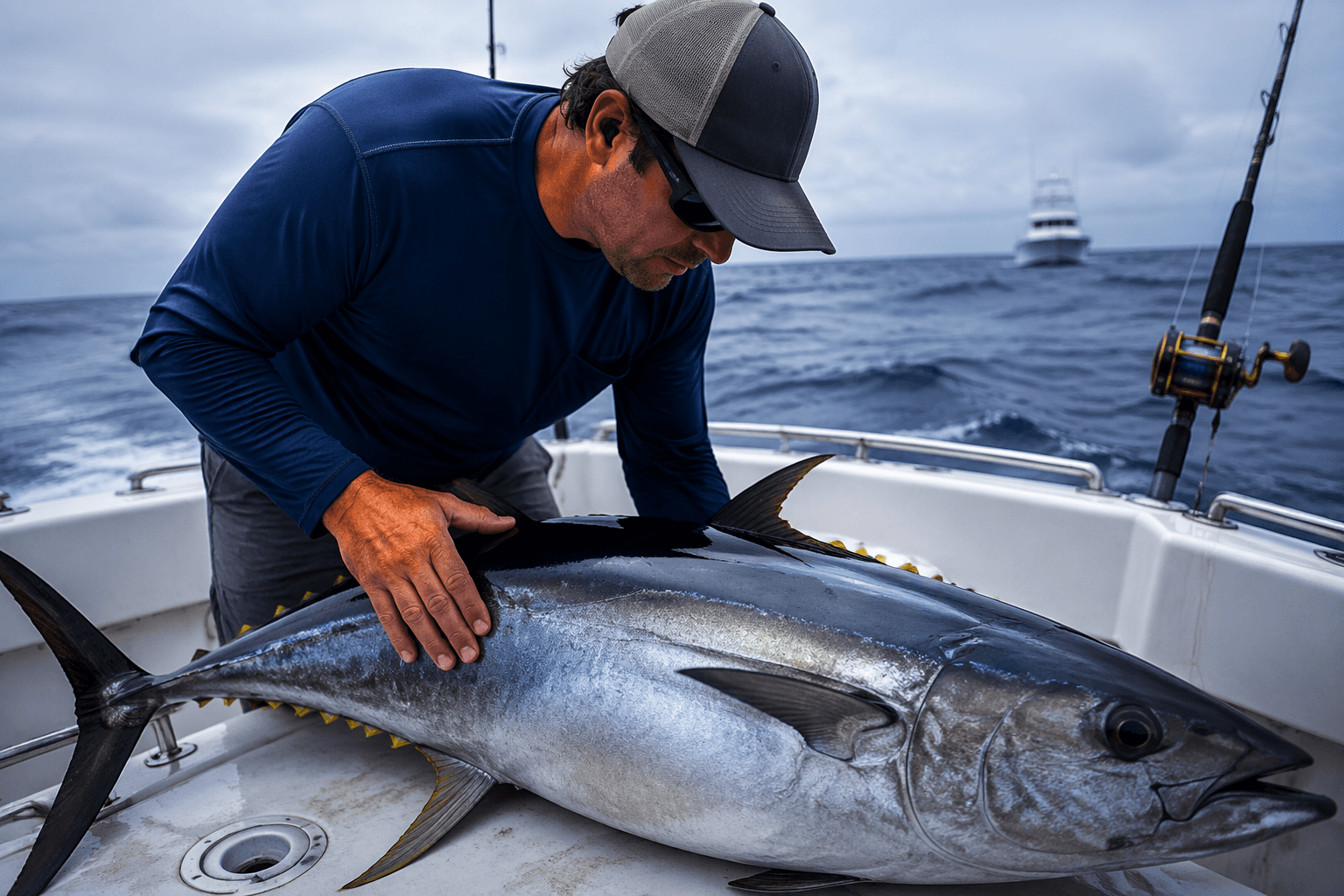
The American Bluefin Tuna Association says it represents recreational-category fishermen using conventional hook and line, harpoon, handline, and greenstick gear. That gear picture fits the way many tuna anglers actually fish, but it does not override the federal compliance structure. The boat still needs the right permit, and the crew still needs to fish within the current retention limit and status rules.
That is especially important for anglers who move between species and tactics in the same season. A trip that starts with bluefin in mind can turn into yellowfin, bigeye, or skipjack fishing, but the federal rules do not become loose just because the target changes. The compliance guide is useful precisely because it keeps those species and categories in view together instead of treating each trip like a fresh slate.
Reporting is part of the trip, not an afterthought
NOAA’s HMS Permit Shop includes catch reporting, and NOAA says a new Android app is available for that purpose while the previous Android app is no longer supported and will not receive updates. That detail matters because reporting is not just paperwork for the office later in the week. It is part of how NOAA tracks catch, effort, and retention in real time.
For an offshore crew, the sequence is straightforward: 1. Confirm the vessel permit is current. 2. Check the bluefin fishery status and bag limit before departure. 3. Fish within the current retention limit and gear category. 4. Report the catch through the HMS reporting tools after the trip.
That sequence may not be flashy, but it is what keeps a bluefin day legal from start to finish.
Why the guide helps before money leaves the dock
NOAA Fisheries’ Atlantic Highly Migratory Species Recreational Compliance Guide is valuable because it answers the questions that cost anglers the most when they are answered too late. Do you have the right vessel permit? Is the fishery open today? Did the retention limit change after the last run? Which app or reporting tool should you use when the fish are settled on deck and the crew is already thinking about the ride home?
Those are the checks that separate a smart tuna program from an expensive mistake. With the rules tied to permits, retention limits, status updates, gear category, and reporting, the safest move is still the simplest one: verify everything before the boat leaves the dock, because a missed NOAA update can cost more than the trip itself.
This article was produced by Prism’s automated news system from verified source data, official records, and press releases, then run through automated quality and moderation checks before publishing. The system is built and supervised by the people who set the standards it runs under. Read our full AI policy.
Did this article answer your question?