NOAA Proposes Higher 2026 Bluefin Quota, Anglers Await New Limits
NOAA’s bigger 2026 bluefin quota could ease pressure on the season, but anglers still need to watch for rule shifts, trophy openings, and rapid closures.
What the higher quota means right now
The biggest change for 2026 is simple: the U.S. bluefin quota is moving up, which lowers the odds of a hard squeeze midseason, but it does not lock the rules in place. Captains and private boaters still need to plan around a one-fish default, trophy-area openings and closures, and the chance that NOAA adjusts the baseline quota and bycatch set-aside again before the season settles.
That is the practical read on NOAA’s May 6 proposal. The agency wants to raise the baseline annual U.S. bluefin quota from 1,316.14 metric tons to 1,509.98 metric tons, and it also wants to lift the pelagic longline bycatch set-aside from 25 metric tons to 62.5 metric tons. NOAA scheduled a public hearing for May 28, 2026 and set June 8, 2026 as the comment deadline, which means the rule is still moving and the numbers on the water can still shift.
ICCAT’s decision, in plain English
ICCAT is the international body that sets the top-line catch limits for Atlantic bluefin, and its 2025 meeting in Seville changed the board for both sides of the ocean. The western Atlantic total allowable catch for 2026 through 2028 was set at 3,081.6 metric tons, a 13% increase, while the eastern Atlantic TAC rose to 48,403 metric tons, a 19.3% increase.
For U.S. anglers, the key detail is that NOAA said the U.S. delegation secured an additional 231 metric tons of Atlantic bluefin tuna at that meeting, the largest single-year increase in U.S. quota history. NOAA also said the deal required unanimous consensus from all 55 ICCAT parties, which explains why the final numbers matter so much once they land. ICCAT’s move is the reason NOAA is now rewriting the domestic rulebook to match the new international limits.
What that means for the fishery you actually fish
The quota bump should give managers more breathing room, but it does not mean bluefin becomes a free-for-all. NOAA still manages the fishery by category, region, size class, and vessel type, so a bigger annual pie can still be cut into tight pieces. If landings run hot, the fishery can tighten quickly, which is exactly why the best crews are tracking both the bite and the bulletin board.
The 2025 season showed how fast that can happen. NOAA closed the angling category recreational bluefin fishery on August 12, 2025 after the preliminary adjusted quota, including trophy quota, was reached. That is the kind of date every captain remembers, because it is the clearest reminder that a strong stock and a busy season can still end in a hard stop.
Where recreational access stands now
The recreational Atlantic bluefin fishery reopened January 1, 2026 under the default limit of one school, large school, or small medium bluefin per vessel per day or trip. The trophy fishery also reopened January 1, 2026, with one trophy bluefin per vessel per year when trophy subquota is available.
As of May 4, 2026, NOAA listed the Gulf of Maine and Southern New England trophy areas as open, the South trophy area as closed since January 13, and the Gulf of America trophy area as open. NOAA also listed the current trophy base quota at 2.3 metric tons for each of those areas, which tells you how narrow trophy access still is even when the stock is improving.
There is another rule that matters more than many crews realize: recreational bag limits vary by permit, vessel type, fish size, and region. NOAA also says bluefin cannot be retained if a hammerhead shark is on board or has been offloaded from the vessel. That is the sort of detail that can end a trip before the mate even gets the fish on the deck.
Why bluefin feel more accessible than they used to
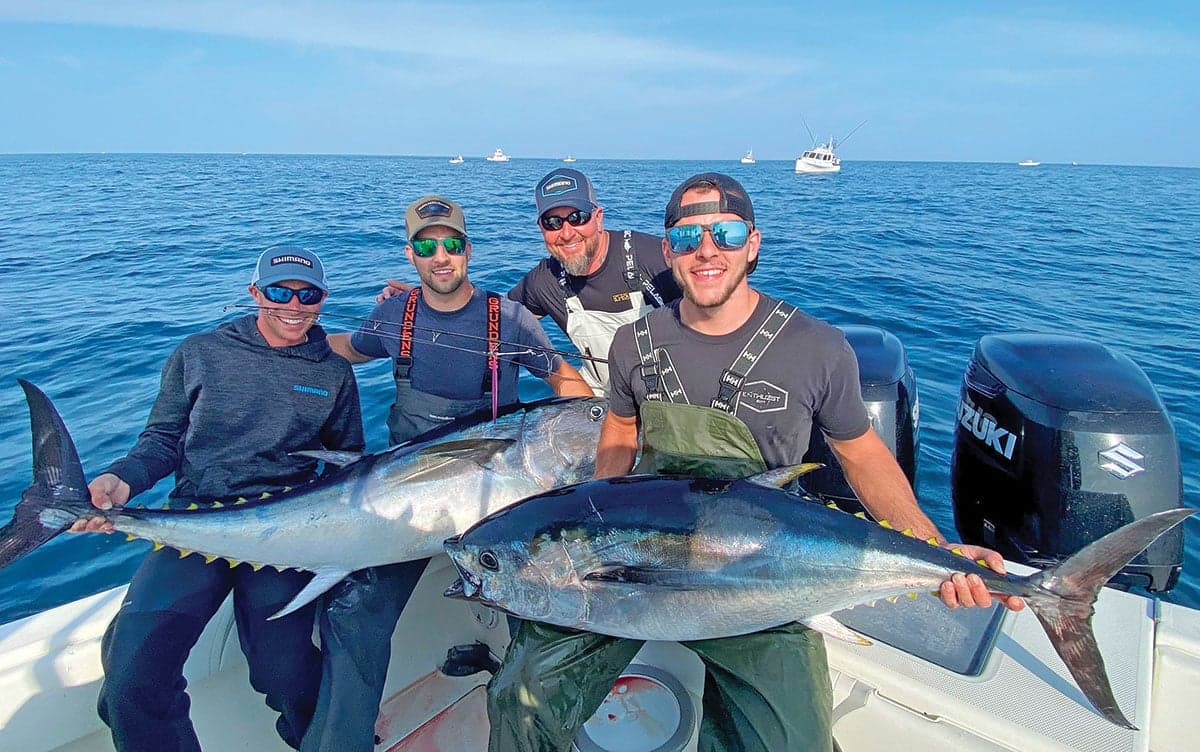
Part of the reason this season feels different is that bluefin are showing up closer to home. Capt. Mike Pierdinock notes that a decade ago anglers often had to run 30 to 50 miles or more offshore to get into them, while now bluefin are frequently nearshore and in some places are showing up right off the beach. That changes how crews plan fuel, bait, and weather windows, because the fish are no longer just an all-day offshore gamble.
That closer-in footprint also makes bluefin more visible to more boats. When the fish are showing on the edge, the spread gets condensed, the reports travel faster, and the pressure builds quicker. In practical terms, that means a good forecast and a clean window can turn into a crowded bite in a hurry.
Why the science debates matter to your limit
The management fight is not happening in a vacuum. NOAA says the Slope Sea may hold a crucial missing piece for understanding Atlantic bluefin stock structure, and its 2026 research suggests bluefin may have a nearly continuous spawning area from the Northwest Caribbean to the Slope Sea. In that work, NOAA says more than 35,000 plankton tows and nearly 5,000 bluefin larvae were examined, with the northern Gulf producing the most larvae in late spring and the western Slope Sea producing the most in early summer.
The genetics side has pushed the debate even further. NOAA’s 2025 close-kin mark-recapture analysis used about 9,000 adults and about 4,000 larvae, found 56 parent-offspring matches, and produced an estimate for the western spawning population. NOAA says that work included adults age 8 and older that could be spawning in the western Atlantic, including the Slope Sea, which reinforces the idea that the western and eastern stocks are connected.

That science is why ICCAT parties also agreed to keep talking about the natural distribution and mixing of Mediterranean and Gulf of America bluefin stocks, with genomics and tagging studies expected to shape the next round of management debates. The argument is no longer just about how many fish can be taken, but about where those fish are born, how they mix, and how much each fishery should get.
What to watch before you launch
The practical checklist is short, and it matters now:
- Watch the May 28 public hearing and the June 8 comment deadline, because NOAA’s proposed quota rule is still open.
- Keep an eye on the baseline quota number, 1,509.98 metric tons, because that is the domestic piece most likely to frame the rest of the season.
- Track trophy-area status by region, especially the Gulf of Maine, Southern New England, and South, since openings and closures can change the trip math overnight.
- Check vessel rules before every run, because bag limits change with permit type, fish size, and location.
- Treat landing totals as live information, not background noise, because a busy bluefin bite can close fast once the quota gets chewed through.
The bottom line is that 2026 bluefin should feel healthier and more accessible, but the season still belongs to the crews that watch the numbers as closely as they watch the sounder.
This article was produced by Prism’s automated news system from verified source data, official records, and press releases, then run through automated quality and moderation checks before publishing. The system is built and supervised by the people who set the standards it runs under. Read our full AI policy.
Did this article answer your question?