North Carolina highlights Katie's 90-inch bluefin tuna catch and release
Katie’s 90-inch bluefin at Oregon Inlet put a giant fish back in the water and put North Carolina’s spring tuna bite on notice.
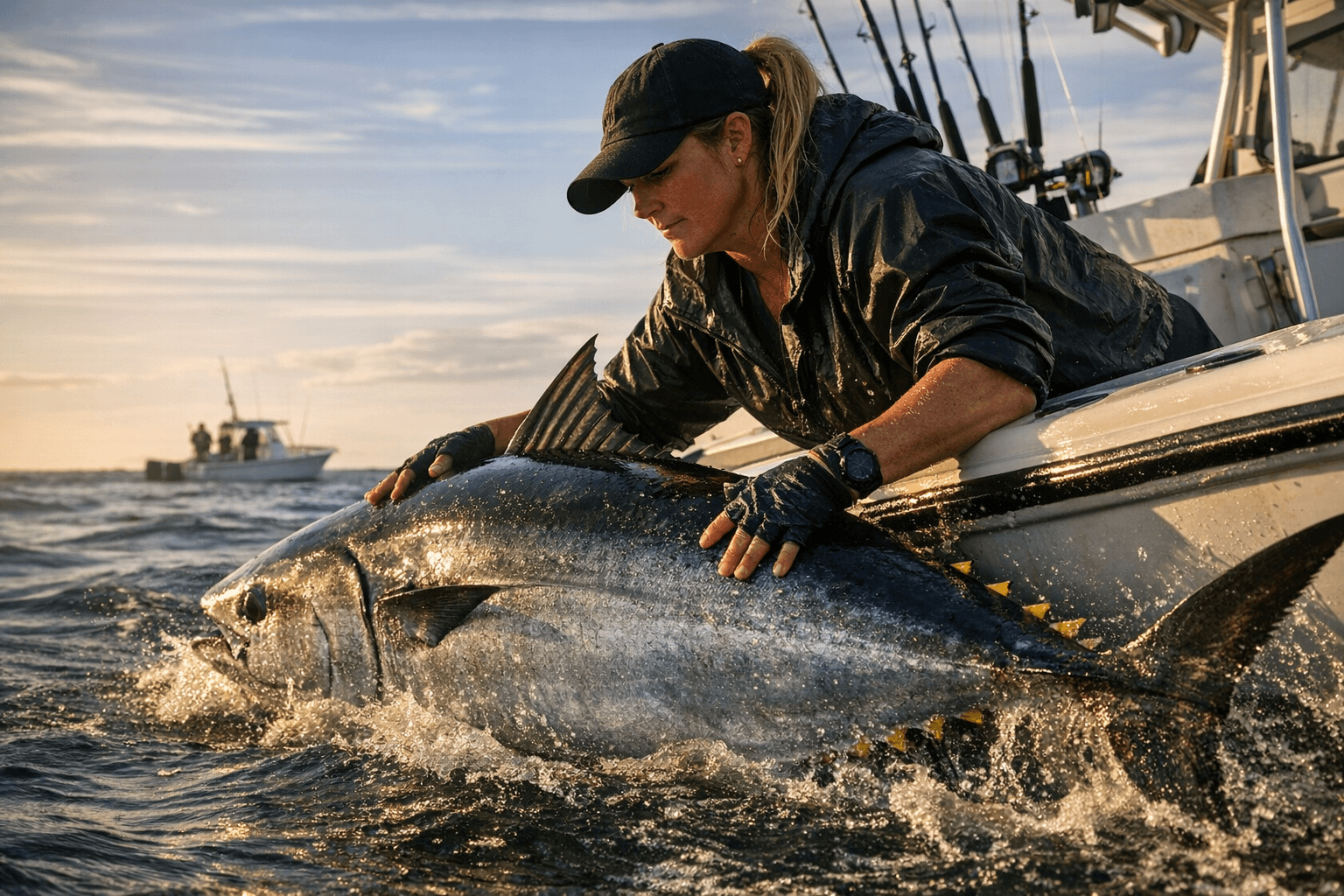
One 90-inch bluefin sliding back off Oregon Inlet said plenty about the fishery off North Carolina right now: the big fish were there, the spring bite was on, and handling a giant the right way mattered as much as putting it boatside.
Katie’s catch and release was featured by the North Carolina Division of Marine Fisheries as a standout example of the kind of bluefin action showing up off the Outer Banks. The agency also used the catch to push for more women anglers to share their own big-fish stories, a sign that the tuna scene here is broadening beyond the usual crew and captain photos. For East Coast bluefin anglers, the message was simple: a fish that size is worth remembering even if it never hits a scale.
The 90-incher also sat well inside North Carolina’s recognition rules. The North Carolina Department of Environmental Quality says bluefin tuna qualify for a live-release citation at 70 inches or longer, while harvested bluefin can qualify for a state Saltwater Fishing Tournament award at 200 pounds or greater. That makes Katie’s fish more than just a bragging-size release. It was the kind of catch that fits squarely into how the state documents and celebrates big tuna.
The fishery itself has been busy. North Carolina Division of Marine Fisheries data show 181 Atlantic bluefin tuna landed in the state through March 2025, with 31 in January, 103 in February and 47 in March. That kind of monthly spread tracks with what bluefin do off North Carolina: NOAA research says they occupy the coastal waters in winter to feed on Atlantic menhaden, which is why Oregon Inlet and the Outer Banks keep drawing attention when the water cools and the bait stacks up.
The rules around those fish still matter. Recreational anglers in coastal waters need a Coastal Recreational Fishing License, and certain recreationally landed highly migratory species, including Atlantic bluefin tuna, must have a landing tag affixed before removal from the vessel. NOAA Fisheries also says bluefin retention limits vary by permit, vessel type, fish size and region, with limits set per vessel per day or trip. North Carolina ended its old Highly Migratory Species Catch Card Program on April 1, 2025, and federal permit holders now report landings and dead discards directly to the National Marine Fisheries Service within 24 hours using electronic options.
North Carolina has gathered recreational catch and effort data since 1981, with port agents interviewing more than 500 anglers each week. Katie’s release fits that long-running picture: a heavy fish, a live release, and another clear sign that spring bluefin fishing off North Carolina still carries real weight for anglers running the blue water right now.
This article was produced by Prism’s automated news system from verified source data, official records, and press releases, then run through automated quality and moderation checks before publishing. The system is built and supervised by the people who set the standards it runs under. Read our full AI policy.
Did this article answer your question?