Spanish Tuna Purse Seine Fleets Cut Bycatch Sharply Over 20 Years
Spanish purse seiners spent 20 years proving bycatch can fall fast: non-entangling FADs, live-release tools and tighter rules reshaped one of the biggest tuna fleets.
A 20-year look at the Spanish-owned tropical tuna purse seine fleet in the Atlantic and Indian oceans shows bycatch falling sharply after the fleet tightened gear, formalized handling rules and accepted tougher regional management. For tuna anglers, the important part is simple: the same boats that land skipjack, yellowfin and bigeye at industrial scale proved that bycatch is not just an unavoidable cost of fishing.
The Spanish fleet matters because it is not a niche player. In the Indian Ocean, it accounts for about 26% of the skipjack and yellowfin caught there, roughly 3% of the global catch for those species. That is the kind of footprint that shapes how tuna is managed, how the fishery is viewed by shoppers and conservation groups, and how far rule changes can spread.
The turning point came through a mix of industry discipline and outside pressure. ANABAC and OPAGAC set up a common Code of Good Practices in 2012, and by April 2015 the verification system covered 59 purse seiners and 19 supply vessels. In the Indian Ocean, the stakes were high: yellowfin tuna was assessed as overfished and subject to overfishing in 2015, and the Indian Ocean Tuna Commission responded with Resolution 16/01 in 2016 as an interim rebuilding plan.
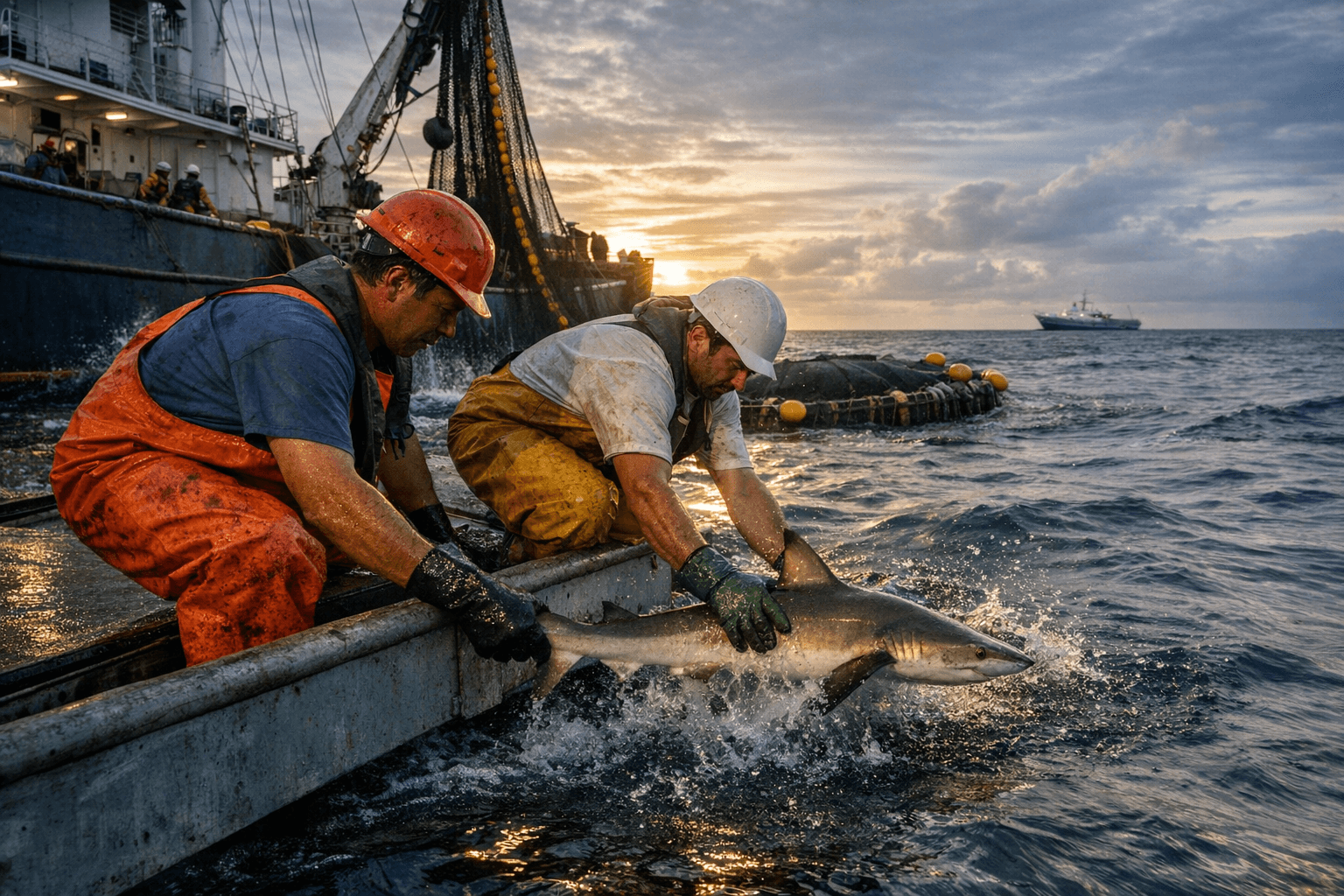
The Atlantic numbers show what that looked like on deck. From 2015 to 2017, more than 600 trips were monitored on 28 purse seiners and 8 support vessels. The report found that 81.3% of deployed FADs were non-entangling, a big deal for reducing accidental captures and making releases cleaner. It also recorded 37,468 vulnerable specimens, with sharks making up 88% of the interactions. Sensitive species were mainly freed by hand from the deck, while manta rays were handled with specific tools, and release time had already been reduced since 2015.
That matters beyond the commercial fleet. These are the same kinds of changes that tend to work: non-entangling gear, better observer coverage, faster release, and rules that are actually enforced. The Spanish fleet’s sustainability push eventually drew formal recognition too. AGAC’s tropical tuna fishery was reported as the first purse seine fishery certified by the Marine Stewardship Council in all four oceans, and its 44-vessel fleet had about half its total catch certified.
For recreational tuna anglers, the message is hard to miss. When a fleet landing 303,638 tons from the Indian Ocean, worth EUR 423.7 million in 2023, can keep cutting bycatch through better practice and tighter rules, the old excuse that bluewater tuna fishing cannot get cleaner starts looking flimsy.
This article was produced by Prism’s automated news system from verified source data, official records, and press releases, then run through automated quality and moderation checks before publishing. The system is built and supervised by the people who set the standards it runs under. Read our full AI policy.
Did this article answer your question?