Offshore Tuna Fishing Safety: Essential Pre-Departure Checks, Gear, Weather Planning
Check engine, fuel, comms, survival kit, and weather windows before any offshore tuna run, remoteness magnifies small mistakes into major problems.

Offshore tuna trips push boats beyond the comfort of sheltered waters, where weather, sea state and remoteness raise both the cost of mistakes and the value of preparation. I wrote this from trips that ended with long tows, borderline fuel margins, and one near-miss when a handheld VHF battery died 30 miles from the nearest marina, so I’ll tell you what to check and how to stack the odds in your favor.
1. Float plan and trip timeline
File a float plan with a named contact and a realistic on-water timeline before you leave; remoteness makes timely search-and-rescue notification critical. List departure/return times, exact slip or ramp, intended waypoints, fuel range at cruising RPM, and the number and names of everyone on board; if weather forces a change, update the contact immediately. Carry a paper copy on board and keep one person ashore responsible for calling authorities if you don’t check in on schedule.
2. Fuel, range margins, and consumption checks
Fuel math is the most common mistake on offshore tuna runs, estimate consumption at the RPM you’ll actually run while trolling or steaming between sets. Calculate usable gallons (tank capacity minus unusable sump), note your boat’s fuel burn at cruising and trolling RPM from recent logs, and carry at least a 30–40% reserve beyond planned transit fuel because sea state and headwinds spike burn. If your recorder shows you use 3.5 gph at trolling speed for example, multiply by planned hours plus reserve; never assume a full tank equals full range.
3. Engine systems and electrical redundancy
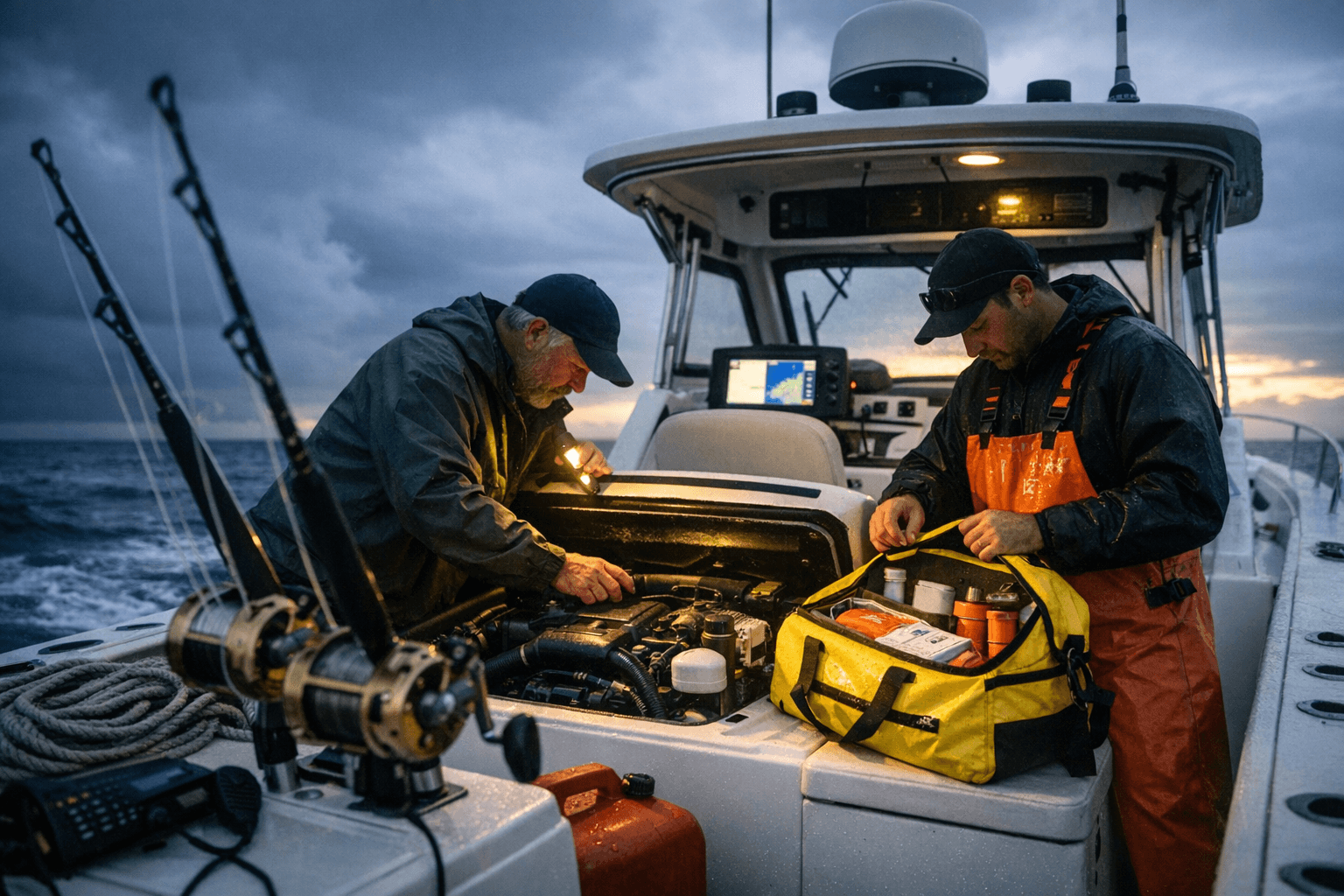
Check engine oil level, coolant, and raw-water pickup before leaving sheltered waters; a small leak or clogged intake will become a big problem offshore. Test the alternator output under load, inspect belt condition and battery terminals, and carry a fresh set of terminals and crimp-on connectors. Bring an onboard multimeter and a spare marine battery or battery pack, electrical failures often coincide with bad weather, and having a second shallow-cycle battery or a jump-start pack saves long tows.
4. Navigation and redundancy: charts, GPS, and paper backups
Relying on a single chartplotter is asking for trouble when you’re 30+ miles offshore; bring a secondary GPS or a tablet with downloaded charts plus paper charts for your area. Program waypoints for anchorages, fuel stops, and the route home before you leave. Ensure your chartplotter’s cartography and firmware are current; an out-of-date chip or failed update has stranded more boats than I can count.
5. Communications: VHF, DSC, EPIRB/PLB, and handhelds
You need layered comms, fixed VHF with DSC, a float-free EPIRB or satellite PLB, and a waterproof handheld VHF with fresh batteries, because remoteness magnifies the cost of a single-point failure. Test DSC registration and MMSI on the VHF, verify your EPIRB registration details ashore, and store a portable satellite messaging device if you fish well beyond VHF range. Keep batteries charged and carry physical contact numbers for the nearest Coast Guard or rescue coordination center.
6. Survival gear and personal flotation
Every crew member must have a properly fitted lifejacket on board, and you should have a life-raft or throwable flotation sized for your maximum headcount; offshore tuna trips push you into conditions where minutes count. Check lifejacket service dates, sprayhoods, and life-raft hydrostatic release status; inspect flares (visual and smoke), and rotate out expired items before heading out. Pack a ditch bag with extra PFDs, thermal protection, a mirror, whistles, and a small first-aid kit tailored for deep cuts and hooks.
7. Weather planning: models, windows, and sea-state thresholds
Because weather, sea state and remoteness raise the cost of mistakes, plan trips around multi-model agreement and clearly defined sea-state thresholds you won’t exceed. Don’t go if forecasted wind or swell pushes you beyond your boat’s tested capability, define a maximum sustainable wind and swell for your hull and crew experience, and stick to it. Use multiple sources (local gribs, buoy observations, and a reliable offshore forecast) and look for consistent trends across models rather than a single optimistic run.
8. Crew briefing and role rehearsal
Before lines in, run a 10–15 minute safety briefing: who mans the helm, who handles the radio, where the PFDs are, and the man-overboard procedure, everybody should know their primary and backup role. Rehearse a man-overboard drill and show where emergency gear lives; in open-ocean conditions, confusion costs time and can escalate into a medevac. Assign one person to maintain a log of repairs, weather updates, and fuel burn so decision-making is data-driven during the trip.
9. Fishing gear and deck safety
Inspect all tuna tackle, leaders, swivels, gaffs, and clips, before you leave sheltered waters; a failed leader on a 150–200 lb fish in heavy seas is a hazard to crew and boat alike. Secure loose gear with lashings, check that deck drains are clear, and have nonslip tape in places the crew walk in wet conditions. Bring a spare gaff, leader spools, and a basic rigging kit (swivels, crimps, heat shrink) so you can repair rigs without a dry dock.
10. Emergency scenarios, towing, and recovery planning
Because remoteness increases consequences, plan for the worst: know towing arrangements, nearest safe harbor, and which commercial or local vessels respond in your area. Have a tow bridle and heavy tow line rated appropriately for your boat’s displacement stored ready; know how to lash a disabled engine to drift with minimal yaw. If you carry an EPIRB or PLB, confirm activation procedures with the whole crew so panic doesn’t delay a distress call.
- Float plan filed with onshore contact and paper copy onboard
- Fuel calculation with 30–40% reserve and usable tank gallons noted
- Two communications: fixed VHF (DSC) + handheld + EPIRB/PLB
- One spare battery or jump pack, multimeter, and basic electrical tools
- Lifejackets for all, life-raft or throwable, and a ditch bag
- Chart redundancy: electronic + paper, waypoints programmed
- Weather window confirmed by at least two model sources
Practical checklist (use this before you push off)
Conclusion Offshore tuna trips push you into open-ocean environments where weather, sea state and remoteness raise both the cost of mistakes and the value of preparation, so don’t treat safety checks as optional. Nail the basics, float plan, fuel math, comms redundancy, and a clearly briefed crew, and you’ll turn risky runs into catches that are fun instead of expensive lessons.
This article was produced by Prism’s automated news system from verified source data, official records, and press releases, then run through automated quality and moderation checks before publishing. The system is built and supervised by the people who set the standards it runs under. Read our full AI policy.
Did this article answer your question?