Palm Beach Bottom Fishing Thrives as Offshore Trolling Remains Slow
A single billfish bent Captain Rich Adler's 7/0 hook and vanished on April 6; bottom fishing filled the cooler while offshore trolling went quiet.
%2Ffit-in%2F1200x630%2Fusers%2F33cfca0a-ab78-43c3-9e45-e9d8978f141f%2Fimages%2F2e2f9a73-d26a-4666-9983-6c99fe960b42.jpg&w=1920&q=75)
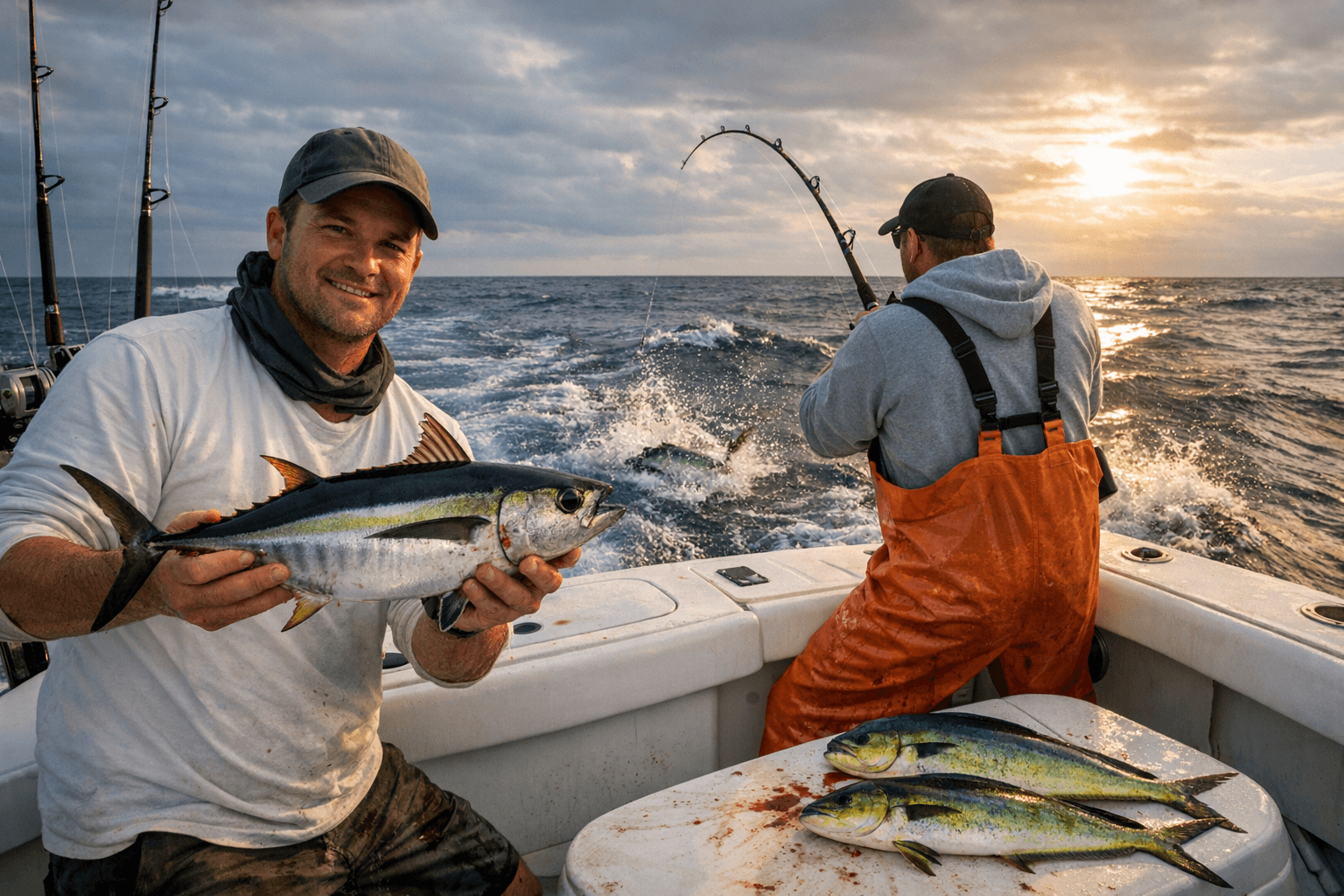
Every tuna angler knows that quiet-spread feeling: lines are set, the teaser is dancing, the spread looks textbook right, and nothing happens for hours. On April 6, Captain Rich Adler ran a charter out of Riviera Beach Municipal Marina with the Smithwick family aboard and got exactly one billfish shot all morning. That fish hit, straightened a 7/0 hook, and was never seen. That was it for the trolling bite.
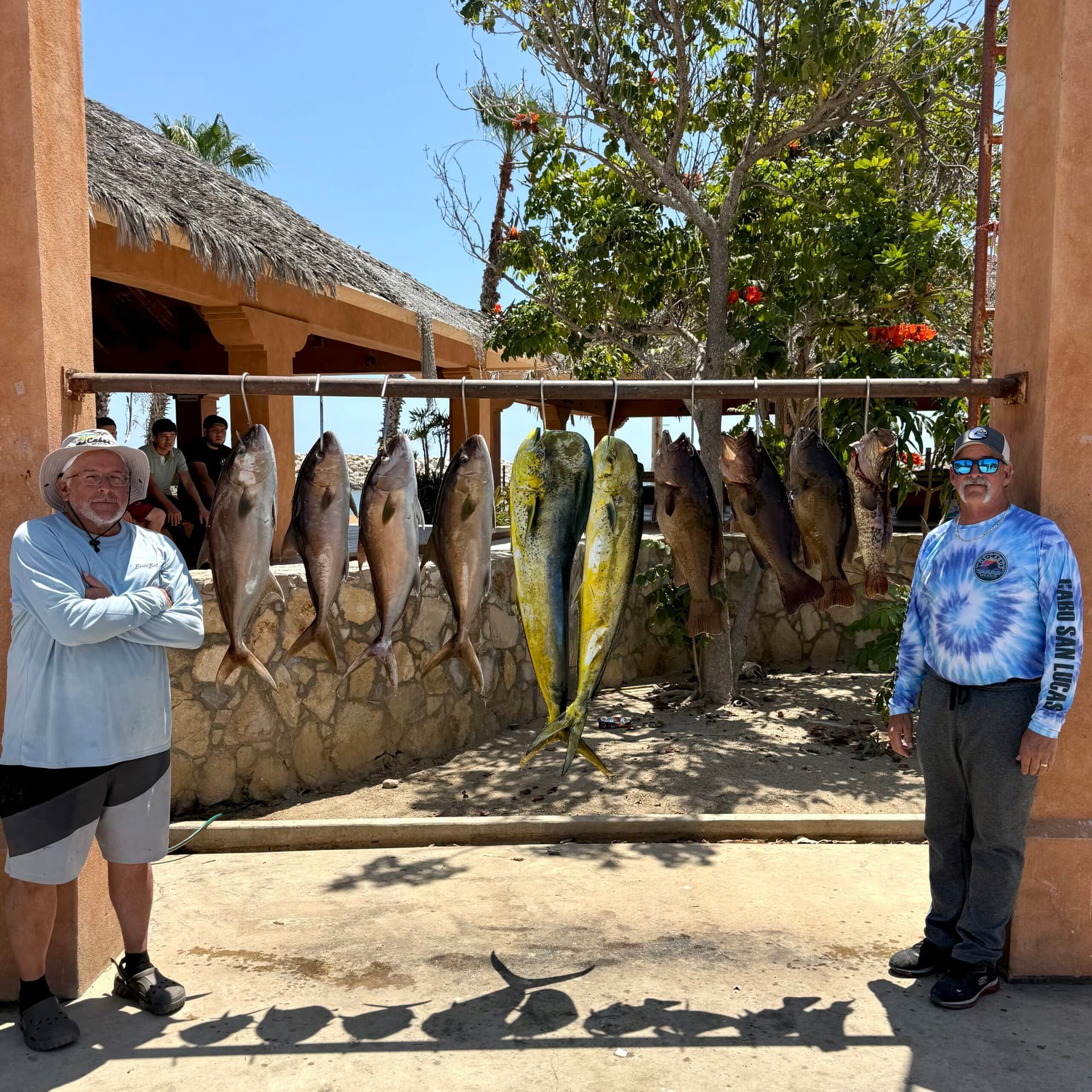
The bottom program, however, delivered. Ample action and table fish came off structure while the offshore spread sat quiet, a contrast that tells tuna and wahoo crews something specific about where the fish were holding that day.
Water clarity ran 6 to 12 feet on April 6, with air temperatures reaching 83°F and overnight lows at 74°F. Winds stayed light at 6 mph with gusts barely reaching 8 mph. On paper, those are workable offshore conditions. But the pelagics were not engaging at trolling depths, and one unseen billfish strike that straightened a 7/0 hook signals exactly the kind of tentative, mid-column bite that requires a different approach.
For South Florida weekend crews targeting tuna and wahoo, Adler's log reads as a clear pivot signal, not a washout. Three adjustments make the most sense given what the water told him on April 6.
First pivot: run the temperature break. When clear, calm inshore water is not producing in April off Palm Beach, the bite typically lives at the color change where warmer blue water meets greener nearshore water. Wahoo and blackfin tuna stack at those edge lines early, before boat traffic and midday sun push them deeper. Running the edge first thing, before committing to standard troll routes closer to the beach, is the logical move after a report like Adler's.
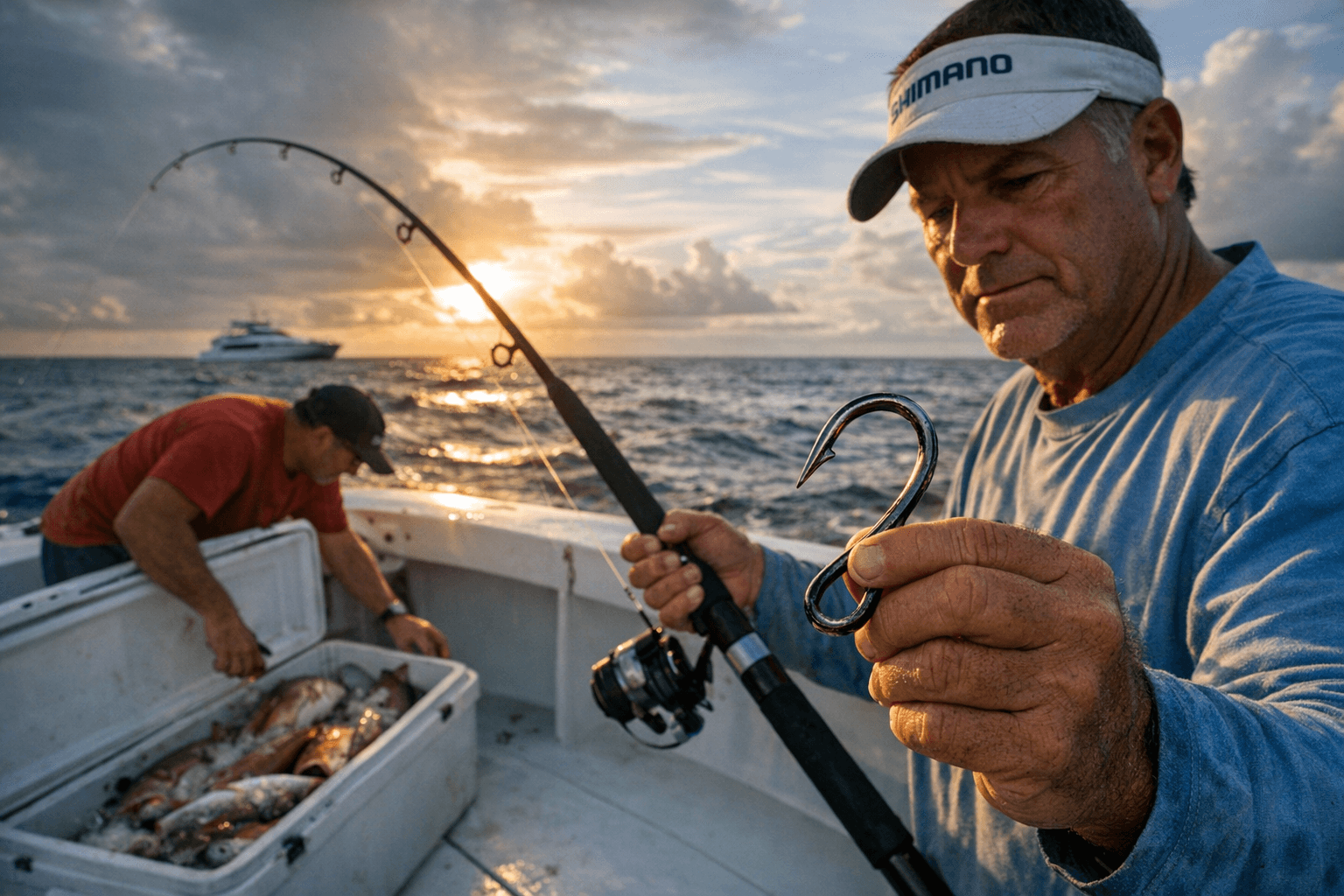
Second pivot: slow the spread and tighten it. A straightened 7/0 hook from an unseen strike is the textbook signature of a fish that contacted the bait without fully committing. Dropping trolling speed one to two knots and shortening the spread gives those fish less time to feel resistance before the hook sets. Wahoo are the exception and generally want speed, but when billfish are making tentative contact, slower is almost always the better call.
Third pivot: convert to a live-bait drift. The same conditions that defined Adler's April 6 outing, flat wind at 6 mph and clear water to 12 feet, are exactly what makes a live-bait drift manageable and effective. Goggle-eyes or pilchards drifted into the 120-to-200-foot range off Palm Beach consistently produce blackfin tuna through April when the trolling bite goes cold. The light wind keeps the boat from pushing baits too fast, and clear water means fish can locate the presentation.
Adler's operation still lists Tuna Wahoo Charters as available trip types out of Riviera Beach Municipal Marina, which matters for anglers planning around April's notoriously patchy pelagic windows. April is a transitional month off Palm Beach, and the fish are clearly in the area. One billfish straightening a hook is not an empty ocean; it is an active bite running on a different clock.
The bottom bite bailed out the Smithwick family charter. The tuna bite, for the crew that reads the signal and pivots correctly, may not need saving at all.
Know something we missed? Have a correction or additional information?
Submit a Tip