Recreational Anglers Provide Fin Clips, Tagging Data to Boost Bluefin Tuna Research
Charter captains Brian and Peter Bacon are turning every bluefin fight into a data point, supplying fin clips and tags that feed CKMR science.

Picture the stern of a 50-foot fishing vessel, legs braced against the gunwale, the boat rolling in its own wake. Then the reel screams and the mate hollers "Fish on!" What follows is anywhere from a 20-minute sprint to a 5-hour war of attrition against a fish built with more than 80 pounds of muscle. For brothers Brian and Peter Bacon, seasoned charter captains working the Atlantic coast, that moment is also the start of a data collection event.
The Bacons are among the recreational anglers, charter captains, private boats, and commercial fishers now feeding biological samples and tagging records into Atlantic bluefin tuna science. Fin clips and other tissue collected on the water are flowing into genetic studies and close-kin mark-recapture (CKMR) analyses, a methodology that uses genetic relationships between sampled individuals to estimate population size and structure. Alongside the tissue samples, tagging data gathered through NOAA's Cooperative Tagging Center is filling in the picture of where these fish go, how fast they grow, and how long they live.
NOAA's Cooperative Tagging Center works with anglers, charter captains, and commercial fishers along the Atlantic and Gulf coasts and across the Atlantic Ocean. The program provides free tagging kits, and when a fish is tagged and released, three data points are recorded: fish size, location of capture, and release condition. When that fish shows up again, days, months, or years later, scientists get a window into migration routes, growth rates, and longevity that would be hard to open any other way. Some tagged bluefin have been recaptured more than a decade after their initial tagging.
For the Bacon brothers, tagging has also become something of a friendly sibling rivalry, and their customers are in on it. The program has practical business value too: even when recreational seasons are closed, tagging gives charter operations a way to keep customers engaged and on the water doing something meaningful.
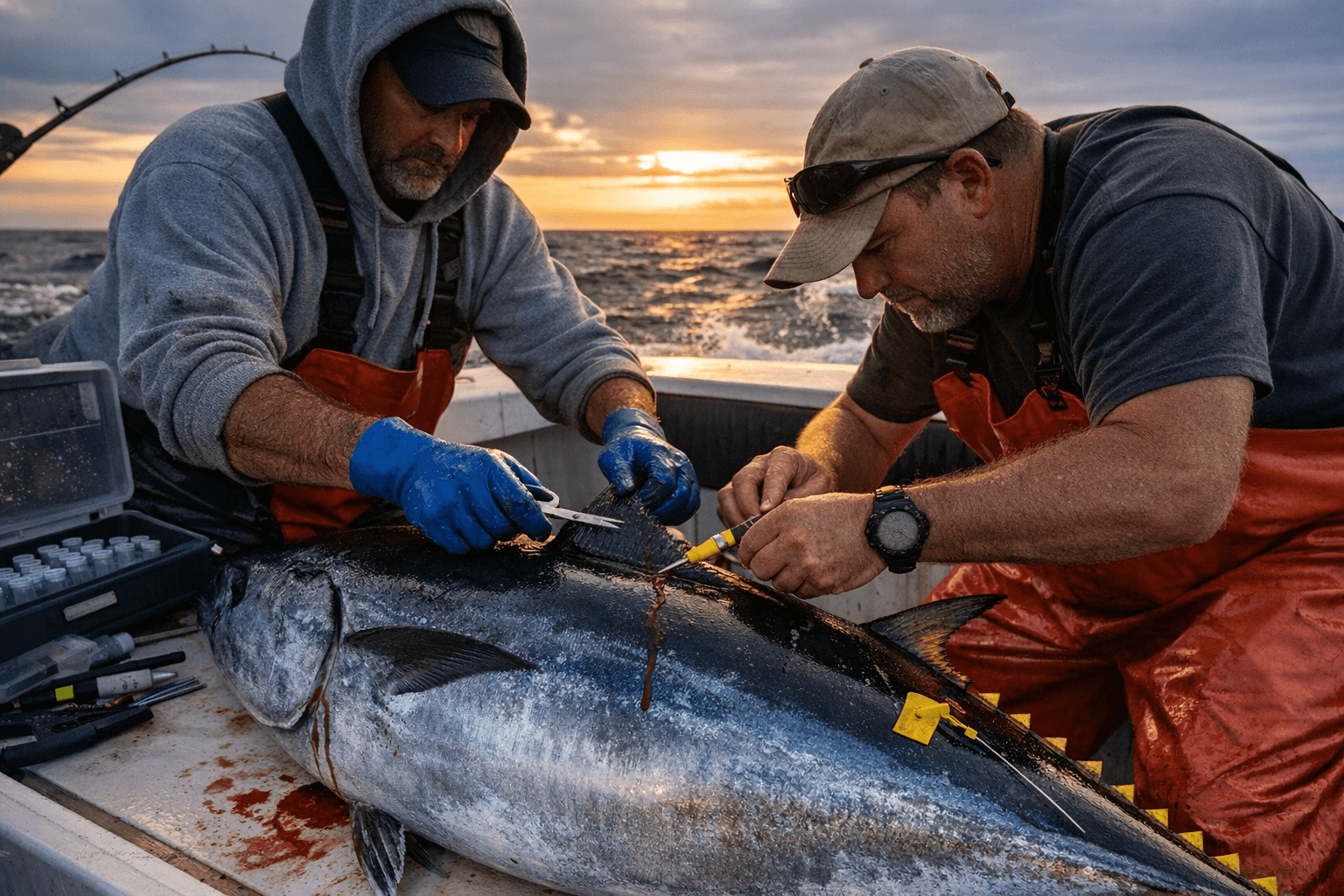
Brian Bacon put the motivation plainly: "Most people who fish want the fishery to do well and be good for future years and the next generation of people. It feels good to help contribute the data to do that. We want to help contribute to the fishery whether we're keeping the fish or not."
That attitude, multiplied across the fleet, is what makes angler participation so valuable to fisheries managers. Charter captains and private boaters are on the water daily, observing conditions and handling fish directly, giving science a presence at sea that no research vessel budget could match. The geographic reach of NOAA's Cooperative Tagging Center across the entire Atlantic basin reflects exactly that logic: the data network only works if the people closest to the fish are the ones collecting it.
This article was produced by Prism’s automated news system from verified source data, official records, and press releases, then run through automated quality and moderation checks before publishing. The system is built and supervised by the people who set the standards it runs under. Read our full AI policy.
Did this article answer your question?