U.S. sends sensors to help Argentina, Uruguay track illegal fishing
Sensors and cameras are heading to the South Atlantic as dark fishing fleets keep pressuring tuna, sharks and swordfish near Argentina and Uruguay.

For tuna crews, the most dangerous boat is often the one you cannot see. The United States is sending ISR sensors and cameras to the Argentine and Uruguayan navies to help them track illegal offshore fishing in their exclusive economic zones, a push aimed squarely at vessels that go dark by switching off AIS and slipping past patrols.
The move matters because the scale of the problem is bigger than any single EEZ. The U.S. Department of State says illegal, unreported and unregulated fishing is a pervasive maritime security threat that undermines fisheries conservation, food security, economic security and ocean biodiversity. The Food and Agriculture Organization of the United Nations calls IUU fishing one of the greatest threats to marine ecosystems and estimates it accounts for about 20% of the world’s catch.
In the South Atlantic, the pressure lands directly on the species that matter most to working boats and coastal economies. The Uruguayan Navy has said illegal fishing threatens tuna, sharks, swordfish, turtles and seabirds in Uruguayan waters. Its officers have also pointed to suspicious dark behavior as a clue that can reveal illegal fishing patterns, even when AIS signals disappear. The sensors and cameras are meant to make that pattern easier to spot and harder to exploit.
Argentina has been seeing the same strain at its maritime boundary. In recent reporting, the Argentine Navy was monitoring hundreds of fishing vessels near the edge of Argentina’s Exclusive Economic Zone, as officials warned that intrusions threatened the country’s natural resources. The stakes are not abstract: a 2016 Argentine government account said a Chinese fishing vessel was detected inside Argentina’s EEZ, pursued after warnings and eventually sunk during the chase, a flashpoint that still hangs over enforcement in the region.
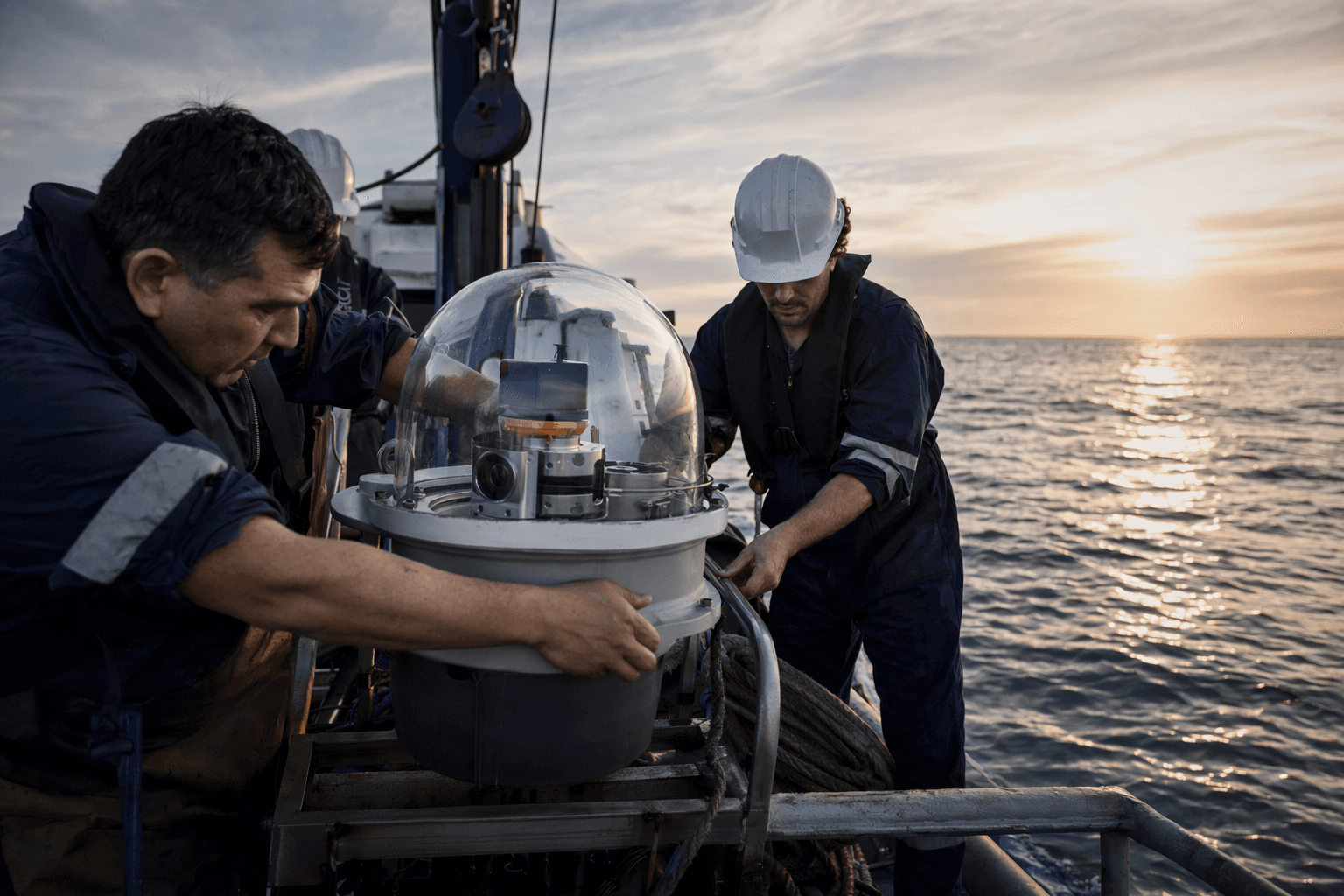
The new hardware arrives alongside broader military cooperation. The Argentine and U.S. navies carried out a bilateral maritime engagement in the Atlantic Ocean from April 28 to May 1, 2026, as part of U.S. Naval Forces Southern Command and U.S. 4th Fleet’s Southern Seas 2026 deployment. In Montevideo, the U.S. Embassy in Uruguay has framed regional security as a shared priority, and this latest support suggests the anti-IUU campaign is being treated less like a one-off aid package and more like a test case for how to police tuna grounds in real time.
If the sensors help Argentine and Uruguayan crews keep dark fleets in view, the payoff could be larger than one patrol or one seizure. It could mean tighter pressure on illegal effort across the South Atlantic, and a model other tuna regions may be forced to copy.
Know something we missed? Have a correction or additional information?
Submit a Tip