Warming Oceans Push Tuna Toward Cooler Waters, Higher Latitudes
Tuna are burning more energy than scientists expected, and that heat burden could shove fish into cooler water, higher latitudes, and shorter seasons.
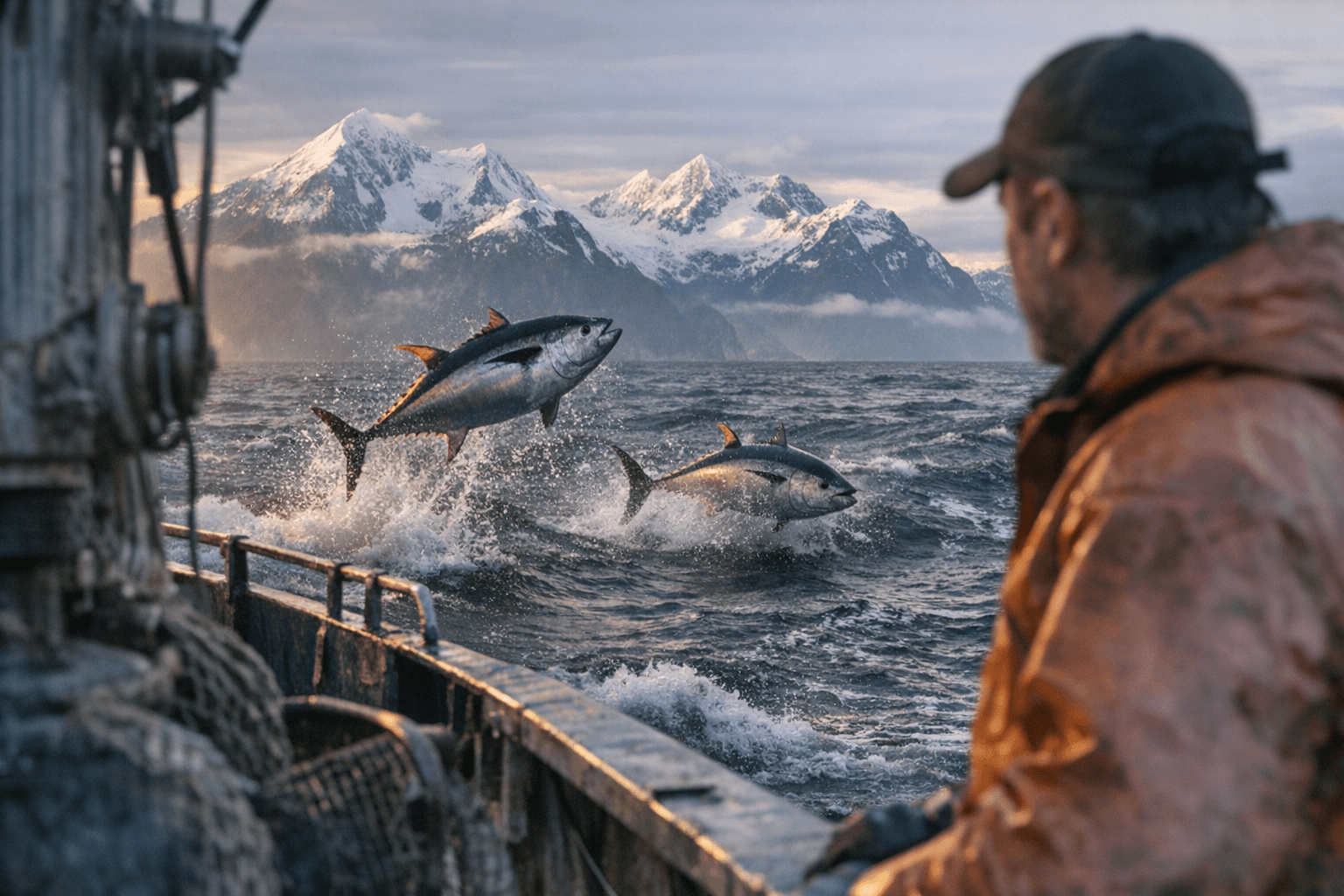
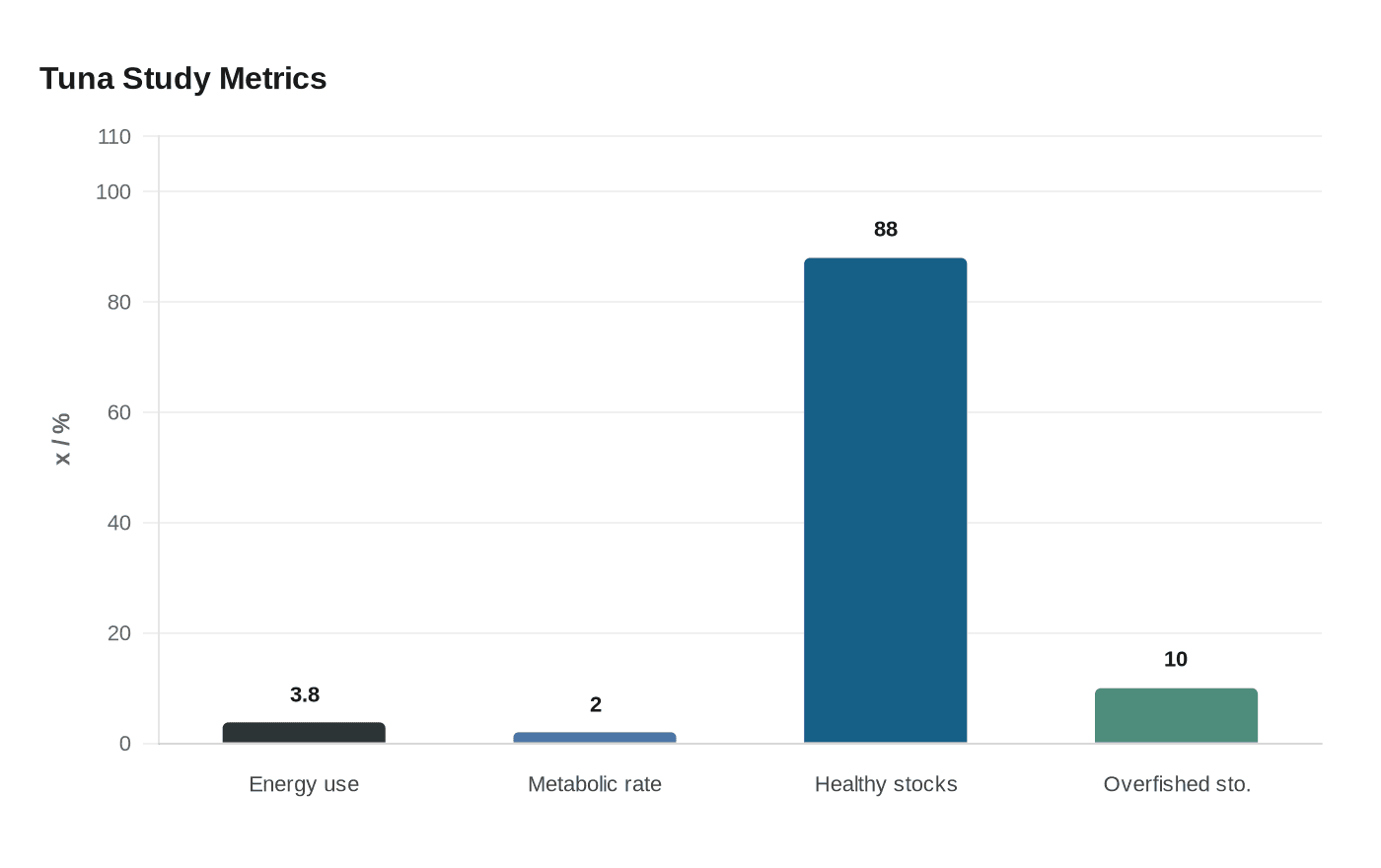
Tuna may be built like offshore missiles, but the new warning is plain enough for anyone who has stared at a blank spreader bar all morning: the fish are running hotter, and that heat comes with a cost. A study led by Trinity College Dublin with the University of Pretoria, published in Science on April 16, 2026, found that mesothermic fishes, which include tunas and some sharks, use about 3.8 times more energy than similarly sized cold-blooded fish. A 10°C rise in body temperature more than doubled routine metabolic rate.
That matters because mesothermic fishes make up fewer than 0.1% of all fish species. They are rare, powerful, and fast, but their advantage is also their vulnerability. The researchers combined biologging data from free-swimming fish with laboratory measurements, including data from basking sharks weighing up to 3.5 tonnes, to estimate what these animals are really paying in energy as oceans warm. The picture is a double hit: warmer water raises the risk of overheating, while food in those same systems may be harder to find.
For anglers, the on-water consequence is the part that hits home. If tuna have to stay inside a narrower thermal band, then the fish you used to find on a reliable summer edge may slide toward cooler water or farther north. That can compress habitat, tighten the window when fish hold on a piece, and turn a dependable season into a moving target. It also means old assumptions about where tuna should show up, and when, get less useful as sea temperatures climb.
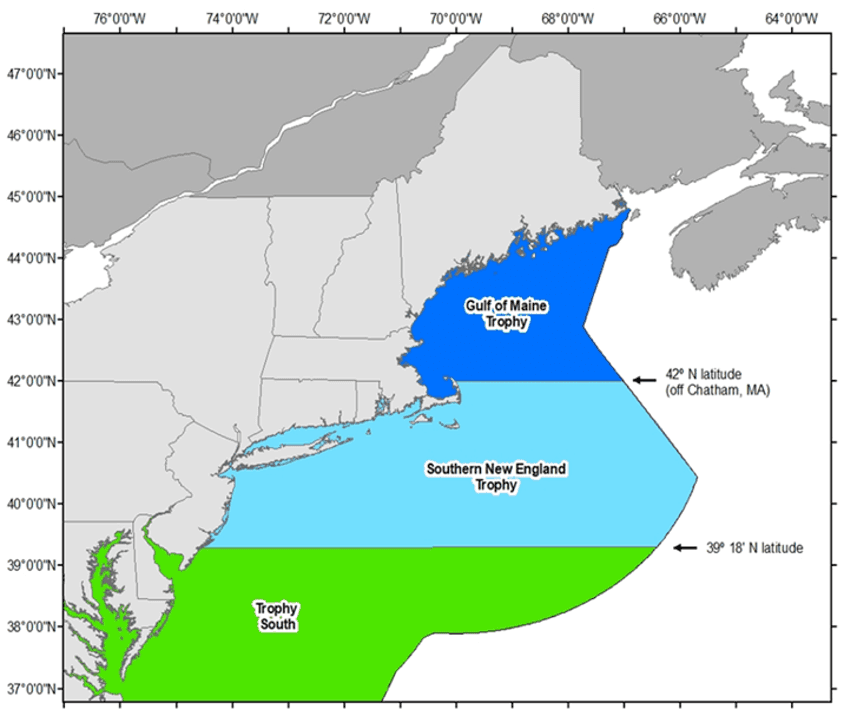
The management side is already feeling that pressure. NOAA has said warming seas are driving fish stocks beyond traditional habitats and across international boundaries, which makes tuna harder to predict, harder to assess, and harder to manage with fixed-line thinking. In November 2025, U.S. negotiators secured a 231-metric-ton increase in Atlantic bluefin tuna quota at the ICCAT meeting in Seville, Spain, a 17% boost in baseline quota and allowances for U.S. fishermen. ICCAT parties also agreed to discuss the natural distribution and mixing of Mediterranean and Gulf of America bluefin stocks at a future meeting.
The stock picture is mixed, not catastrophic, but not steady either. The International Seafood Sustainability Foundation said in December 2024 that 88% of global commercial tuna catch came from stocks at healthy levels of abundance, while 10% came from overfished stocks. OSPAR’s 2025 assessment said Atlantic bluefin tuna were in good status, with spawning stock biomass at its highest level since the 1960s and spatial distribution expanded, while still listing climate change as a pressure on the species.
The biggest takeaway is simple. Tuna are not just following bait and current lines anymore. Their own physiology is helping push them into new water, and that can change the whole game, from the North Atlantic to the Pacific islands, where jobs, cannery work, and government revenue still ride on where the fish go and how long they stay.
This article was produced by Prism’s automated news system from verified source data, official records, and press releases, then run through automated quality and moderation checks before publishing. The system is built and supervised by the people who set the standards it runs under. Read our full AI policy.
Did this article answer your question?