House House's Big Walk looks like a new co-op hit for friends
Big Walk is shaping up as House House’s next shared-chaos co-op, with an August 4 PC and Mac launch and a $19.99 price tag. The real pitch: hang out, get lost, and make stories.
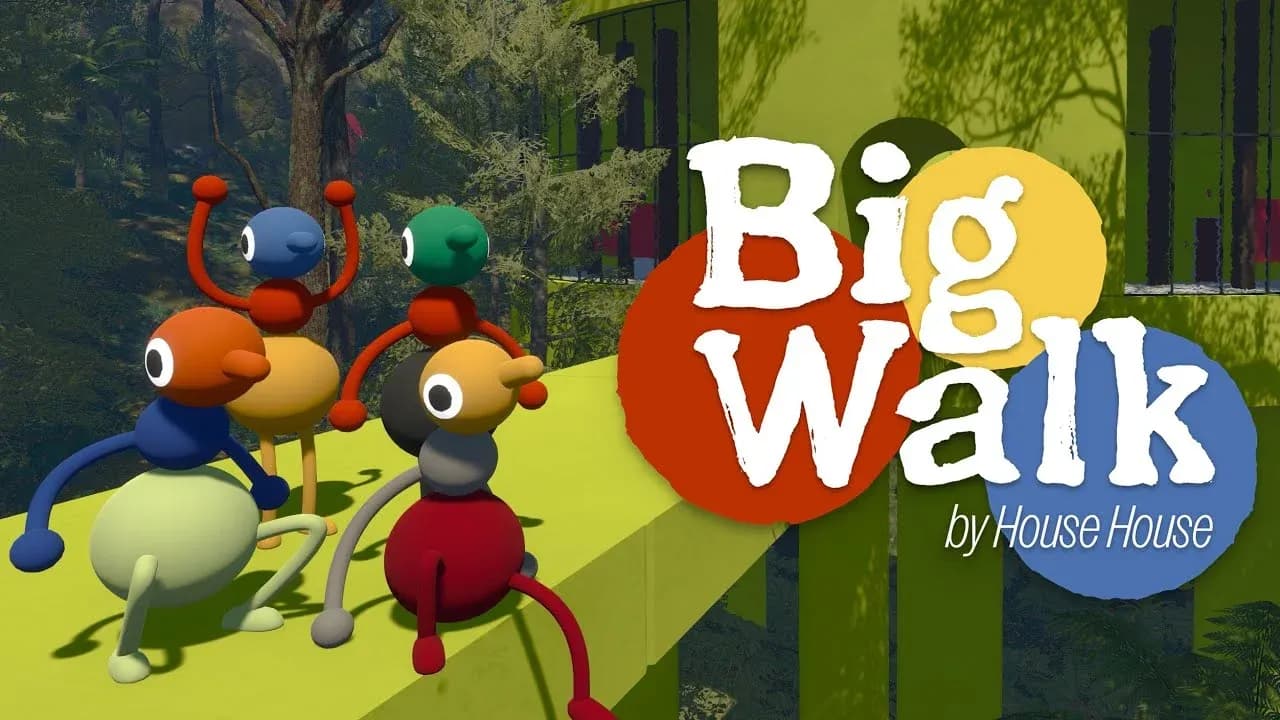
Big Walk looks built for the exact kind of night that turns a Discord call into a permanent inside joke. House House, the Melbourne studio behind Untitled Goose Game, is putting out its third game as a cooperative online walker-talker, and Steam sells it as a place to “hang out and get lost with close friends in a big world.” The game is slated for August 4, 2026 on PC and Mac, with a $19.99 price tag and a 25% launch discount for the first couple of weeks.
House House has already earned the benefit of the doubt
The reason Big Walk lands with real weight is simple: House House has already shown it knows how to make multiplayer mischief memorable. The studio is based in Melbourne, Australia, and it says Big Walk is its third game, which puts it in the rare position of following up a breakout hit with another project that feels tailor-made for group storytelling.
Untitled Goose Game still sets the benchmark for that kind of success. It launched on September 20, 2019 for macOS, Nintendo Switch, and Windows, then arrived on PlayStation 4 and Xbox One on December 17, 2019. Publisher Panic said it sold more than one million copies in its first three months, and it went on to win Game of the Year at the 23rd D.I.C.E. Awards and the 20th Game Developers Choice Awards. That is the sort of track record that makes a new House House game feel less like a curiosity and more like an event.
Big Walk’s pitch is social first, not solo first
Big Walk’s description does not dress itself up as a systems-heavy survival game or an endurance test for high-skill players. The hook is much simpler and, for the right group, much more dangerous: you and your friends are meant to wander a big world together, keep talking, and see what happens when the group gets delightfully lost. Steam’s framing is direct, and it matters because a game like this lives or dies on whether the social friction is funny, readable, and worth repeating.
That is where the phrase “cooperative online walker-talker” starts to make sense. The genre label is almost a joke in itself, but it points at the real design challenge: can the game create enough shared confusion that every session produces stories? The best co-op rituals are not built on perfect execution, they are built on the moments when somebody misunderstands a callout, takes the wrong path, or solves a problem in the least efficient way possible and the whole group loses it laughing.
Devolver Digital carrying the game in its upcoming catalog only sharpens that expectation. This is not being sold as a tiny one-off oddity. It is being positioned as a polished indie with the kind of personality that can spread through friend groups, streamer circles, and the endless group-chat retelling that turns a good co-op game into everybody’s next obsession.
Push Me Pull You is the clearest clue to the DNA
If you want the best preview of what House House is chasing here, look at Push Me Pull You. House House describes that earlier game as an award-winning local multiplayer game about friendship and wrestling, and the key twist is brutally simple: players share the same body. That means the game depends on communication first, execution second, and the studio’s own description says you need to carefully communicate, or “just shout a lot.”
That is the same lane Big Walk appears to be entering, just on a larger and more exploratory scale. Push Me Pull You worked because it turned coordination into comedy, and comedy into tension. If Big Walk can make movement, direction, and shared decision-making feel equally slippery, it could do for online co-op what Untitled Goose Game did for solo chaos: give people a setup that is easy to explain and impossible to fully appreciate until the stories start piling up.

The connection between the two games matters because it shows House House is not reinventing itself so much as scaling up what it already understands. It knows how to make players negotiate space, timing, and intent in ways that produce laughter instead of frustration. In a co-op landscape crowded with survival grinds and loud combat sandboxes, that is a very different and very appealing lane.
What to know before launch
The practical details are straightforward. Big Walk is releasing on August 4, 2026 on PC and Mac. Steam lists the game at $19.99 USD, with a 25% launch discount for the first couple of weeks. That puts it in easy impulse-buy territory for anyone who wants a new group game without committing to a full-priced experiment.
The timing also matters because House House is not selling a vague promise. It is selling a repeatable social setup from a studio that has already proven it can turn strange ideas into shared language. If Big Walk lands the way its pitch suggests, the selling point will not be combat, loot, or leaderboard pressure. It will be the way a simple walk through a big world turns into a night everybody remembers for the wrong turns, the bad calls, and the laughs that come with them.
This article was produced by Prism’s automated news system from verified source data, official records, and press releases, then run through automated quality and moderation checks before publishing. The system is built and supervised by the people who set the standards it runs under. Read our full AI policy.
Did this article answer your question?