Pete Hines says Microsoft left him powerless at Bethesda after acquisition
Pete Hines said Microsoft made him feel powerless at Bethesda, a sharp post-acquisition complaint from one of the studio's most recognizable veterans.
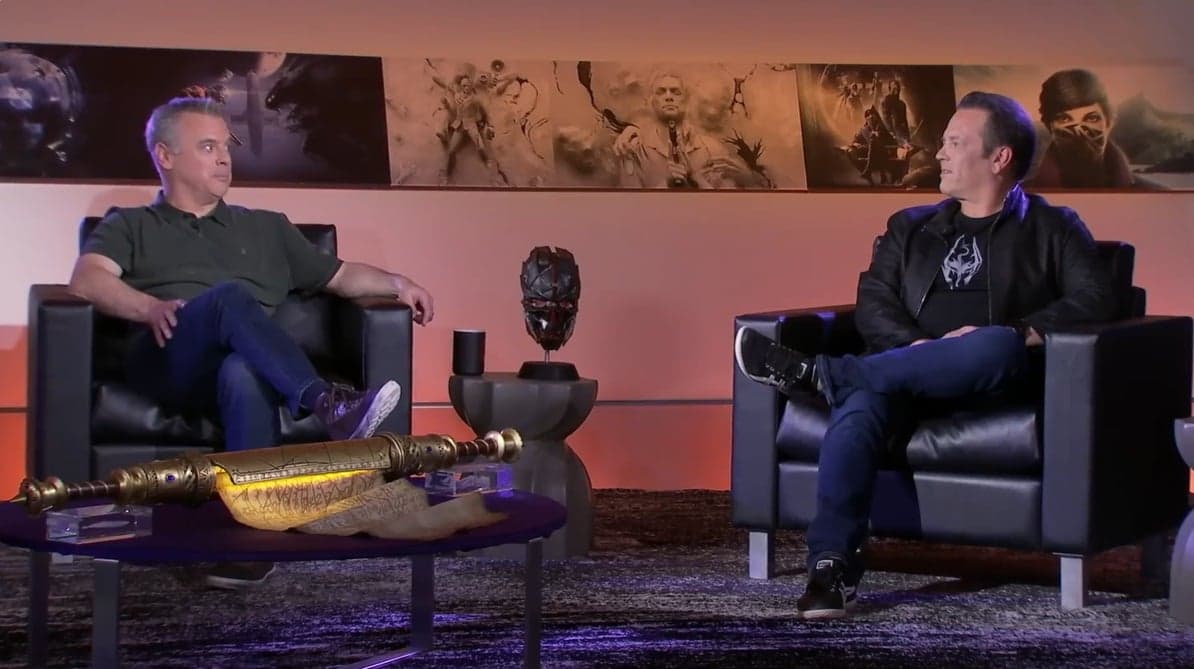
Pete Hines, one of Bethesda’s most recognizable executives, said Microsoft’s ownership left him feeling powerless to do what he believed was necessary to protect the company. After 24 years at Bethesda and a departure that followed Starfield’s release, Hines said he stayed because he felt the studio still needed him, but he eventually reached a point where he would not keep watching the organization get damaged, broken apart, or mistreated.
That makes his remarks hit harder than a standard retirement reflection. Microsoft announced the ZeniMax Media deal on September 21, 2020, promising to pay $7.5 billion in cash, and completed it on March 9, 2021. At the time, the company framed the acquisition as a way to strengthen Xbox’s first-party lineup, expand Game Pass, and bring Bethesda’s studios into the Xbox family. Phil Spencer and Microsoft’s gaming leadership sold it as a strategic win; Hines’s comments suggest the lived reality inside Bethesda felt far less tidy.
The platform strategy became impossible to ignore with Starfield. Bethesda confirmed the game launched on September 6, 2023 for Xbox Series X|S and PC, and Xbox promoted it as a day-one Game Pass release. For a studio known for The Elder Scrolls and Fallout, that was a clear sign that Microsoft’s priorities were already reshaping how Bethesda shipped its biggest projects. Bethesda later publicly announced Hines’ retirement on October 16, 2023, after Starfield had already set the tone for the post-acquisition era.

His comments also land in the middle of a broader argument Microsoft has been forced to have about exclusivity and control. During the Federal Trade Commission’s challenge to Microsoft’s Activision Blizzard acquisition, regulators pointed to Bethesda as an example while arguing that platform exclusivity could be used to foreclose rivals. Hines had already been part of that debate, defending some of Bethesda’s exclusivity decisions while acknowledging the tension between platform strategy and studio identity.
The wider context only sharpens the point. Microsoft cut 1,900 jobs across Xbox, Bethesda, and Activision Blizzard in January 2024, then announced another 650 layoffs in Xbox gaming in September 2024. Against that backdrop, Hines’s remarks read less like bitterness from a veteran on the way out and more like a blunt warning from someone who spent decades inside Bethesda and came to believe the studio’s culture was being squeezed by a much larger machine. With The Elder Scrolls 6 still unreleased, the question of how much of Bethesda’s identity survives that squeeze still matters.
This article was produced by Prism’s automated news system from verified source data, official records, and press releases, then run through automated quality and moderation checks before publishing. The system is built and supervised by the people who set the standards it runs under. Read our full AI policy.
Did this article answer your question?