Unity revenue rises 17 percent as ad-tech cleanup drives loss
Unity brought in $508.2 million in Q1, but $279 million in impairment charges tied to ironSource and Supersonic still dragged it to a $347 million loss.

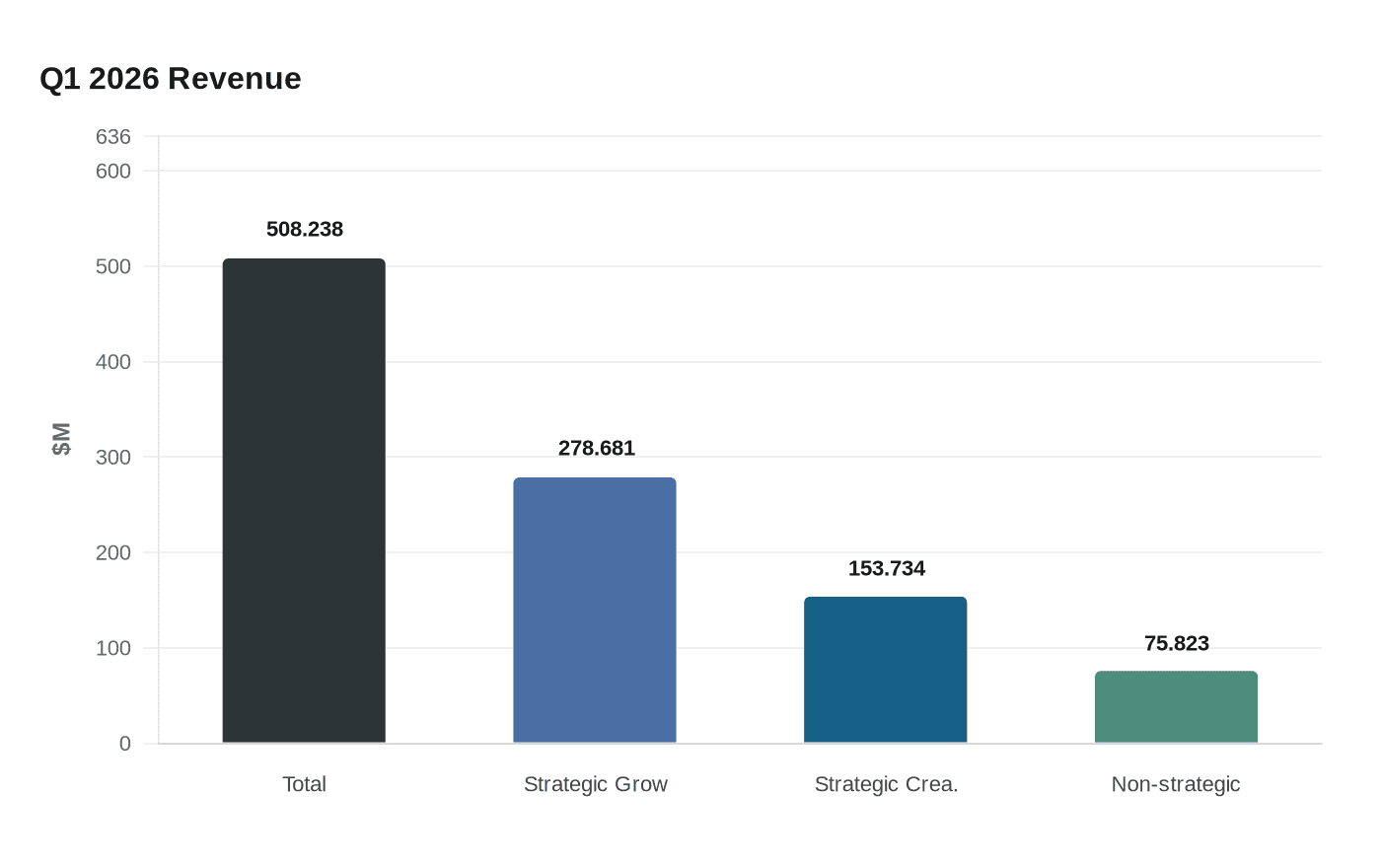
Unity’s core engine business looked healthier in the first quarter of 2026, but the company is still paying for its old ad-tech bet. Revenue rose 17 percent year over year to $508.238 million, and Unity said the parts it now calls strategic revenue climbed 35 percent to $432.415 million, with Strategic Grow up 49 percent and Strategic Create up 15 percent.
That is the number game makers will care about most. Unity has spent months drawing a harder line between the businesses it wants to keep and the ones it wants to shed, and this quarter showed both sides of that reset at once. Strategic Grow brought in $278.681 million, Strategic Create delivered $153.734 million, and non-strategic revenue dropped 34 percent to $75.823 million from $114.757 million a year earlier. The company said the ironSource Ads Network was sunset effective April 30, 2026.

The cleanup came with a heavy accounting hit. Unity reported a net loss of $347 million, including $279 million in impairment charges tied to the sunset of ironSource’s ad network and the planned divestiture of Supersonic, its game publishing business. For developers weighing whether Unity feels safer to build on now, that is the tension in the numbers: the business is getting narrower and more focused, but the legacy ad stack is still leaving dents in the income statement.
Unity had already tipped its hand in a March 26 preliminary update, when it said first-quarter revenue should land between $505 million and $508 million, above prior guidance of $480 million to $490 million. It also said adjusted EBITDA should come in between $130 million and $135 million, above guidance of $105 million to $110 million, and that Unity Vector was expected to rise 15 percent sequentially. Matt Bromberg has framed the reset as a push toward better growth and profitability, with more games, more creators and better discovery doing the work that older monetization layers used to handle.
The company’s April 8 partnership extension with Meta on next-generation VR experiences underlined that shift. Unity is trying to sell the market on a simpler pitch: a more focused platform, fewer distractions from ad-network baggage, and a future built more on creation tools than on the messier parts of mobile monetization.
This article was produced by Prism’s automated news system from verified source data, official records, and press releases, then run through automated quality and moderation checks before publishing. The system is built and supervised by the people who set the standards it runs under. Read our full AI policy.
Did this article answer your question?