Freshly Serviced 1981 Yamaha CS-70M Analog Polysynth Lists for $9,998
A freshly serviced 1981 Yamaha CS-70M just listed on Reverb for $9,998 from Japan, as asking prices for working examples routinely reach five figures.
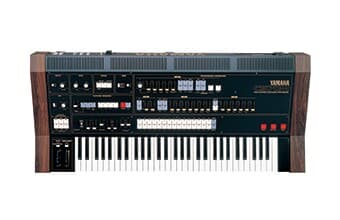
A listing that appeared on Reverb from Scott's Gear Garage in Soya-Gun, Japan, puts a freshly serviced 1981 Yamaha CS-70M at $9,998 Buy It Now. For anyone tracking the ultra-rare end of the analog polysynth market, this is a useful data point: prices for the CS-70M currently range from as low as 5,000€ to as high as 13,000€ depending on condition and provenance, which puts the Scott's Gear Garage ask squarely in the mid range for a unit described as working flawlessly.
The seller's description calls it "original vintage c 1981 Yamaha CS-70M analog poly monster, freshly serviced, in excellent playing condition." A second serviced example surfaced on Reverb just last year, with that listing's service notes detailing replacement of electrolytic capacitors in the power supply and an upgrade from a two-prong inlet to a modern three-prong IEC connector, the kind of remediation work that separates an instrument ready for a studio from one waiting to fail mid-session.
The CS-70M is a 6-voice polyphonic synthesizer built around 12 VCOs (two per voice), two LFOs, 12 VCFs, 12 VCAs, and a 61-key keyboard with aftertouch sensitivity. That aftertouch is not a footnote: it is one of the features that distinguishes the CS-70M as a performance instrument rather than a preset machine. Its fat sounds, cutting leads, and bubbly basses sit inside a design that also includes a four-track polyphonic sequencer and external magnetic data card memory storage. The CS-70M is widely considered the last purely analog Yamaha synthesizer of the era, and its dual-layer voice architecture, much like the CS-80 it followed, allows for timbral complexity that monosynths simply cannot replicate.
That heritage helps explain the five-figure pricing. But buyers need to audit carefully, because the CS-70M has well-documented weak points. All tact switches must be replaced on most surviving units, all linear encoders need cleaning and lubrication, and the switches and sliders require the same treatment. The custom Yamaha ICs, once unobtainable, are now stocked by specialist suppliers, but their absence in a non-serviced unit is a dealbreaker. Power supply capacitors are another standard replacement. Wood side panels are cosmetically fragile and frequently show age-related damage.

Before committing to any CS-70M listing, demand the following: a detailed service log specifying exactly what was replaced and when; a video demo that cycles through all six voices individually to confirm no dead notes or tuning instability; close-up photos of the keybed, the encoder bank, and the interior PCBs; and explicit confirmation of how the unit is being shipped, including insurance coverage. International shipments from Japan add transit risk for a large, heavy, irreplaceable instrument. Reverb's buyer protection policy provides a layer of recourse, but it is not a substitute for due diligence before the purchase.
At $9,998, the Scott's Gear Garage unit is not cheap by any measure. It is also not overpriced for a freshly serviced, working CS-70M in 2026 — which, more than anything else, tells you where the market for late Yamaha analog hardware currently stands.
Know something we missed? Have a correction or additional information?
Submit a Tip