Josh Lucan Shows How to Build Tangerine Dream-style Sequenced Analog Pads
Josh Lucan’s Synthtopia tutorial (Feb 18, 2026) lays out practical steps to craft Tangerine Dream–style sequenced analog pads, from sequencer routing to slow, evolving modulation.
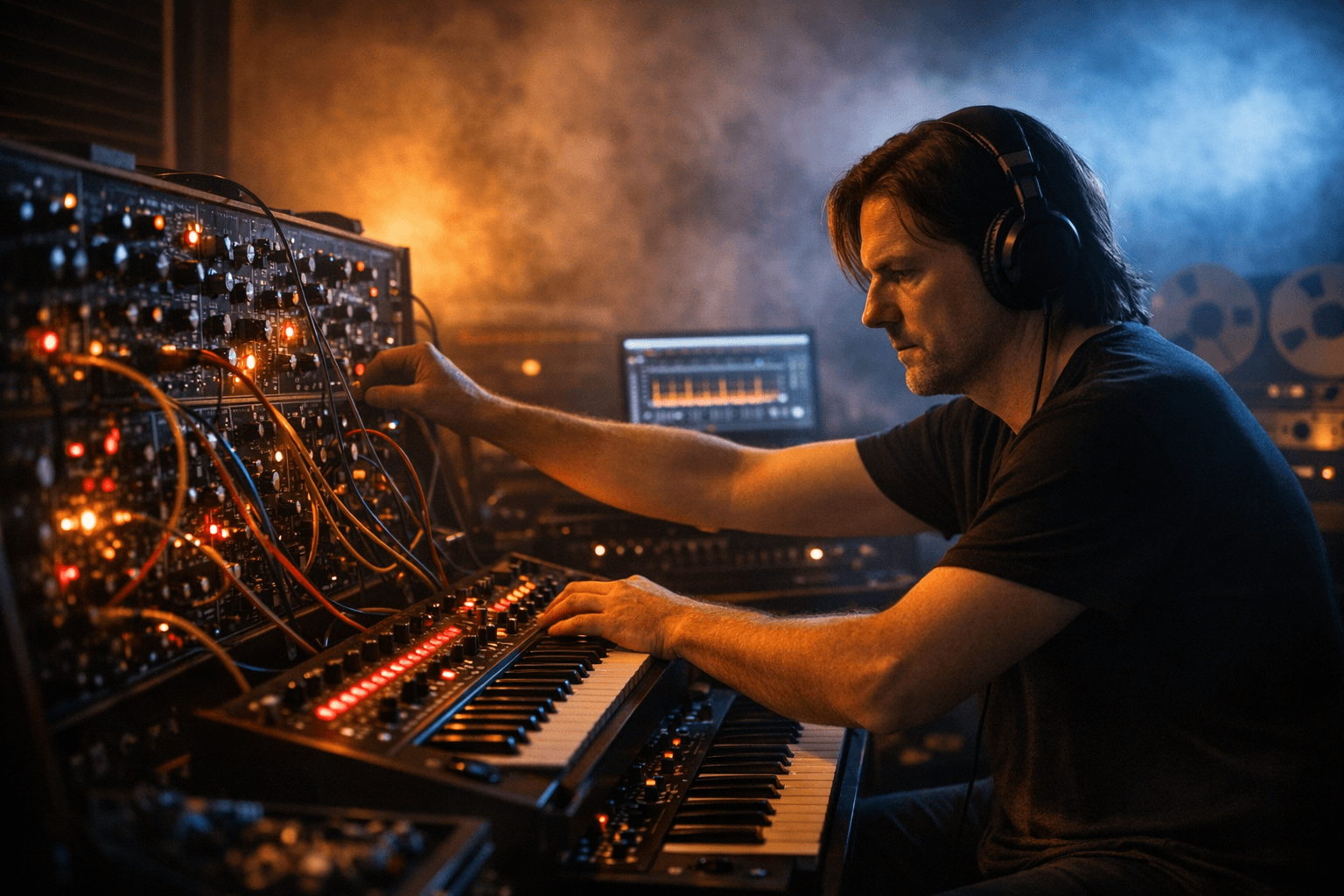
Josh Lucan walks readers through a hands-on method for making sequenced, evolving pads in the style of 1970s Tangerine Dream in a Synthtopia video published Feb 18, 2026. The piece focuses on what to dial in, how to route a sequencing voice into long pad layers, and how to shape motion so the pads feel both rhythmic and timeless, practical detail aimed at players who want originals inspired by that era rather than exact recreations.
1. Choose a sequenced voice and routing that supports continuous motion
In the Feb 18 Synthtopia tutorial, Lucan starts by demonstrating a primary sequenced voice that provides rhythmic momentum beneath pad textures. He emphasizes routing the sequencer output to both pitch and modulation inputs so the sequence itself becomes a source of evolving timbre; this keeps the pads moving without constant manual intervention. Use a step sequencer or clocked MIDI pattern set to classic TD-style subdivisions to anchor motion while you build pad layers around it.
2. Select oscillators and waveform blending for warm, analog character
Lucan shows how to pick oscillator types and blend them to mimic 1970s analog warmth in the Synthtopia video. He favors combinations that produce rich harmonic content, think two oscillators slightly detuned or one oscillator with a subtly different waveform routed through a second at low level, so the pad has a living core. Set detune and waveform mix gently; the result should be lush but not overtly chorused, a balance Lucan demonstrates visually and by ear.
3. Sculpt slow envelopes to create long, evolving pads
The demonstration breaks down envelope settings that favor long attack and release times to produce the sustained, cloud-like qualities associated with Tangerine Dream-era pads. In the tutorial Lucan shows ADSR and multi-stage envelope choices that avoid sharp transients; the sustain level and slow decay shape how the sequencer’s notes blur into the pad. He also points out that slightly unequal attack and release times (longer release than attack, or vice versa) can prevent the pad from sounding too static while remaining smooth.
4. Add layered voices for depth and stereo width
In his Synthtopia piece, Lucan layers multiple pad voices over the sequenced core to achieve depth reminiscent of early Tangerine Dream arrangements. He demonstrates using complementary timbres, one voice focused on low-mid warmth, another on airy highs, and panning them subtly to create stereo breadth without losing mono compatibility. Lucan’s approach keeps each layer simple so the total sound remains cohesive rather than polyphonic clutter.
5. Use slow modulation sources to generate organic motion
Lucan’s tutorial emphasizes routing slow LFOs or modulation envelopes to filter cutoff, oscillator pitch, and amplitude to produce gradual, non-repetitive movement. He shows how very low-rate modulation (sub-Hz) applied with small depth yields evolving textures that avoid obvious periodic wobble. On Feb 18, 2026 Lucan demonstrated chaining modulation sources, for example, a slow LFO modulating an envelope rate, to create second-order motion that feels natural and cinematic.
6. Employ sequencer variation and probabilistic steps to avoid looped sameness
In the video on Synthtopia, Lucan breaks down techniques to vary the sequencer so your pad environment keeps changing: alter step lengths, transpose sections, and inject probability on select steps. He demonstrates that slight, scheduled variations (every 8 or 16 bars) preserve the sequenced backbone while introducing new harmonies and textures over long stretches. This mirrors the evolving structures found in 1970s Tangerine Dream pieces where repetition serves as a launchpad for gradual transformation.
7. Apply delay and reverb strategically for space and rhythmic shimmer
Lucan shows in the tutorial how delay and reverb are not just ambience but compositional tools for TD-style pads: tempo-synced delays add rhythmic shimmer tied to the sequence, while long, dense reverb creates the expansive, timeless wash. He demonstrates mixing delays at lower feedback for clarity and increasing feedback or reverb tail only on serviceable sends so the pad sits behind the sequenced lead without swallowing it. Lucan’s workflow on Feb 18 highlights balancing effect levels during arrangement rather than committing aggressive settings early.
8. Automate filter and effect parameters across sections
The Synthtopia video walks through simple automation moves Lucan uses to transition between sections and maintain listener interest. He demonstrates automating filter cutoff, delay feedback, and reverb send levels to shift density and brightness across an arrangement. These automated gestures let you keep the original sequenced pulse while shaping pad intensity at phrase boundaries, a practical tactic Lucan presents for creating originals inspired by Tangerine Dream.
9. Keep parts playable and record originals, not clones
Lucan stresses, in audio and visual examples on Feb 18, that the goal is original music inspired by Tangerine Dream’s 1970s sequenced textures, not note-for-note copying. He demonstrates capturing takes live, then comping or overdubbing to keep performances human; subtle timing variations and dynamic expression are part of what makes the pads feel alive. This approach supports creative ownership while preserving the iconic aesthetic cues of the era.
10. Mix with headroom and finalize with tasteful EQ
Finally, Lucan’s Synthtopia tutorial covers mixing basics specific to dense, evolving pads: leave headroom on the sequenced core, high-pass pad layers lightly to avoid low-end conflict, and use gentle shelving to keep the top end airy without brittle brightness. He demonstrates these moves on Feb 18 so players can translate the textures to different systems, from small studio monitors to live rigs, and preserve the moody, expansive character of the sounds.
- If you’re working in-the-box, emulate analog drift with tiny detune and subtle low-frequency modulation as Lucan does in the video.
- Use tempo-synced delay for rhythmic cohesion; Lucan demonstrates matching delay subdivisions to the sequencer’s clock.
- Record long takes and edit later, Lucan shows this workflow to conserve spontaneity while allowing compositional refinement.
Practical tips from the tutorial
Conclusion Josh Lucan’s Synthtopia tutorial (Feb 18, 2026) gives a pragmatic roadmap to make sequenced, evolving analog pads that echo Tangerine Dream’s 1970s textures while remaining unmistakably your own. By combining a sequenced core, layered analog-style voices, slow modulation, sequencer variation, and careful effects work, all demonstrated step-by-step in the video, you get a repeatable process for producing pads that breathe, shift, and support original compositions in the classic style.
Know something we missed? Have a correction or additional information?
Submit a Tip