Michigan Synth Works MSW-820 revives Roland CMU-800 spirit with flexible filter
Michigan Synth Works’ beta MSW-820 brought a two-VCO Roland CMU-800 riff to Sonicstate, but its 16-mode filter and pending third VCO made it feel like more than a clone.
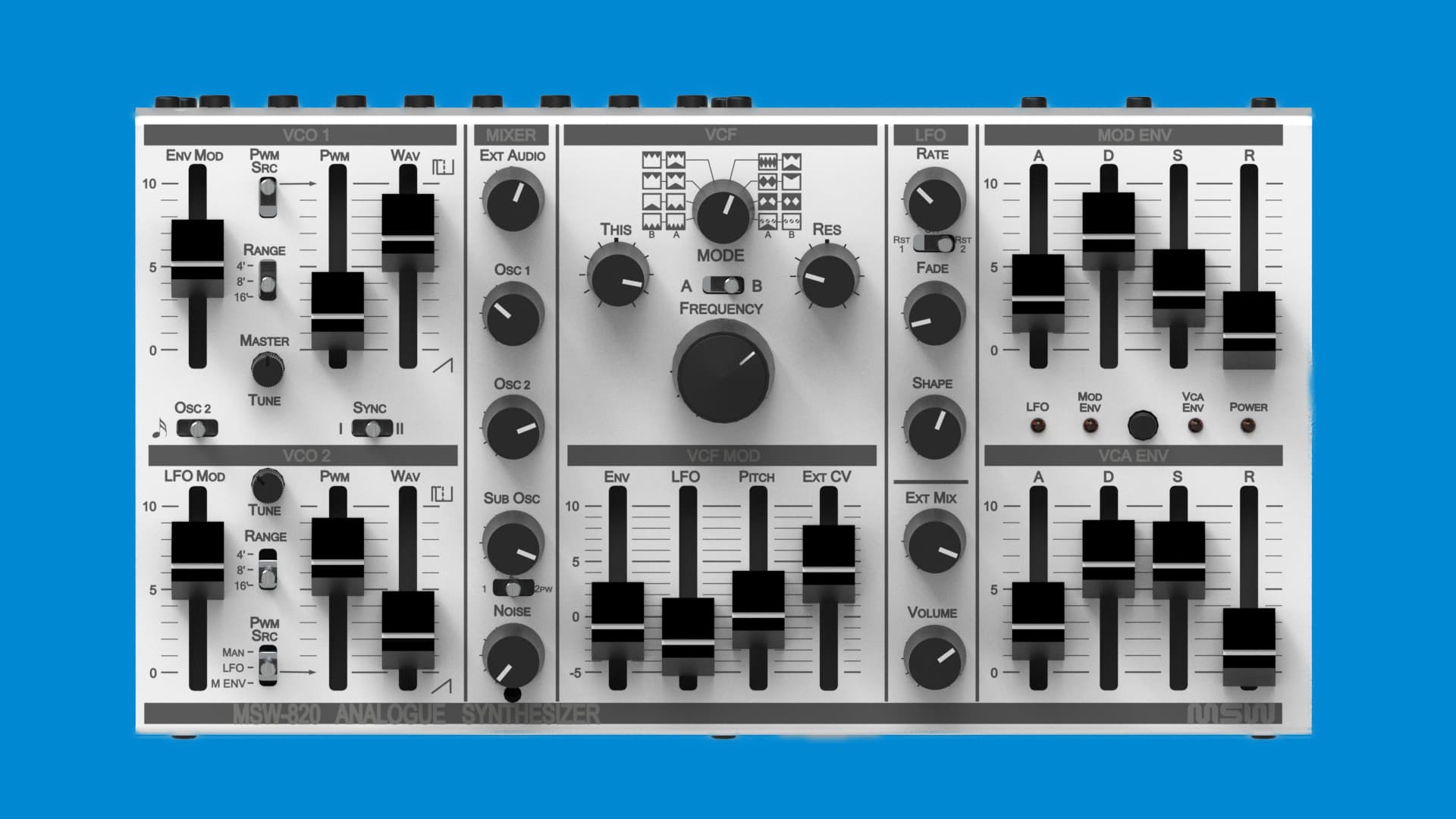
Michigan Synth Works’ MSW-820 landed in a sweet spot that vintage Roland fans rarely get to see: close enough to the CMU-800 family to trigger recognition, but altered enough to feel like a new instrument rather than a museum copy. Sonicstate’s SonicLAB segment on April 13, 2026 put the beta unit under the microscope, and the immediate takeaway was that this is not a straight resurrection. It is a sequel to the MSW-810, and it carries that lineage forward with a broader, more flexible voice.
At its core, the MSW-820 is a two-oscillator analogue monosynth with two envelope generators, a digital LFO with sync and trigger functions, and a digital noise source with eight flavors. Michigan Synth Works also lists MIDI over TRS or USB, plus desktop and euro formats, which broadens the instrument well beyond the usual compact monosynth lane. The big differentiator is the filter: an advanced 16-mode voltage controlled filter that gives the 820 far more tonal range than a typical “one sound, one filter” homage box. That flexibility is what pushes the design toward interpretation rather than simple cloning.
The beta status mattered in a practical way. Sonicstate described the review unit as still needing a few final additions before the production model lands, and the instrument already pointed to a future expansion, with a third digital VCO expected later. That leaves the current voice architecture feeling intentionally familiar, but not finished in the old-school sense. Michigan Synth Works listed the MSW-820 from $450, marked it as not in stock, and said demand meant 4-6 weeks for delivery. The company’s own copy also matched the live demo’s point: this is compact, affordable by boutique standards, and aimed at players who want immediate hands-on synthesis without chasing aging hardware.
The historical hook is clear. Michigan Synth Works describes the MSW-810 as a faithful recreation of the CMU-810 monosynth, the expander voice tied to Roland’s 1983 CMU-800 computer music system. Roland DG’s history places the CMU-800 release in 1983, and Vintage Synth Explorer’s notes on the platform underline why it still matters: Apple II or PC-based operation, analog synthesis, four-note chord polyphony, monophonic bass and melody sections, and analog drums. The MSW-820 does not try to freeze that world in amber. It updates it, trims it down to a modern desktop and euro workflow, and adds a filter section that gives the old computer-music spirit a much wider expressive range.
This article was produced by Prism’s automated news system from verified source data, official records, and press releases, then run through automated quality and moderation checks before publishing. The system is built and supervised by the people who set the standards it runs under. Read our full AI policy.
Did this article answer your question?