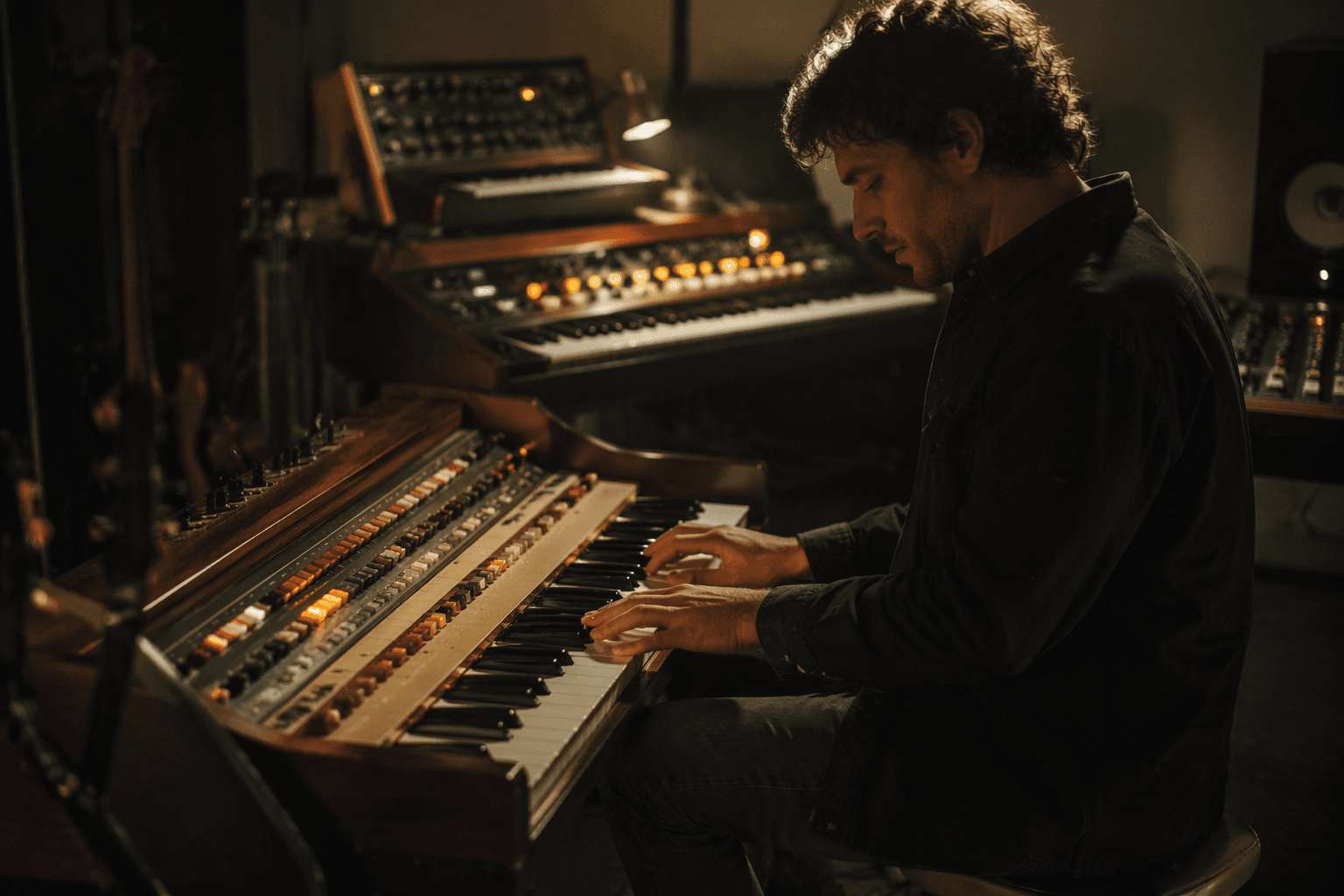
Roland JX-3P, the overlooked 1980s polysynth that helped launch MIDI
Roland’s JX-3P looks restrained beside Jupiter and Juno legends, but its six-voice DCO engine, PG-200 workflow, and early MIDI role make it a sleeper classic.
Why the JX-3P still matters
The Roland JX-3P is one of those synths that only clicks when you stop judging it like a flagship and start hearing it as its own instrument. It arrived in 1983 as a six-voice polysynth with a very different idea of control, and that difference is exactly what gives it its pull today. Roland now frames it as a landmark from the dawn of MIDI, and that history is only half the story; the other half is the way it behaves under your hands, with a fast preset workflow and a personality that feels immediate rather than overloaded.
What makes it worth a second look is simple: the JX-3P is historically important, still musically useful, and far less expensive than the Roland names it sat beside. For players and studios that want a genuine early-80s Roland voice without chasing the highest-priced icons, that combination is hard to ignore.
Built from Roland’s guitar-synth DNA
The JX-3P did not come from nowhere. Its design grew out of Roland’s earlier guitar-synth experiments, and that background helps explain why it feels so purposeful. Roland’s work in Matsumoto, Japan, and the company’s GR-series development line fed into the final keyboard design, with the optional PG-200 programmer tying the synth directly back to that broader family of instruments.
That lineage matters in practical use. The JX-3P was not built around the knob-per-function ideal that later players came to expect from some analog polysynths. Instead, it offers a tighter, more focused layout that prioritizes presets and guided editing, which gives it a kind of guitar-like immediacy: you get to the sound quickly, then shape it without getting lost in panel clutter.
A six-voice Roland that chose practicality over flash
Roland describes the JX-3P as a six-voice synthesizer released in 1983, and that alone places it right in the middle of a crowded period. The Juno and Jupiter families were already in the showroom, so the JX-3P did not need to outgun them. It needed to carve out a role, and it did that by being streamlined, playable, and approachable.
Its digitally controlled oscillators gave it stable tuning, which is one of the quiet strengths that still stands out now. You are not fighting drift every few minutes; you are working with an instrument designed to stay settled and ready. That stability, paired with easy preset recall, is a big part of why the JX-3P still makes sense in modern studios where speed matters as much as character.
The front panel tells you what Roland valued
If you want to understand the JX-3P, look at the panel before you listen to the sound. Roland’s current software recreation page describes a streamlined layout built for fast access to preset sounds, with deeper sound design handled through the optional PG-200 programmer. That split identity is the whole machine in miniature: a preset synth first, a deeper editor second.
The original owner’s manual makes the workflow even clearer. The synth shipped with 32 factory patches and 32 additional memory locations for user-written sounds. It also included a built-in polyphonic sequencer capable of up to 128 automatic notes, which gave the instrument a surprisingly useful compositional edge for the era.
What that means in actual use
- You can move fast between factory sounds without losing momentum.
- You can store your own patches once you have the PG-200 in the chain.
- You can sketch ideas with the built-in sequencer instead of reaching for another device.
- You get a disciplined, performance-friendly layout rather than a sprawling programming surface.
That approach is exactly why the JX-3P still lands with certain players. It is not a “study piece” first and a working synth second. It is built to be played, and its limitations are part of the reason it works so well.
The PG-200 is the key to the deeper side
The optional PG-200 programmer is central to the JX-3P story. Roland’s own PG-200 manual identifies it as the dedicated programmer for the JX-3P, the MKS-30, and the GR-700, which makes it more than an accessory. It is the bridge between the instrument’s preset-focused face and its deeper editing potential.
That matters because the JX-3P can feel closed if you only treat it like a front-panel synth. With the PG-200, the machine opens up in a way that matches its design philosophy. You are still not dealing with the sprawling immediacy of a knob-dense flagship, but you gain a direct route into the sound without losing the synth’s disciplined character.
Why its MIDI role is a big deal
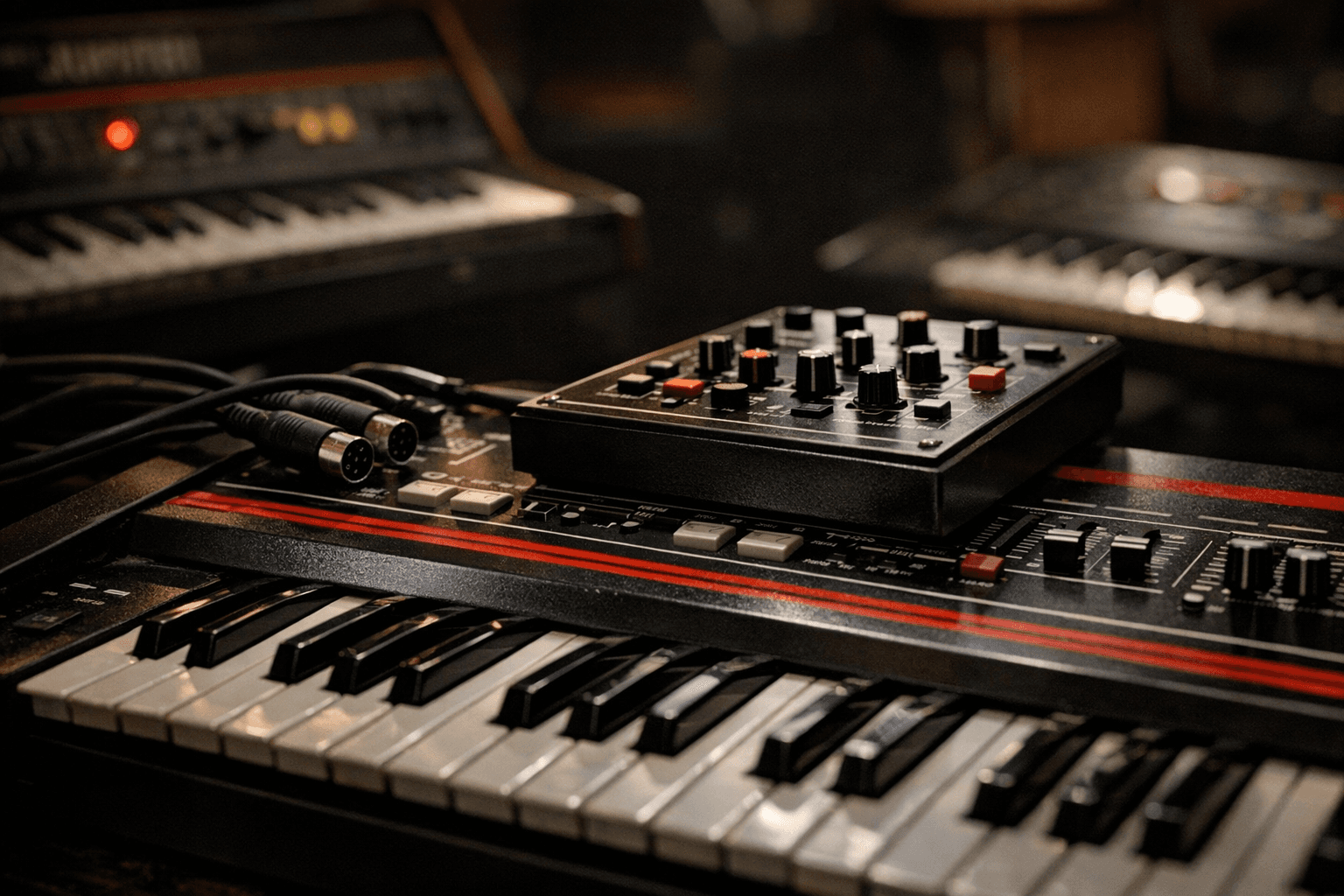
Roland says the JX-3P was its first synthesizer with MIDI support, alongside the Jupiter-6, and that it contributed significantly to the birth of MIDI as a global standard. That is not a small footnote. It places the JX-3P at the beginning of one of the most important shifts in electronic instrument history.
By modern standards, its MIDI implementation was primitive. That is part of the charm, not a flaw to apologize for. The instrument captures an early moment when MIDI was still taking shape, which makes the JX-3P feel like a bridge between the old world of pre-standardized hardware and the connected setups that followed.
The price told the real story in 1983
A 1983 British review listed the JX-3P at £900 including VAT, with the optional PG-200 at £195 including VAT. That pricing put it below Roland’s Jupiter and Juno flagships, and it explains why the synth could appeal as a more accessible entry into the company’s polysynth world. It was not cheap, but it was clearly positioned as the more attainable Roland choice.
That price context is still useful now. The JX-3P’s reputation has moved far beyond “budget alternative,” but the original positioning still shapes the market today. It remains the sort of synth that offers real heritage without demanding the same cash as the most celebrated Roland names.
Who should be hunting one now
The JX-3P makes the most sense for players and studios that want personality, not prestige. Its sound and workflow reward people who enjoy working within a defined instrument identity rather than chasing endless modulation options or total front-panel access. The synth’s focused design is part of what gives it a practical stage role and a strong place in a recording setup.
- collectors who want a Roland with real historical weight but a more approachable buy-in,
- producers who value preset recall and stable tuning,
- performers who want a synth that moves fast in a live context,
- and anyone who wants an early-MIDI machine with a clear link to Roland’s broader development story.
It is especially compelling for:
Roland’s own recent language keeps pushing the point home, describing the JX-3P as an underground 1980s classic and a detailed virtual recreation of the original. That is the right way to frame it. The JX-3P is not a lesser Jupiter or a stripped-down Juno. It is a distinct Roland with a focused voice, a practical layout, and a history that reaches from guitar-synth experiments to the birth of MIDI. That is exactly why it is overdue for serious respect.
This article was produced by Prism’s automated news system from verified source data, official records, and press releases, then run through automated quality and moderation checks before publishing. The system is built and supervised by the people who set the standards it runs under. Read our full AI policy.
Did this article answer your question?