Vintage synth repair guide helps owners fix common faults at home
A tired vintage synth often needs cleaning, not a full restoration. Here are the home fixes that save money, and the failures that belong on the bench.
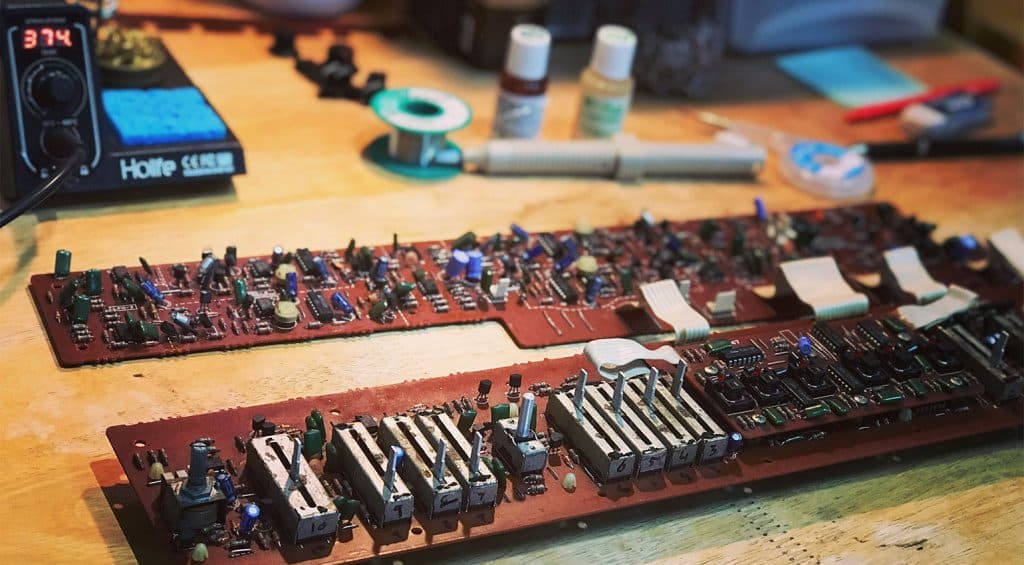
Before you price out a tech visit
A vintage synth or drum machine can look like a dream and behave like a money pit. The good news is that many of the faults that make owners panic are the same ones that can be checked safely at home, and catching them early can stop a simple problem from becoming a rare-parts chase.

That is why the old gear ecosystem still matters so much: Roland, Yamaha, Moog Music, and Sequential all keep support pages, manuals, or legacy documentation alive, while repair shops and parts suppliers keep handling batteries, key contacts, and minor fixes. The real trick is knowing where the easy win ends and the bench work begins.
The home fixes that usually make sense first
Dirt, dust, and grime
The first thing worth doing is opening the instrument carefully, unplugged, and looking for dust, grime, or contamination. On a lot of older keyboards and drum machines, debris collects under keys, inside switches, and around moving parts, and that alone can cause noisy operation, stuck notes, or controls that feel unreliable.
This is the cheapest kind of repair because it starts with observation rather than parts. In vintage gear, diagnosis often begins with the original design itself, which is why service manuals and schematics are so useful when you are trying to understand what should be happening inside the machine.
Dead keys and dirty key contacts
If a few notes fail while the rest of the keyboard behaves, dirty key contacts are one of the most common explanations. That problem shows up constantly in repair forums because keybeds take years of use, sweat, dust, and oxidation before they finally misbehave.
A careful cleaning can often bring those notes back without deeper surgery. This is one of the classic home jobs because it is visible, understandable, and often reversible if you stop once the contacts are clean and the keybed feels normal again.
Sticky buttons and tired tact switches
Buttons that miss presses, double-trigger, or feel gummy are another familiar vintage fault. On older synths and drum machines, sticky buttons often point to worn tact switches or contamination on the control surface, both of which are widely reported in repair discussions and parts resources.
This is also the kind of issue that can snowball if ignored. A bad button may start as a nuisance, then turn into a control-surface board problem if the owner keeps hammering on it or delays repair until the damage spreads.
Internal batteries and patch-memory problems
If the instrument forgets patches, loses user data, or behaves as if the memory is unstable, the internal battery is a prime suspect. Battery replacement is one of the recurring jobs owners and repair shops talk about most often, especially on patch-memory synths that rely on aging backup cells.
This is a good home-service candidate when the battery is easy to access and the instrument is already opened for inspection. It is also one of those repairs that can prevent a much bigger headache, because a dead battery can make a perfectly playable synth seem broken when the sound engine itself is fine.
Dead LCDs and display issues
A blank or failing LCD can look disastrous, but it is not always the same as a dead instrument. In many vintage units, the display failure is a separate service item, and some owners can handle the simplest replacements if the part is straightforward and the machine is already documented.
The key is not to confuse a display problem with a deeper logic fault. If the synth still makes sound, loads programs, or responds elsewhere on the panel, the screen may be the only thing that needs attention.
Minor control-surface repairs and simple board swaps
Loose buttons, isolated control failures, and clearly identified control-surface board problems are often manageable if you already know the exact part at fault. Vintage repair discussions commonly mention control-surface board replacements as successful fixes, especially when the rest of the instrument is healthy.
This is where archived documentation becomes more than convenience. It helps you match symptoms to original design, and that matters on older instruments whose boards, connectors, and parts layouts were never meant to be guessed at.
What you should not treat like a weekend job
Unplug the instrument before anything else, and stop if the fault moves beyond cleaning, batteries, and obvious contact issues. Anything involving the power supply, capacitor-related damage, or work that makes you unsure of the next step belongs at the bench edge, not on the kitchen table.
That caution is not just about protecting the instrument. The Smithsonian’s preservation approach treats analog and digital objects as things whose life should be prolonged carefully, and vintage synths fit that logic perfectly: they are playable tools, but they are also historical artifacts with circuitry that deserves respect.
Why older gear is still worth repairing
There is a practical reason so many owners keep fixing these machines instead of replacing them. A repair shop notes that instruments manufactured before 1994 tend to be easier to service because parts and manuals are still more available, which gives older gear a major advantage when something goes wrong.
That is especially relevant to the classic programmable era. Sequential says the Prophet-5, introduced in 1977, was the first fully programmable polyphonic synth and the first musical instrument with an embedded microprocessor. Dave Smith’s legacy is still present every time an owner opens an old panel and realizes that a once-futuristic instrument is now a vintage object with very ordinary wear points.
The support ecosystem around the bench
The reason this repair culture keeps working is that the information never disappeared. Roland maintains a public manual archive for legacy instruments, Yamaha offers a manual library along with parts and manual ordering pages, Moog Music provides support and troubleshooting resources, and Sequential keeps product support downloads and legacy FAQs available.
Around those official channels, the community fills in the gaps. Vintage Synth Explorer Forums, Syntaur, and similar repair spaces keep the living knowledge moving, from battery swaps to keybed cleaning to the specific failures that appear again and again on old control surfaces. That mix of archived documentation, specialist repair, and owner experience is what keeps vintage gear in circulation instead of retired to shelves.
The bottom line is simple: the most common vintage synth faults are often the least dramatic. Clean the contacts, check the battery, inspect the switches, and know when the issue has crossed from safe maintenance into real bench work. That discipline saves money, protects rare machines, and keeps the best old instruments doing the one thing they were built for: making sound.
This article was produced by Prism’s automated news system from verified source data, official records, and press releases, then run through automated quality and moderation checks before publishing. The system is built and supervised by the people who set the standards it runs under. Read our full AI policy.
Did this article answer your question?