Zlosynth Arplus blends string synth textures with quantizer and arpeggiator
Arplus packs string-machine shimmer, quantized harmony, and arpeggiated motion into 20 HP, with a Karplus-Strong engine built for patching, not nostalgia.

What Arplus is really for
Zlosynth’s Arplus is the rare Eurorack module that treats string-machine nostalgia as a live instrument idea, not a decorative sound preset. In 20 HP, it combines a quantizer, an arpeggiator, and a string synthesizer into one self-contained voice, so the panel can steer harmony, motion, and resonance without forcing you into a separate keyboard workflow.
That matters because Arplus is not just an oscillator with a few convenience features bolted on. Zlosynth positions it as a module that can be used in sections on their own or together, and that makes it useful whether you want a quick plucked texture, a harmonic sequencer brain, or a full performance voice with stereo spread. The company is based in Brno, Czechia, and that regional identity fits the project’s larger goal of making musical harmony approachable without sanding off the weirdness.
Inside the module
Arplus is built around a Karplus-Strong string synthesis engine with 6-voice polyphony, plus an external audio input for custom excitation sources. It also offers a quantized 1V/oct output and three stereo output modes, which turns it into more than a sound generator: it can drive the rest of your rack while it plays its own part.
The scale section is unusually deep for a module this size. Zlosynth says Arplus supports 31 different scales and chords of up to eight notes, with options that include Western diatonic, Arabic maqam, Indian melakarta, Japanese pentatonics, and quarter, semi, and whole-tone patterns. The arpeggiator can build note patterns from a chosen chord and scale, and its pattern behavior is CV-controllable, which makes it feel like a proper performance tool instead of a one-button convenience feature.
A useful detail for hands-on players: the panel makes the choices visible. A ModWiggler commenter praised the immediate, accessible layout and pointed out that quantizers often hide their scale logic behind memorized code numbers, while Arplus puts the musical choices where you can see them.
Why vintage-synth readers should care
The vintage link is not superficial. Karplus-Strong string synthesis comes from the 1983 paper “Digital Synthesis of Plucked-String and Drum Timbres” by Kevin Karplus and Alex Strong, and Arplus sits squarely in that lineage of digital plucked-string emulation. If your ear is tuned to string machines, early physical-modeling experiments, and the shimmering ensemble textures that made those instruments so hypnotic, Arplus is working from the same family of ideas, just inside a modular frame.
That framing is what makes it interesting. A classic string machine gave you a fixed voice and a fixed keyboard; Arplus gives you a string-synth idea that can be pushed into quantized harmony, chord movement, microtonal scales, and external excitation. It is the difference between owning a fragile relic and having a modern module that can mutate the old behavior into something you can actually patch around.
Patch 1: instant string-bed movement
Start with a familiar scale, then use the Tone control to set the root note and the Chord control to pick the harmony. Feed the arpeggiator a clock and let the module generate motion across a chosen chord and scale, then take the stereo output into chorus, delay, or reverb for the wide ensemble wash people associate with classic string hardware.
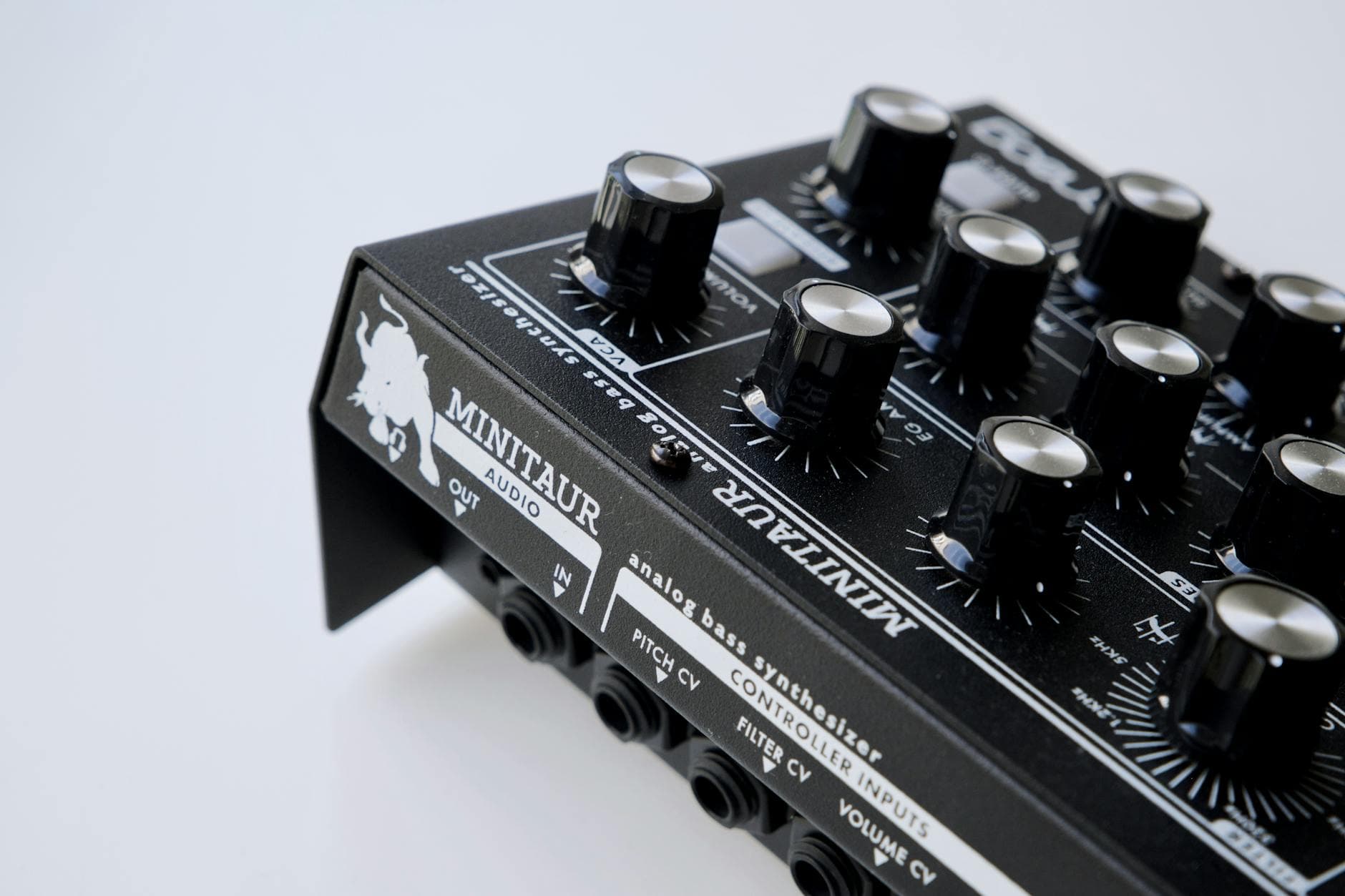
This is the quickest route to the vintage payoff: a shimmering, ensemble-like pad that feels musical immediately, but still responds to modular timing and modulation. The six-voice engine and the three stereo output modes help keep the sound open, so it can behave more like a compact string ensemble than a thin utility voice.
Patch 2: plucked pulses and resonant hooks
For the more physical-modeling side of Arplus, use the external audio input as your excitation source. A short trigger pulse, a click, or a noise burst can all push the Karplus-Strong engine into plucked territory, giving you staccato notes, bell-like strikes, or resonant lines that sit somewhere between a string and a struck object.
This is where the module starts to feel less like a retro homage and more like a modern answer to the old problem of getting organic attack without a real string instrument. Try unusual scale choices here, such as Japanese pentatonics or whole-tone patterns, and the result moves away from obvious “string machine” memory into something more expressive and less predictable.
Patch 3: harmony brain for the rest of the rack
Arplus is not confined to making its own pretty noise. Because it offers a quantized 1V/oct output, it can also act as a pitch source for another oscillator, filter voice, or sequenced layer, turning its chord logic into the control center for a larger patch.
That is where the CV-controllable arpeggiator becomes especially useful. Modulate the pattern behavior, switch scales, or move between chord shapes and the rest of the rack stays harmonically anchored, which is exactly what you want if you are chasing vintage character without committing to a single fixed keyboard voice. The result is a patch that can drift from warm string pad into sequenced modular arrangement without losing its center.
Buying it, building it, and where it sits in the market
Arplus is available both as an assembled module and as a DIY kit, and the kit is unusually approachable. Zlosynth says the SMD parts are already pre-soldered, leaving the through-hole components for the builder, and the build manual lists a Daisy Patch Submodule along with 4 green potentiometers, 6 blue trimmers, 12 jack sockets, 8 red LEDs, and a 20 HP front panel.
The pricing reflects regional variation. Retailer pages show figures around €375.10 and about $361, which places Arplus in the range where modular users can buy a distinctive voice without chasing down another large vintage keyboard. Zlosynth’s retailer network includes Beatsville in Japan, Schneidersladen in Europe, and Lectronz for DIY kits, which gives the module a footprint well beyond its Brno home base.
That breadth matters because Arplus does not read like a niche effects box or a novelty oscillator. It is a modern module for classic string-machine instincts, with enough harmonic logic, plucked-string behavior, and patchable flexibility to justify its place in a vintage synth conversation. If the old appeal was about body, shimmer, and that slightly unreal ensemble glow, Arplus gives you the same instinct in a form you can actually integrate into a contemporary system.
This article was produced by Prism’s automated news system from verified source data, official records, and press releases, then run through automated quality and moderation checks before publishing. The system is built and supervised by the people who set the standards it runs under. Read our full AI policy.
Did this article answer your question?