Sequential’s 10 landmark synths, sequencers and drum machines traced
Sequential kept making programmable gear less mythical and more playable. The used market still tracks those moves, from the Model 600 to the Fourm.
Model 600 analog sequencer, 1974
Sequential starts where a lot of synth myths do not: with a practical workaround. Dave Smith founded Sequential Circuits because the gear he wanted to use was too expensive, so he built an analog sequencer first, not a flagship polysynth. The Model 600 was his first music product, a 16-step analog sequencer that turned a cost problem into a company identity.
That origin still matters when you look at Sequential on the used market. The Model 600 is the purest statement of the brand’s original idea: control the machine, do not let the machine control your wallet. It set the template for everything that came after, including the company’s later obsession with making pro features feel reachable.
Model 800 digital sequencer, 1975
The Model 800 pushed the same idea into digital territory, and that mattered because it showed Sequential was not just an analog nostalgia act from day one. National Music Centre identifies it as a 16-step, 16-bank digital sequencer, which is exactly the kind of upgrade that made sequencing feel less like a lab tool and more like a working musician’s habit.
If you collect early Sequential pieces, the 800 is important because it marks the shift from clever workaround to actual product line. It also explains why the brand’s later synths never felt like isolated voices. The company was already thinking in terms of pattern memory, recall, and repeatable performance, the things players now take for granted.
Model 700 Programmer, 1976
The Model 700 Programmer took Sequential closer to the modern keyboard brain. It could store 64 programs, a figure that sounds modest now but was a serious step toward recallable sound design in an era when many instruments were still basically one sound at a time. This is where Sequential stopped being only a sequencing company and started becoming a memory company.
For anyone buying old Sequential hardware today, that memory angle is part of the appeal. The 700 is a reminder that the brand’s value was never only in tone, it was in practical control. If you understand why 64 programs mattered, you understand why later Prophet-era instruments landed so hard.
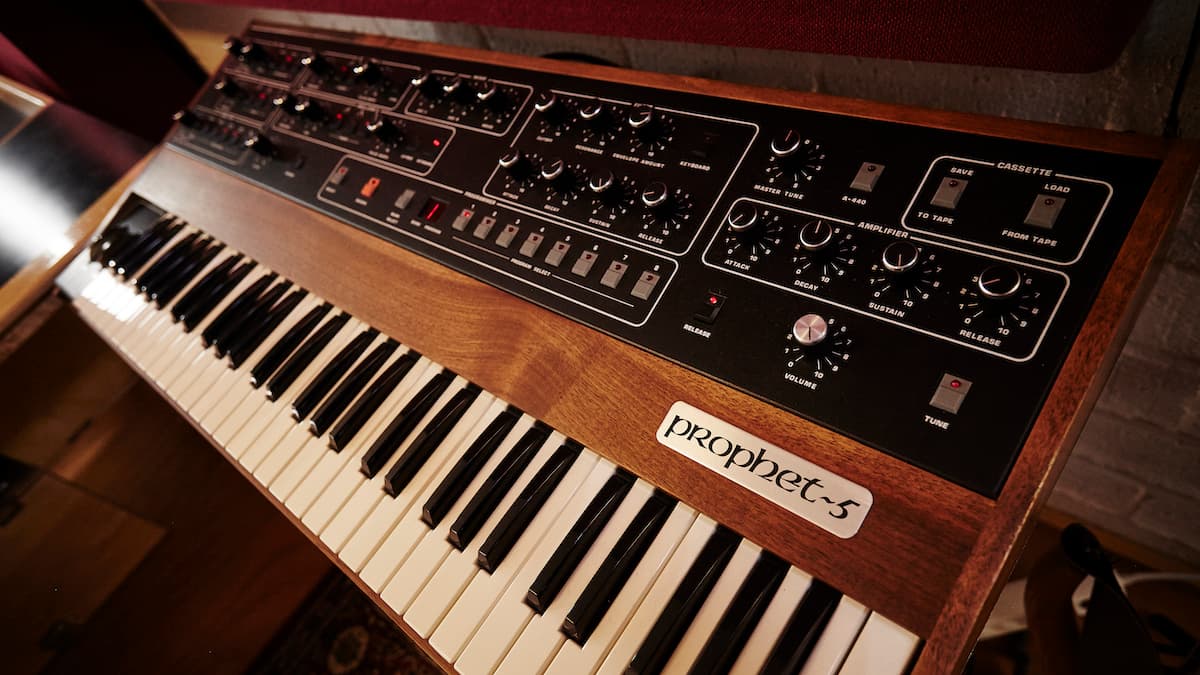
Prophet-5, 1977-1978
The Prophet-5 is the machine that changed the conversation. Sequential says it was the world’s first fully programmable polyphonic synthesizer, and also the first musical instrument with an embedded microprocessor. Yamaha’s own historical material backs up the larger point: Sequential was the first company to launch a mass-produced CPU-driven synthesizer model, and the Prophet-5 became the blueprint everybody else had to answer.
This is the one that still drives collector fever. A clean Prophet-5 is expensive for a reason, because it is not just a classic sound, it is the moment polyphonic synth design stopped being an experiment and became a standard. If you want the machine that made the modern used-synth market look the way it does, this is it.
Prophet 600, early MIDI era
The Prophet 600 is where the Sequential story intersects with the protocol that still ties rigs together. Dave Smith was the driving force behind the MIDI specification in 1981, and Yamaha notes that the Prophet 600 was among the first mass-produced instruments to use the new standard. That makes it a key bridge between the Prophet-5’s analog prestige and the connected rig culture that followed.
For a working musician, the Prophet 600 is one of the smarter places to look if you want Sequential history without Prophet-5 money. It is historically important, but it also lives in that sweet spot where the market has not turned it into untouchable museum glass. MIDI compatibility is not a bonus here, it is the whole point.
Six-Trak, January 1984
The Six-Trak proved Sequential could make polyphonic synths feel more playable in a real-world setup, not just more impressive in a spec sheet. Released in January 1984, it was one of the first MIDI-equipped multitimbral analog synthesizers, which meant you could wring more practical use out of one box than older analog polys ever allowed. That combination of multitimbrality and MIDI made it a very modern instrument for its time.
This is the kind of Sequential gear that still makes sense for players who need utility more than bragging rights. The Six-Trak is not the trophy piece, but it is the sort of keyboard that quietly explains why Sequential mattered to working musicians, not just collectors. It brought arrangement-minded thinking into an analog instrument.
DrumTraks, 1984
DrumTraks was Sequential’s first drum machine, and it arrived as one of the first drum machines with MIDI control. That detail sounds almost routine now, but in 1984 it was the difference between a machine that sat alone and a machine that could behave like part of a proper rig. Sequential was applying the same control-first logic to rhythm that it had already used for synth voices.
If you are comparing vintage drum machines, DrumTraks sits in an interesting middle zone. It is not the most famous box in the category, but it belongs in the conversation because it helped define what a programmable drum machine should be able to do. For many players, that MIDI control matters more than nostalgia.
Prophet 2000, 1985
The Prophet 2000 was Sequential’s first sampler, and it arrived with a real edge. It used 12-bit sampling at a time when many commercial samplers, including the Fairlight CMI, were still using 8-bit sampling, which helps explain why Sequential mattered even outside the analog camp. The company was not just chasing sounds, it was pushing more affordable access to professional features.
That makes the Prophet 2000 one of the smartest buys in the broader Sequential universe if you want character and history without jumping straight to the most expensive icons. It is also a reminder that “Sequential sound” was never one thing. The company kept moving the floor upward, then making the new floor feel normal.
From closure to the name coming back
Sequential Circuits closed in 1987, and Yamaha acquired the brand name, which would have been the end of the story for a less stubborn company. Dave Smith kept working across the industry, returned with Dave Smith Instruments in 2002, had the Sequential name restored in 2015, and renamed the company Sequential again in 2018. Focusrite announced the acquisition in 2021, and after Smith’s death on May 31, 2022, the brand stayed active under the legacy he built.
This matters when you are buying, because Sequential gear now falls into distinct eras with very different ownership and service realities. A pre-1987 piece is collector bait, a late-2000s Dave Smith Instruments box is often the working musician’s sweet spot, and the modern brand identity tells you the company is still speaking the same language it invented.
Fourm and the modern buying guide
The Fourm is the cleanest sign that Sequential still understands its own audience. It is a compact four-voice analog polysynth, and that alone makes it feel far more affordable and accessible than the old myth of Sequential as expensive, cathedral-scale hardware. It is the right machine for the player who wants the name, the workflow, and the touch, without signing up for a restoration project.
If you are sorting by use rather than romance, the priorities are pretty clear. • Collector: Prophet-5, Model 700, and a clean DrumTraks, because the historical weight is undeniable. • Working musician: Prophet 600, Six-Trak, and Prophet 2000, because they still earn their rack space. • Budget-curious newcomer: Fourm, because it lets you hear the Sequential idea in a package that does not demand a vintage-synth rescue budget. That is the real Sequential legacy, not just great instruments, but a repeated push to make serious control less exclusive.
This article was produced by Prism’s automated news system from verified source data, official records, and press releases, then run through automated quality and moderation checks before publishing. The system is built and supervised by the people who set the standards it runs under. Read our full AI policy.
Did this article answer your question?