SourceLab 2.1.0 Adds Random Preset Generator for Faster Analog-Style Sound Design
SourceLab 2.1.0's category-locked randomizer can generate Juno/Prophet-class pad textures in one click; here's the workflow to make each result analog-credible.
The Juno-106's sawtooth-through-chorus architecture defines a timbral territory that commands over $1,000 on the used market, used by everyone from Daft Punk to Tame Impala. Initial Audio's SourceLab 2.1.0, released March 30, 2026, does not claim to replicate that circuit, but its new category-locked Generate preset button makes a credible case that a modern hybrid engine can reach the same neighborhood in under a minute. The challenge: ten usable vintage pads in five minutes. It holds up.
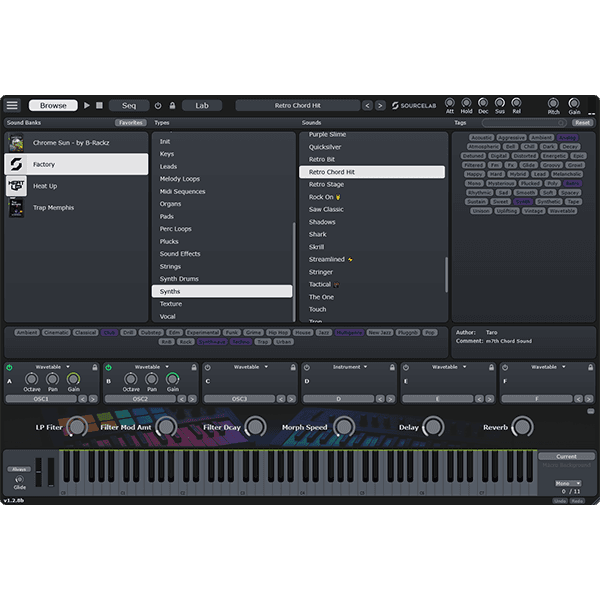
Category selection is the variable that matters most. SourceLab runs a 6-layer hybrid engine capable of wavetable, sampler, and FM modes simultaneously, which means unconstrained randomization will land on FM bell clusters or granular noise as often as it lands on a warm sawtooth stack. Lock the generator to Pads before each press and the parameter space tightens sharply toward slow-attack, sustained-release architectures. Three or four presses in, the outputs start reading as Juno territory: layered oscillators with a modest frequency spread, a lowpass filter sitting just above the point where it sounds polished rather than open.
Getting those generated patches from "interesting" to "analog-credible" takes three refinements, and the workflow is fast once you know them. First, pull the per-voice unison detune to somewhere between 5 and 10 cents. SourceLab's per-voice unison control handles this precisely, and wider settings push results toward digital shimmer rather than the organic drift that defines a Prophet-5 chorus. Second, back the modulation envelope depth off until any vibrato is implied rather than audible. Third, widen using layered stereo spread on one or two of the six sources rather than all of them simultaneously, which is closer to how a BBD chorus circuit actually behaves: widening through phase displacement rather than blanket spatial processing. A touch of filter drive on the low-mids closes the gap considerably, adding the subtle saturation that separates hardware VCF behavior from a clean digital filter.
The generator is not firing into a blank parameter space. SourceLab ships with approximately 2,300 factory presets built across its three synthesis modes, meaning the randomizer draws from a musically curated set of parameter weightings. That architecture is why generated pads land near recognizable analog timbres rather than synthetic noise.
The v2.1.0 update also addressed UI and stability edge cases that affected workflow in larger projects, a practical fix for anyone running SourceLab alongside a hardware-heavy rig where session complexity compounds. Initial Audio has been iterating quickly since the 2.0 release on March 16, 2026, with 2.1.0 following just two weeks later.
A generated SourceLab pad layered an octave below a real Juno pad thickens the low-mid body without competing with the hardware's BBD character. At $163, the plugin costs a fraction of the hardware it complements, and the new generator means the programming time for that layer is now measured in seconds rather than sessions.
Know something we missed? Have a correction or additional information?
Submit a Tip